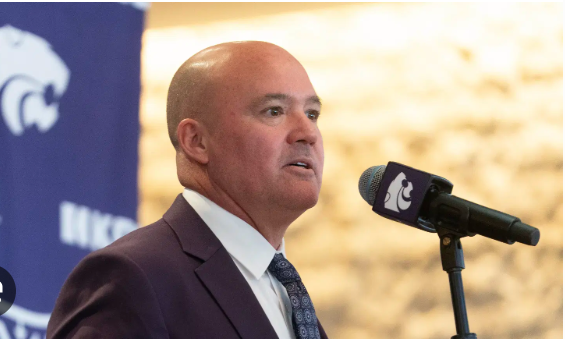
Kansas State is already heading in a promising direction, and much of that momentum begins with Casey Alexander.
Kansas State introduced its 27th head coach, Casey Alexander, on Monday, marking a new chapter after Jerome Tang was dismissed “for cause.” From the outset, it’s clear Alexander’s philosophy differs—and it could be exactly what the Wildcats have been missing.

A focus on stability and long-term growth
Rather than overhauling the roster, Alexander emphasized building a steady and sustainable program. The former Belmont coach made it clear during his introductory press conference that he values continuity, both on the court and within the broader university community.
He stressed the importance of keeping players in the program and allowing them to grow, rather than constantly reshuffling the roster.
“I want to see consistency,” Alexander explained. “I don’t want to flip a roster every season. It may take some time to get there, but that’s not something we want happening year after year.”
Prioritizing retention over quick fixes
While Jerome Tang found early success by aggressively using the transfer portal, Alexander appears to favor a more patient approach. He wants to avoid short-term roster gambles and instead build a core group of players who develop together over time.
That said, some turnover is still expected in his first season. One of his former players, Missouri Valley Conference Player of the Year Tyler Lundblade, has already entered the transfer portal following Alexander’s departure, and Kansas State could be a potential landing spot.
Uncertainty surrounding the current roster
Looking ahead, it remains unclear how many players from the 2025–26 roster will stay. Much may depend on starting point guard P.J. Haggerty, one of several key players who transferred in last offseason alongside Abdi Bashir Jr., Khamari McGriff, and Nate Johnson.
Given the coaching change and last season’s circumstances, further roster movement seems likely. That could make it challenging for Kansas State to maintain continuity in the short term.
Questions remain for Year One
Alexander’s emphasis on retention and long-term development is clear, but it may take time to fully implement. With limited Power Five head coaching experience, there are valid questions about how quickly he can translate his vision into success at Kansas State.
For now, the Wildcats appear to be embracing a new direction one centered on stability, development, and a stronger connection to the program’s foundation.
Leave a Reply