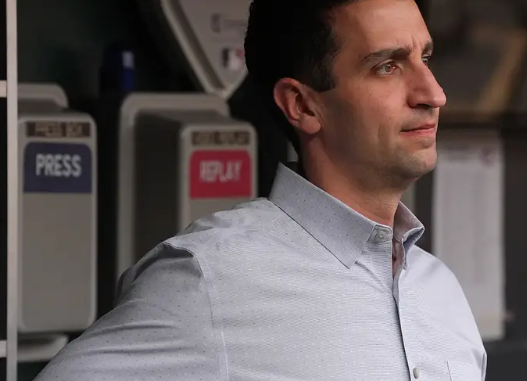
The New York Mets may have fired manager Carlos Mendoza, but many around baseball believe the organization’s larger problems begin much higher up the ladder. With the club enduring another disappointing season despite one of the highest payrolls in Major League Baseball, increasing scrutiny has shifted toward President of Baseball Operations David Stearns, whose roster decisions have largely failed to deliver the championship contender fans were promised.
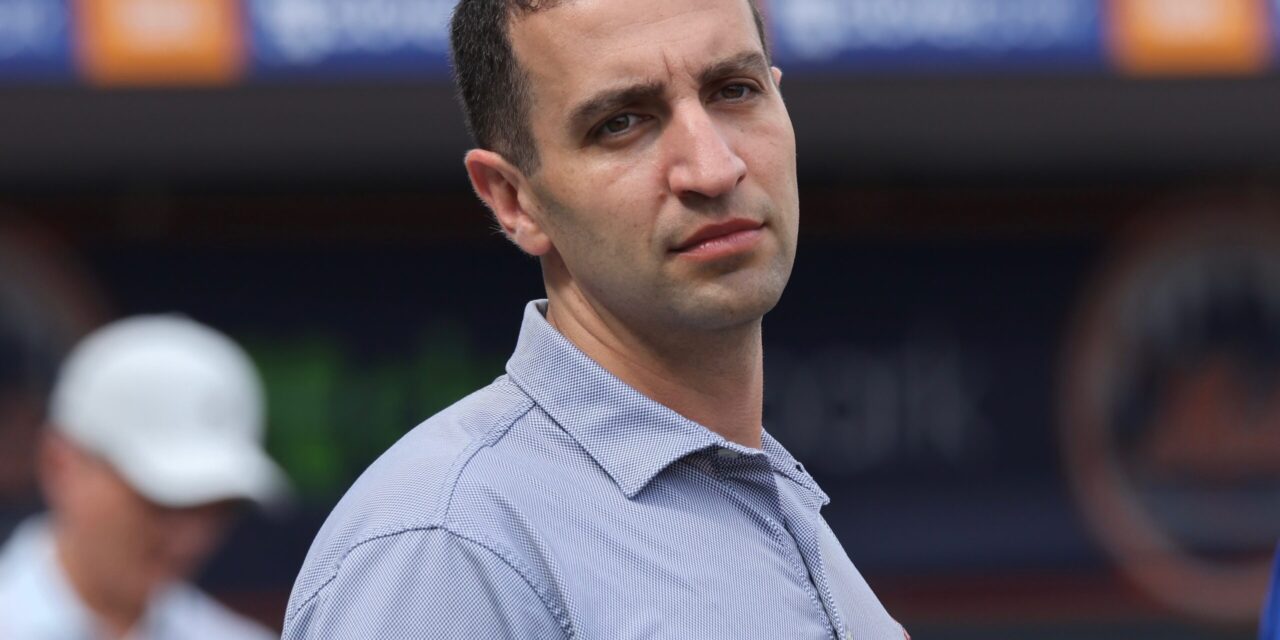
Mendoza became the latest casualty after New York stumbled to a disappointing 34-47 record, but replacing the manager may do little to solve the issues that have plagued the franchise over the past two seasons. Since their dramatic collapse late in the 2025 campaign, the Mets have continued to slide, and many of the team’s biggest setbacks can be traced directly to Stearns’ personnel decisions.
After arriving in New York in October 2023, Stearns was viewed as the ideal executive to restore the franchise to contention. A lifelong Mets fan with an outstanding reputation from his tenure with the Milwaukee Brewers, he inherited enormous financial resources and a fan base expecting immediate success. While the Mets reached the postseason in 2024, they collapsed in 2025 and have regressed even further during the 2026 season despite carrying a payroll exceeding $329 million.
Several of Stearns’ highest-profile moves have backfired, leaving the Mets with an expensive roster that has consistently underperformed.
Frankie Montas Signing Turns Into Costly Disaster
Perhaps no decision has aged worse than the signing of veteran starter Frankie Montas. Believing the right-hander could rediscover the form that once made him one of baseball’s better pitchers, Stearns handed him a two-year, $34 million contract before the 2025 season.
Instead, injuries quickly resurfaced. Montas opened his Mets career on the injured list with a lat strain, struggled badly after returning with a 6.68 ERA in seven starts, and ultimately required Tommy John surgery before the season concluded. After exercising his player option for 2026, he was designated for assignment and released, leaving the Mets responsible for paying $17 million to a pitcher no longer on the roster.
His brief tenure ended with a disappointing 6.28 ERA and became one of the franchise’s most expensive mistakes.
Marcus Semien Trade Has Failed to Deliver
Seeking to improve the club’s defense, Stearns traded longtime fan favorite Brandon Nimmo to the Texas Rangers in exchange for veteran second baseman Marcus Semien.
While Semien brought Gold Glove credentials and championship experience, his offensive decline has accelerated dramatically. He is batting just .214 with a .613 OPS while producing some of the weakest offensive numbers among qualified major league hitters. Even his normally reliable defense has declined significantly.
Meanwhile, Nimmo has continued to provide consistent offensive production in Texas, making the trade appear increasingly lopsided in the Rangers’ favor. Adding to the concern, Semien remains under an expensive long-term contract that could become an even greater burden if his decline continues.
Letting Pete Alonso Walk Leaves Massive Offensive Void
One of the most controversial decisions of Stearns’ tenure came when the Mets allowed franchise slugger Pete Alonso to leave in free agency without securing an adequate replacement.
Alonso signed with the Baltimore Orioles and has continued producing at a high level, remaining among the league leaders in home runs and RBIs. His departure stripped New York’s lineup of its most feared power hitter.
Rather than replacing Alonso with another middle-of-the-order bat, Stearns signed Jorge Polanco, whose season has been derailed by injuries after appearing in only a handful of games. The offensive downgrade has become impossible to ignore as the Mets continue to struggle to score runs consistently.
Devin Williams Gamble Has Produced Mixed Results
Stearns also invested heavily in reliever Devin Williams despite the closer coming off the worst season of his career with the New York Yankees.
The hope was that Williams would quickly return to his previous All-Star form, but that resurgence has yet to materialize. While he has shown flashes of effectiveness, his ERA, WHIP, strikeout rate, and command remain well below the elite standards that once made him one of baseball’s premier relief pitchers.
Instead of becoming the dominant bullpen anchor New York envisioned, Williams has delivered inconsistent results while occupying a significant portion of the payroll.
Luis Robert Jr. Trade Brings More Injury Concerns
Another aggressive move centered on improving the team’s defense involved acquiring former All-Star center fielder Luis Robert Jr.
Although Robert once possessed elite power and Gold Glove ability, injuries and declining production had already raised concerns before the trade. Those worries quickly resurfaced as he landed on the injured list after appearing in only 24 games.
His limited availability and modest offensive production have prevented him from making the impact the Mets desperately needed while costing the organization valuable young talent in return.
Starting Rotation Left Without Enough Reinforcements
Perhaps the biggest roster construction issue has been Stearns’ failure to adequately strengthen the starting rotation.
While acquiring Freddy Peralta initially appeared to be a major addition, the rotation as a whole has fallen apart due to injuries and inconsistent performances. Clay Holmes suffered a fractured fibula, Kodai Senga struggled through one of the worst stretches of his career, David Peterson was eventually traded, and several younger pitchers have failed to provide reliable production.
As a result, the Mets now rank near the bottom of Major League Baseball in starting pitching ERA, leaving the bullpen under constant pressure and making sustained success nearly impossible.
Pressure Now Falls Squarely on David Stearns
With Carlos Mendoza no longer managing the club, attention has shifted directly toward the executive who assembled the roster. Many of New York’s biggest offseason acquisitions have either declined sharply, battled injuries, or failed to meet expectations, leaving the Mets with one of baseball’s most expensive yet disappointing teams.
Stearns’ tenure has become defined by a combination of questionable roster decisions, unfortunate injuries, and failed attempts to revive former stars. While bad luck has certainly played a role, many of the franchise’s struggles stem from choices made in the front office.
Now that the manager has been dismissed, David Stearns finds himself under increasing pressure. If the Mets fail to show meaningful improvement during the second half of the season, the spotlight may soon shift entirely toward the architect of the roster, with his own future becoming one of the biggest questions facing the organization.
Leave a Reply