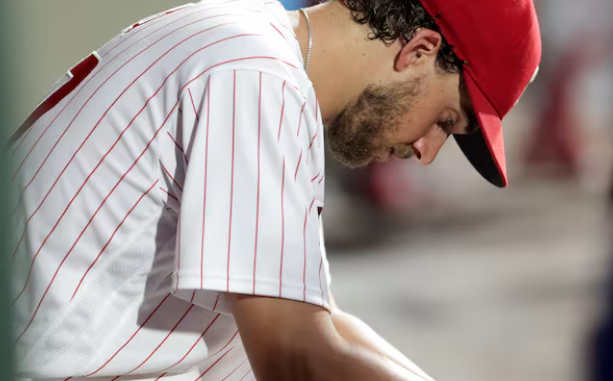
Aaron Nola reached another milestone in his long Phillies career on Monday night at Citizens Bank Park, making the 302nd start of his tenure with the franchise. Only franchise legends Steve Carlton and Robin Roberts have started more games for Philadelphia, a reminder of Nola’s place among the organization’s all-time greats. Yet despite the historic achievement, the evening ended in frustration as the Phillies squandered a five-run advantage in an 11-7 loss to the Pittsburgh Pirates.
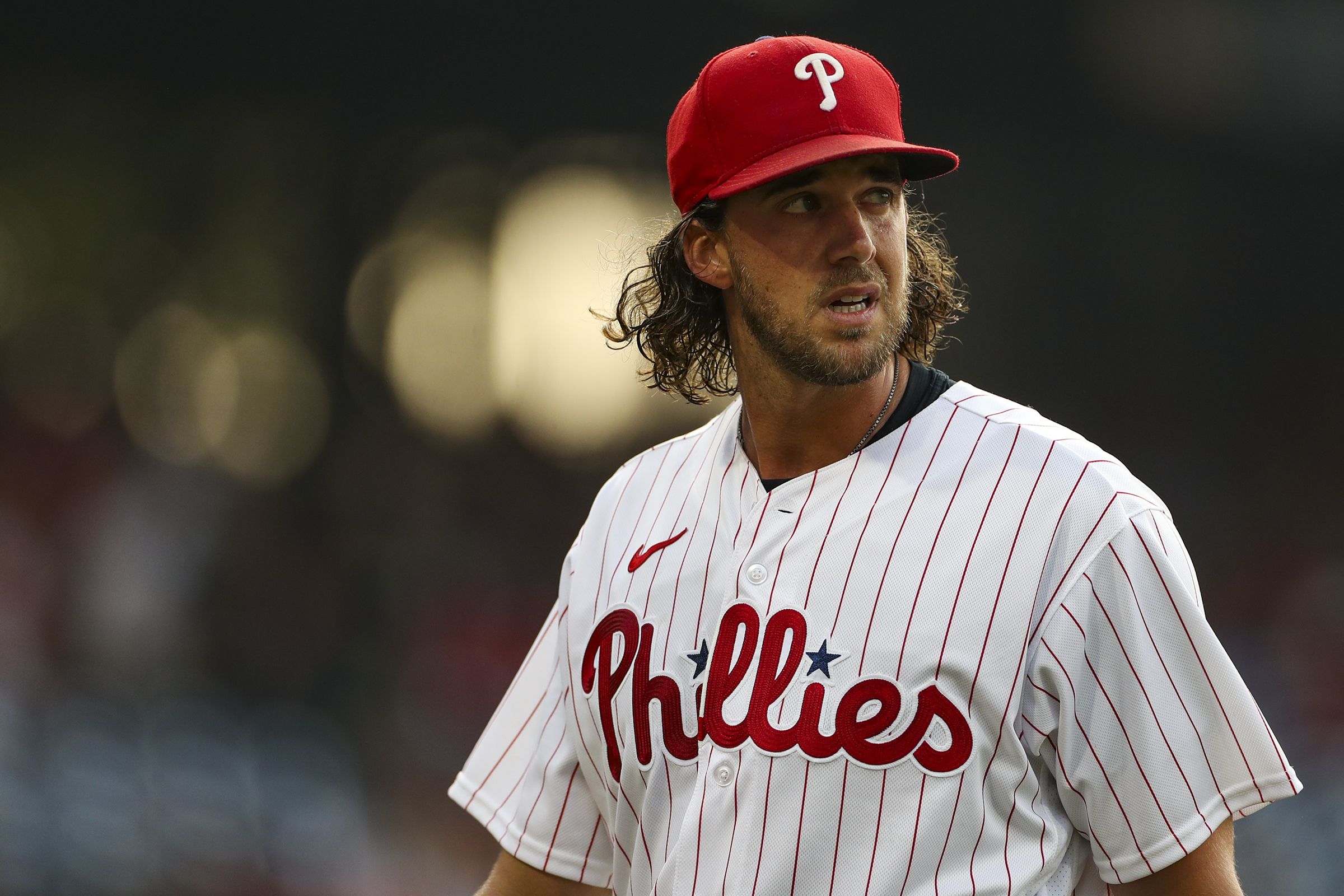
Nola’s outing highlighted the troubling trend that has followed him over the past two seasons. The veteran right-hander surrendered eight runs, seven of them earned, over just 4⅓ innings, extending a difficult stretch in which he has posted a 6.02 ERA across his last 34 starts. Once regarded as one of Major League Baseball’s most dependable workhorses, Nola has struggled to pitch deep into games, creating additional pressure on an already overworked Philadelphia bullpen.
Following the defeat, Nola admitted this has been one of the toughest periods of his professional career. Throughout his time with the Phillies, he built a reputation as an innings eater who consistently worked into the later stages of games. This season, however, reaching the sixth inning has become a rarity. Despite the disappointing results, the veteran remains confident that he can regain the durability and consistency that once defined his success.
His continued struggles could also complicate Philadelphia’s plans ahead of the Aug. 3 MLB Trade Deadline. The Phillies are already expected to pursue a right-handed power bat and another high-leverage reliever, but the uncertainty surrounding the back end of the starting rotation has become increasingly concerning. While Cristopher Sánchez, Zack Wheeler, and Jesús Luzardo have formed one of baseball’s strongest top-three rotations, the recent demotion of Andrew Painter to Triple-A has left the club searching for dependable options behind them.
Monday’s game underscored that concern. With the bullpen heavily taxed after several demanding outings, the Phillies desperately needed Nola to provide length. Instead, he exited before completing five innings, forcing the relief corps back into action earlier than planned. Interim manager Don Mattingly acknowledged that the bullpen has been used more frequently than the club would prefer, making quality starts even more valuable.
The numbers illustrate how dramatically Nola’s workload has changed. He has yet to pitch beyond 6⅓ innings in any start this season and has faced only 19 hitters in the sixth inning or later. Just 4.8 percent of his total pitches have come after the fifth inning, a dramatic drop from previous seasons. During his prime from 2017 through 2024, when he led Major League Baseball with more than 1,430 innings pitched, over 20 percent of his pitches routinely came in the sixth inning or beyond.
Philadelphia’s resurgence this season has largely been fueled by improved starting pitching. After opening the year with a disappointing 9-19 record and a league-worst 5.80 ERA from the rotation—circumstances that ultimately led to Rob Thomson’s dismissal—the Phillies rebounded behind a dramatically improved starting staff. From late April through Sunday, the rotation ranked among baseball’s best with a 3.34 ERA, helping the club climb back into contention and close the gap in the National League East standings.
The offense appeared to provide more than enough support early. Trea Turner and Brandon Marsh each launched solo home runs in the first inning before Kyle Schwarber added a sacrifice fly in the third. Bryce Harper then extended the advantage with a two-run homer, his 20th home run of the season, giving Philadelphia what looked like a comfortable 5-0 cushion.
Nola initially looked dominant, generating numerous swings and misses while keeping Pittsburgh’s hitters off balance. However, momentum shifted in the fourth inning when Esmerlyn Valdez connected for a two-run homer to trim the deficit. The collapse continued in the fifth as Jared Triolo sparked a six-run rally with a solo home run. Nola departed the game with the bases loaded, one out, and the score tied. All three inherited runners eventually crossed the plate, turning Philadelphia’s commanding lead into an 8-5 deficit.
Catcher J.T. Realmuto believed fatigue played a significant role in the veteran’s struggles. He noted that Nola’s velocity and overall effectiveness declined as the game progressed, suggesting he may have remained on the mound longer than he ordinarily would because of the bullpen’s recent workload. With limited relief options available, the Phillies had little choice but to leave their veteran starter in the game despite signs that he was beginning to tire.
Ironically, Nola still generated 23 swinging strikes, the second-highest total of his career and an indication that his raw stuff remained effective at times. His career best came during his All-Star campaign in 2018, when he produced 26 swings and misses in a single outing. Yet those impressive underlying numbers offered little consolation after allowing eight runs, making him one of the few pitchers in recent years to combine elite swing-and-miss stuff with such a damaging final line.
Mattingly admitted that, early in the contest, Nola appeared poised to dominate. His pitches had life, hitters were consistently missing, and everything pointed toward a strong outing before the game suddenly unraveled. Nola, however, dismissed any focus on the swing-and-miss totals, insisting they meant nothing after failing to protect the sizeable lead his offense had provided. For the veteran right-hander, the only statistic that mattered was the final score, and another missed opportunity only deepened what has become the most difficult stretch of his Phillies career.
Leave a Reply