The Philadelphia Phillies made one of the most significant moves of the 2026 MLB trade deadline by acquiring three-time batting champion Luis Arraez, a blockbuster addition aimed at strengthening an offense that has shown flashes of brilliance but lacked consistency throughout the season. While Arraez’s arrival immediately gives the Phillies one of baseball’s toughest hitters to strike out and adds another elite bat to an already talented lineup, the trade also triggered a major defensive overhaul that will require several players including superstar Bryce Harper to make significant adjustments.
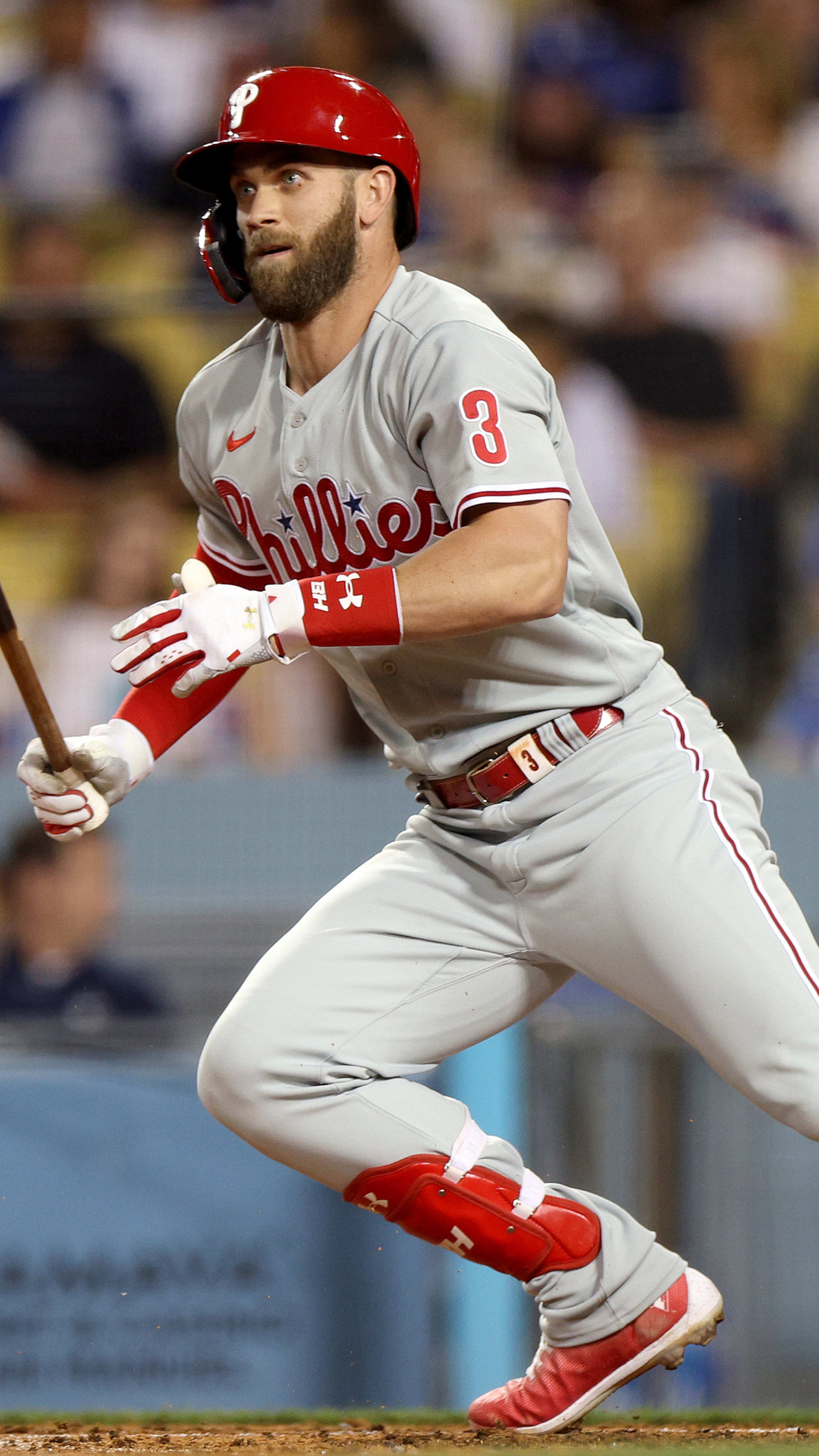
Among those changes, none may be more impactful than Harper’s return to right field, a position he has not played regularly since suffering a serious elbow injury several years ago. Although Harper made it clear he is fully committed to doing whatever helps the Phillies win, he admitted the transition back to the outfield will come with its own set of challenges especially when playing on the road.
Luis Arraez’s Arrival Reshapes the Phillies’ Defense
Arraez has spent much of the 2026 season playing second base while continuing to establish himself as one of Major League Baseball’s premier contact hitters. Because of his success at the position and his desire to remain there for the rest of the season, Phillies manager Don Mattingly and the coaching staff were forced to redesign the club’s defensive alignment almost immediately after completing the trade.
The new configuration places Arraez at second base, while Bryson Stott slides over to third base. Alec Bohm shifts across the infield to first base, and Harper moves from first base back to his familiar spot in right field.
The changes maximize the Phillies’ offensive potential by keeping all of their best bats in the lineup, but they also require several players to adjust to unfamiliar defensive responsibilities during the middle of a pennant race.
Harper Knows the Road Won’t Be Easy
While Harper understands the reasoning behind the decision, he didn’t hide his feelings about returning to the outfield.
Speaking after the trade, the two-time National League MVP joked that life in right field, particularly in opposing ballparks, “is gonna suck.”
His comment wasn’t directed at the physical demands of playing the position as much as the constant attention he’ll once again receive from opposing fans.
Unlike first base, where players are somewhat removed from the crowd, right field places Harper directly in front of some of baseball’s loudest and most relentless spectators. Throughout his career, the eight-time All-Star has often been one of the biggest targets for opposing fan bases, and he expects that treatment to resume immediately.
Harper admitted he had grown accustomed to the quieter environment at first base, where he could focus almost entirely on the game without hearing constant heckling from the stands. Returning to the outfield means he’ll once again spend nine innings within earshot of hostile crowds eager to distract one of the game’s biggest stars.
The Physical Challenge Is Just as Significant
Beyond dealing with opposing fans, Harper also faces the challenge of readjusting physically to everyday outfield play.
Since transitioning to first base, Harper has become increasingly comfortable handling infield responsibilities, and moving back to right field will require him to rebuild the throwing strength, range, and defensive instincts needed to patrol one of baseball’s most demanding positions.
The transition isn’t as simple as moving to a different spot on the field. Playing right field requires long, accurate throws, quick reactions off the bat, and extensive ground coverage skills Harper hasn’t relied on consistently since before his elbow injury.
Even so, the Phillies believe his athleticism and experience will allow him to make the adjustment successfully.
Harper’s Commitment Centers on One Goal
Despite acknowledging that he genuinely enjoys playing first base, Harper made it clear that his personal preference is secondary to the team’s pursuit of a championship.
He explained that he has become extremely comfortable on the infield and has developed a genuine appreciation for playing first base. At this stage of his career, he noted, he could easily remain there if he chose.
Instead, Harper volunteered to return to right field because he believes it gives Philadelphia the strongest possible lineup.
He emphasized that the decision is entirely about helping the team and maximizing the Phillies’ chances of winning a World Series. For Harper, personal comfort means little compared to the opportunity to compete for another championship.
A Calculated Gamble for a Championship Run
The acquisition of Arraez represents one of Philadelphia’s boldest moves in recent years.
As a three-time batting champion known for his exceptional contact skills and ability to put the ball in play, Arraez gives the Phillies another reliable offensive weapon alongside Harper and the rest of an already dangerous lineup.
The front office clearly believes that improving the team’s offense outweighs the challenges created by reshuffling the defense.
By moving Arraez to his preferred position at second base while shifting Harper back to right field, the Phillies hope to create a more balanced roster capable of competing deep into October.
Winning Comes Before Comfort
Harper’s comments reveal the mindset of a veteran superstar willing to sacrifice personal preferences for the benefit of the club.
Although he fully expects life in right field particularly on the road to bring renewed criticism from opposing fans and additional physical demands, he has embraced the challenge without hesitation.
The Phillies are betting that Harper’s willingness to change positions, combined with Arraez’s elite bat, will make the team even more dangerous during the stretch run.
For Harper, the adjustment may indeed “suck,” but if it helps bring another World Series championship to Philadelphia, it’s a sacrifice he is more than willing to make.
Leave a Reply