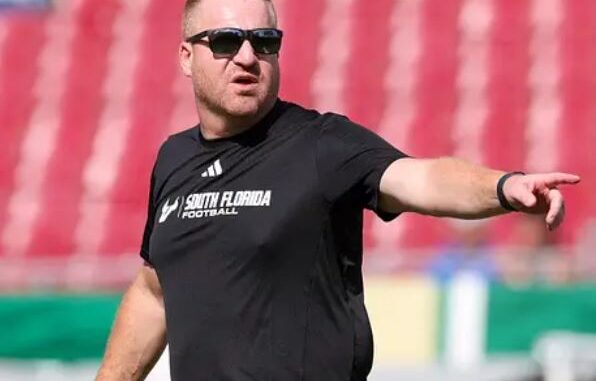
The Auburn Tigers are entering the 2026 college football season with renewed optimism, but perhaps more importantly, they are entering it with a clear need for stability. After years of coaching changes and inconsistent results, the program is hoping new head coach Alex Golesh can establish a foundation strong enough to produce sustained success in the highly competitive SEC.
One prominent college football voice believes Golesh is already taking encouraging steps.
Paul Finebaum recently offered strong praise for Auburn’s new head coach, particularly after Golesh made an unconventional decision during fall camp. Rather than keeping the Tigers on campus throughout camp, Golesh moved the entire team to a resort, creating an environment designed to eliminate distractions and allow players and coaches to concentrate entirely on football.
Finebaum viewed the move as much more than a gimmick.
Finebaum Impressed by Golesh’s Unconventional Approach
Speaking during an appearance on the McElroy and Cubelic in the Morning podcast, Finebaum said he liked what Golesh was doing at Auburn and suggested there was a clear purpose behind the unusual approach.
The SEC Network analyst indicated that the change reflected a coach who is deliberately trying to establish his own culture and direction. Finebaum also expressed optimism about what he has heard from Golesh since the former South Florida head coach took over the Tigers.
The praise is notable because Auburn enters the season with plenty to prove.
Golesh has inherited a program that has struggled to maintain continuity, and his first task will be creating an environment in which players understand exactly what is expected of them. Moving the team away from campus for camp appears to be one way of accelerating that process.
Rather than treating the move as a simple change of scenery, Auburn is using it as an opportunity to bring players closer together and keep their attention focused on preparation.
Auburn’s Coaching Turnover Has Become a Major Problem
The Tigers have experienced a remarkable amount of instability in recent years, cycling through four head coaches over the last six seasons.
That kind of turnover can have serious consequences for a college football program.
Every coaching change can introduce a new offensive philosophy, defensive system, recruiting strategy and culture. Players are forced to adjust, recruiting relationships can be disrupted, and long-term development can become difficult when a program repeatedly changes direction.
Auburn has experienced many of those challenges.
The departure of Hugh Freeze created another reset, leaving Golesh with the responsibility of convincing players, recruits and supporters that this coaching transition will be different.
For a program with Auburn’s resources, tradition and SEC ambitions, simply changing coaches again is not enough. The Tigers need someone capable of establishing a system that can survive the ups and downs of college football.
Golesh Has an Opportunity to Break the Cycle
Golesh arrives with a chance to create his own identity from the ground up.
His experience at South Florida gives him an understanding of leading a program and developing players, while his offensive background could help Auburn become more aggressive and productive on that side of the football.
But his biggest challenge may not be designing plays.
It will be building trust.
Auburn needs players to believe in the coaching staff, recruits to believe in the long-term vision and the administration to provide the support necessary for the program to develop without another abrupt change in direction.
That is why the fall-camp decision has attracted attention. Taking the team away from the normal surroundings gives Golesh an opportunity to establish standards, strengthen relationships and make his expectations clear before the season begins.
One Strong Camp Won’t Solve Everything
Despite the positive attention, Golesh knows that a resort-based fall camp alone will not fix Auburn’s problems.
The real test begins once the Tigers start playing games.
Golesh must develop a roster capable of competing against some of the best teams in the country, improve Auburn’s recruiting position and make sure his players continue buying into his system once adversity arrives.
The Tigers also face a difficult 2026 schedule, meaning there will be little room for mistakes. Strong performances against SEC competition will ultimately determine whether the excitement surrounding Golesh translates into tangible progress.
Auburn’s long-term goal is much bigger than simply having a respectable first season. The program wants to return to the national championship conversation and eventually compete for a place in the College Football Playoff.
The Pressure Is Already Building
Auburn has not appeared in a national championship game since the 2013 season, and the program has struggled to regain that level of national relevance.
The Tigers still possess the resources, recruiting base and fan support necessary to become a major SEC contender. What has been missing is consistency.
That is precisely why Finebaum’s comments about Golesh are significant.
The analyst isn’t simply praising one unusual decision. He is recognizing signs that Auburn may finally be approaching its rebuild with a clear sense of purpose.
Golesh now has the difficult task of turning that promising early impression into sustained results.
If he can establish a strong culture, develop Auburn’s young talent, recruit effectively and compete consistently in the SEC, he could become the coach who finally ends the Tigers’ cycle of constant turnover.
For Auburn, stability may be just as important as wins in the early stages of the Golesh era. But if those two things begin arriving together, the Tigers could finally have the foundation needed to make a serious push back toward the top of college football.
Leave a Reply