Kentucky fans have spent plenty of recent seasons hearing the same familiar message: “Give the team time.” The Wildcats often needed weeks or even months to figure out their rotations, establish chemistry and discover which players could consistently perform when the competition intensified.
That patience has not always translated into the kind of March success Kentucky supporters expect from one of college basketball’s most decorated programs.
But the outlook entering the 2026-27 season feels noticeably different.
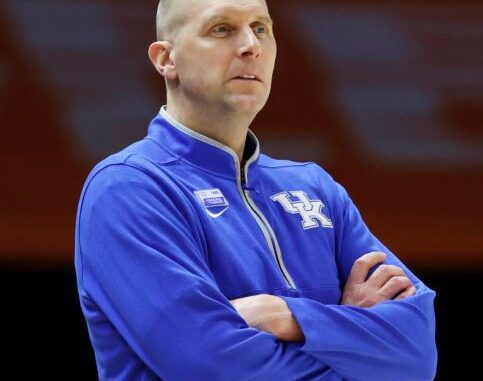
Head coach Mark Pope has assembled a roster that appears far more experienced, balanced and equipped to execute his system from the opening weeks of the season. Instead of relying heavily on young players who need time to adjust to college basketball, Kentucky is bringing back or adding proven players who already understand how to handle high-level competition.
That could allow the Wildcats to find their identity much sooner than they did a year ago.
Last Season Exposed Kentucky’s Lack of Answers
Kentucky entered last season with plenty of talent but also a long list of unanswered questions.
The Wildcats struggled to establish consistent roles in the backcourt. Denzel Aberdeen, for example, had difficulty finding his rhythm while moving between point guard and shooting guard responsibilities.
Otega Oweh also endured a slow start, while Collin Chandler showed flashes of being a difference-maker but sometimes struggled to create opportunities once opposing defenses began concentrating on him.
Injuries only complicated matters.
The availability of Jaland Lowe and Jayden Quaintance became issues, while Kentucky’s frontcourt struggled to consistently provide scoring. Those problems eventually contributed to a team that finished with 14 losses and started the season just 9-6.
Kentucky eventually found stretches of better basketball once SEC play arrived, but the improvement was inconsistent.
The major difference this time is that Pope appears to have addressed many of those weaknesses before the season even begins.
Pope’s New Roster Has Proven Scorers
One of the biggest reasons for optimism is the amount of established production Kentucky has added.
Consider Milan Momcilovic.
The former Iowa State forward has already demonstrated that he can consistently put the ball in the basket at the college level. He has averaged double-digit scoring in each of his previous three seasons, giving Kentucky a proven offensive option rather than another player who needs to discover his role.
Momcilovic’s experience should be particularly valuable early in the season. When Kentucky encounters a difficult opponent before its system is fully established, having someone capable of creating offense and knocking down shots could prevent the Wildcats from falling into the early-season holes that hurt them last year.
Zoom Diallo Could Change the Backcourt
Another major addition is Zoom Diallo, who spent the previous two seasons serving as Washington’s primary floor general.
Diallo brings more than scoring ability.
He averaged 15.7 points, 4.5 assists and 3.9 rebounds last season while posting an impressive 30.3% assist rate. That playmaking ability could be exactly what Pope needs to make Kentucky’s offense operate more smoothly.
Unlike a guard whose game is primarily centered around scoring, Diallo has experience running an offense and creating opportunities for teammates.
That distinction could become extremely important.
Kentucky’s offense should benefit from having a point guard who understands how to control tempo, recognize defensive pressure and get other players involved. With experienced scorers surrounding him, Diallo does not necessarily have to carry the entire offensive burden himself.
System Fit Has Become a Major Priority
One of the most noticeable aspects of Pope’s offseason roster construction is the emphasis on players who fit his system.
Talent remains important, but Kentucky appears to have prioritized players with proven experience and skill sets that translate directly into the style of basketball Pope wants to play.
That could help eliminate some of the uncertainty that surrounded last year’s roster.
Instead of spending the opening month trying to determine which players can coexist, Pope has a group that should theoretically understand its responsibilities more quickly.
That could be a major advantage during the early portion of the schedule.
Experience Could Give Kentucky an Early Advantage
Perhaps the most significant difference between last year’s team and the upcoming Wildcats is the age and experience of the roster.
Kentucky is not expected to depend on a large freshman class to carry the team.
Mason Williams, a four-star freshman, is reportedly the only first-year player expected to receive significant minutes.
The rest of the roster is filled with players who have already spent multiple seasons playing college basketball.
That includes Franck Kepnang, who enters his seventh season of college basketball.
If Kentucky also lands Mark Mitchell, the Wildcats would add another experienced player with five years of college experience.
For Pope, this could dramatically simplify the process of building a cohesive team.
Why Kentucky Could Start Fast
Young teams often need time to learn how to play together. Players must adjust to the speed of college basketball, learn new offensive and defensive concepts and figure out how their individual games fit into a larger system.
Kentucky should have considerably less of that learning curve.
While the Wildcats still have to learn Pope’s specific system, many of the players already understand the fundamentals of playing at a high level. They know how to prepare for games, handle physical SEC competition and respond when opponents make adjustments.
That could put Kentucky ahead of teams that are relying heavily on freshmen.
The comparison becomes particularly interesting when looking around the SEC. Some conference rivals will be introducing young players who need time to develop chemistry, while Kentucky’s experienced roster could potentially be playing much closer to its intended level from the beginning.
March Expectations Still Matter
Of course, an excellent November or December does not guarantee postseason success.
Kentucky’s ultimate goal remains March.
The Wildcats have not reached the level of success their fan base expects since their 2012 national championship, and Pope will ultimately be judged on how far his teams go when the NCAA Tournament arrives.
But getting off to a strong start could change the entire trajectory of the season.
A team that enters SEC play already confident and comfortable within its system has a much better chance of competing for the conference title, earning a favorable NCAA Tournament seed and avoiding the late-season scramble that has characterized some recent Kentucky teams.
Pope May Finally Have the Right Formula
The biggest reason for optimism is that this roster appears intentionally constructed around experience, production and system fit.
Momcilovic provides proven scoring. Diallo gives Kentucky a legitimate floor general. The rest of the roster brings years of college experience, while only a small amount of responsibility is expected to fall on freshmen.
That combination should allow Pope to spend less time figuring out who his players are and more time refining how they play together.
If the pieces fit as expected, Kentucky may not need until February or March to discover its identity.
The Wildcats could be one of the SEC’s more dangerous teams from the very beginning of the 2026-27 season — and that would represent a major change from what Kentucky fans have grown accustomed to seeing.
Leave a Reply