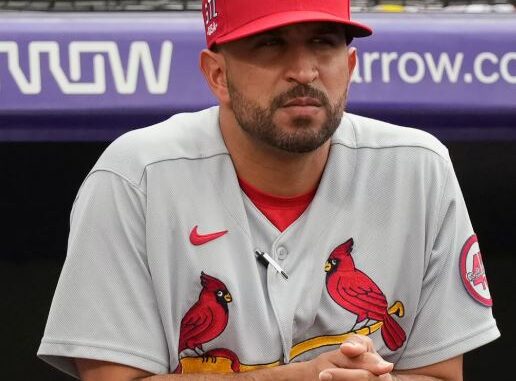
Alec Burleson has spent much of the 2026 season proving that his value to the St. Louis Cardinals extends well beyond what he does with the bat. Now, a newly introduced Statcast defensive metric is finally giving statistical recognition to one of the most important parts of his game: his ability to receive throws at first base.
For years, Cardinals coaches and players have praised Burleson as an excellent defensive first baseman, even when traditional and publicly available defensive statistics failed to support that assessment. That disconnect has now been addressed with the introduction of Receiving Outs Above Average, a Statcast metric designed specifically to measure how effectively first basemen handle throws and turn difficult deliveries into outs.
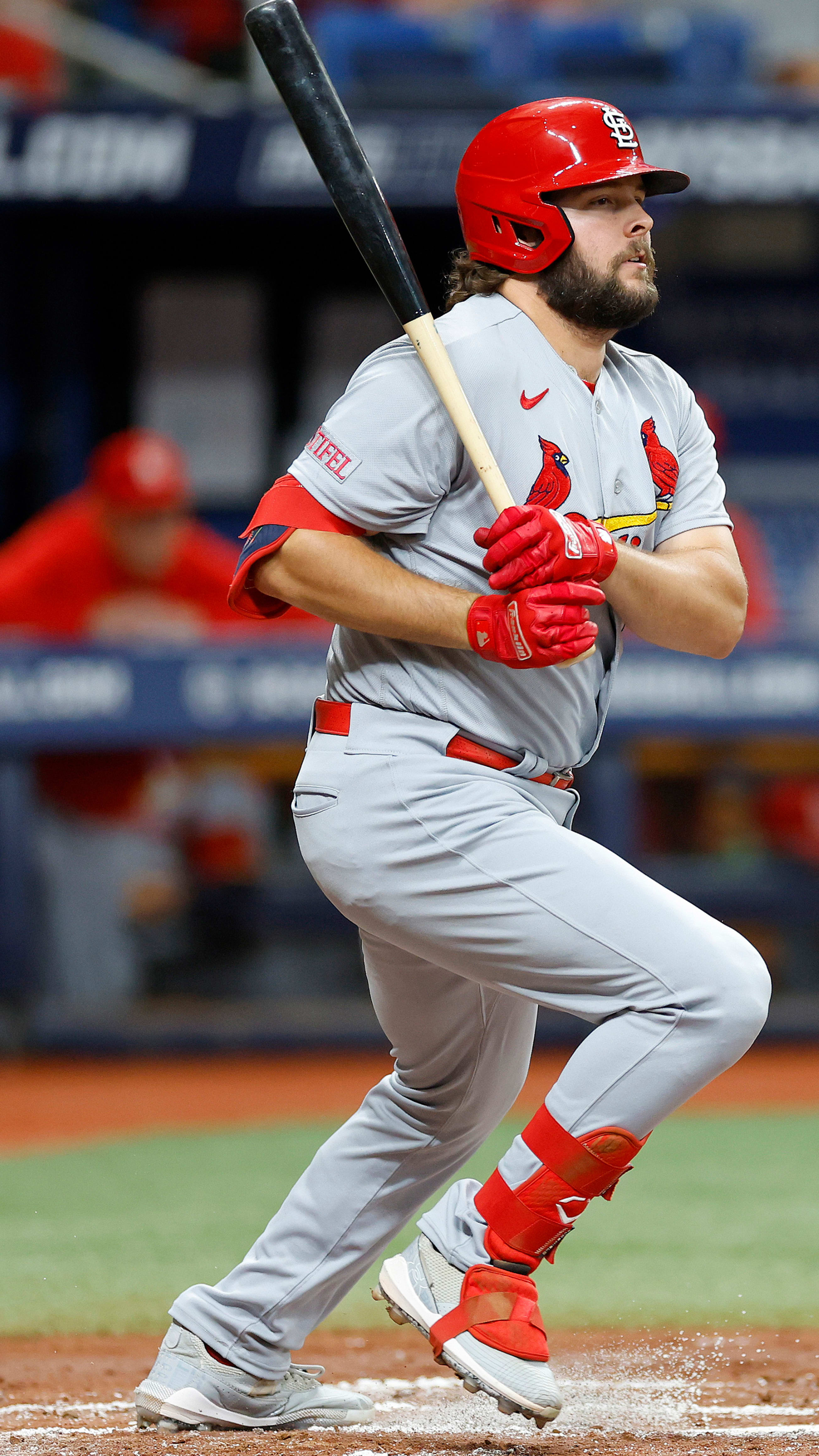
And the results are impressive for Burleson.
Burleson Leads MLB in Receiving Outs Above Average
According to the new Statcast First Base Receiving leaderboard, Burleson currently ranks first among all MLB first basemen with a plus-7 Receiving Outs Above Average mark.
The statistic focuses on an aspect of first-base defense that had previously been difficult to quantify: the ability to scoop, catch and secure throws that are inaccurate, poorly positioned or otherwise challenging.
That has long been considered one of Burleson’s greatest defensive strengths.
Before the new metric was introduced, Burleson’s overall defensive numbers did not necessarily reflect how highly the Cardinals viewed his work at first base. His traditional Outs Above Average figure stood at minus-3, which ranked him 28th among 39 qualifying first basemen.
His non-receiving Fielding Run Value numbers were also unimpressive, placing him near the bottom portion of the league.
The new metric changes the picture considerably.
Once Burleson’s receiving ability is incorporated into his overall Fielding Run Value, he jumps all the way to tied for ninth among qualifying MLB first basemen.
That dramatic improvement helps explain why the Cardinals have consistently maintained that Burleson is much better defensively than some of the older statistics suggested.
First Base Is More Difficult Than It Looks
Burleson himself believes the new statistic addresses a major misconception about playing first base.
The position is sometimes viewed as one of the less demanding defensive spots because first basemen are not typically responsible for covering as much ground as outfielders or middle infielders. But receiving throws from other infielders can be extremely difficult, particularly when throws arrive low, wide, high or with significant velocity.
For Burleson, catching those throws is not a minor part of the job. It is a central responsibility.
He has described receiving throws as making up the overwhelming majority of his work at first base, while other defensive statistics have traditionally focused more heavily on ground balls and plays made directly by the first baseman.
That created a blind spot in the statistical evaluation of his defense.
Now, Burleson can point to an objective measurement showing that his ability to turn difficult throws into outs is among the best in baseball.
Cardinals Have Believed in Burleson’s Defense
The organization has been making this argument long before Statcast introduced the new metric.
Cardinals manager Oliver Marmol has repeatedly praised Burleson’s defensive ability and has said the club saw encouraging underlying indicators even when his early major league results did not always reflect them.
Marmol’s confidence in Burleson has been important throughout the player’s development. The Cardinals selected Burleson in the second round of the 2020 MLB Draft out of East Carolina University, and the organization has spent years finding ways to maximize his offensive potential while developing his defensive versatility.
Burleson spent much of his first four major league seasons playing in the outfield, largely because the Cardinals needed his bat in the lineup and had limited opportunities for him at first base.
He worked to become a serviceable outfielder, but first base was always considered a more natural fit.
That opportunity finally opened after the Cardinals made an offseason trade involving Willson Contreras, allowing Burleson to spend more time at the position where he could make the greatest impact defensively.
A Natural Fit at First Base
The transition has paid dividends.
Burleson’s defense at first base has stood out throughout 2026, even before the numbers finally caught up with what teammates and coaches were seeing on a daily basis.
His soft hands, footwork and ability to adjust to difficult throws have made him a dependable target for Cardinals infielders.
That reliability has also been particularly valuable to younger players.
Blaze Jordan, who has been learning third base at the major league level following his promotion from Triple-A Memphis, has benefited from having Burleson stationed at first. For a developing infielder, knowing that a difficult throw has a strong chance of being converted into an out can make a significant difference.
Instead of worrying about making a perfect throw every time, infielders can focus on making the play and trusting Burleson to finish it.
His Teammates Have Noticed the Difference
Before the arrival of Receiving OAA, Burleson’s defensive excellence was often measured in a much simpler way: the appreciation of his teammates.
Infielders routinely thanked him after he turned difficult throws into outs.
Those seemingly routine plays may not have generated highlights or impressive defensive statistics, but they prevented errors and kept innings moving in the Cardinals’ favor.
Now, those plays have a measurable value.
Burleson joked that the new metric essentially turns all those traditional “thank-yous” from teammates into something that can be displayed on paper. His humor aside, the statistic provides meaningful validation for a player who has long believed that his defensive contributions were being overlooked.
Offense Still Makes Burleson Valuable
The defensive recognition comes on top of Burleson’s established offensive value.
He entered 2026 as the reigning National League Silver Slugger Award winner after a 2025 season in which he split time between the outfield and first base. His ability to produce offensively while becoming a reliable defender has made him increasingly important to the Cardinals.
What makes his development especially interesting is that the Cardinals initially had to find ways to keep his bat in the lineup. Now, Burleson is demonstrating that he can provide legitimate value on both sides of the ball.
The emergence of his defensive numbers could also change how opponents and fans view him. Rather than being considered primarily an offensive player who can fill in at first base, Burleson is increasingly looking like a legitimate two-way contributor at the position.
A New Metric Finally Confirms What the Cardinals Already Knew
The biggest takeaway from Statcast’s new receiving metric is not necessarily that Burleson suddenly became a better defensive player.
Instead, the data is finally measuring something the Cardinals have been watching for years.
Burleson’s ability to scoop difficult throws, maintain his footing around the bag and consistently finish plays has always been a major part of his defensive value. The difference is that those contributions were difficult to capture with previous statistics.
Now there is a number attached to them and Burleson’s number is among the best in baseball.
With a league-leading plus-7 Receiving OAA and an overall Fielding Run Value ranking that rises into the top 10 once receiving is included, Burleson has statistical evidence to support what his teammates and coaches have been saying all along.
The Cardinals may have once measured his defensive value through simple words of appreciation from infielders. In 2026, Statcast has provided something much more concrete.
The thank-yous finally have a number behind them.
Leave a Reply