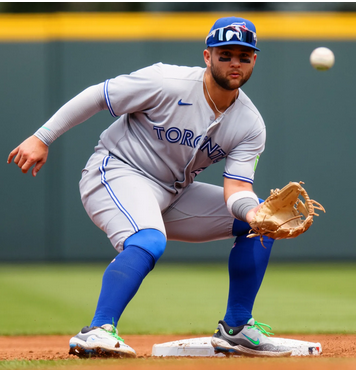
Bo Bichette’s free-agency situation with the New York Mets could end up being one of the most complicated cases in baseball, raising the question of whether a contract loaded with flexibility might actually work against both player and team.
After missing out on Kyle Tucker, the Mets rebounded by signing Bichette, even though shortstop wasn’t a pressing need. Third base, however, remained unsettled, and Bichette was willing to step into that role. His three-year, $126 million agreement looks simple on the surface, but its structure makes it unusually complex for a short-term deal.
The main complication lies in the opt-out clauses after each of the first two seasons. If Bichette chooses to opt out after 2026, he would collect a $5 million bonus in addition to his $42 million salary. This setup creates an unusual balance of risk: if he thrives, he can leave early and chase an even bigger contract on the open market; if he struggles, he can stay and still earn a massive salary. In effect, the Mets assume most of the downside while Bichette keeps the upside.
Another layer of uncertainty involves his defensive position. Aside from about 30 games at second base, he has played almost exclusively at shortstop since being drafted. However, his defensive metrics have often been poor, including a −12 Defensive Runs Saved mark in 2025 and a 16 figure in 2022 both among the worst at the position. Limited range and agility have been recurring concerns, raising the possibility that a permanent move to third base could better suit him.
Even that shift carries questions. Third base demands strong arm strength and quick reactions, and early glimpses haven’t yet provided enough evidence to determine whether he can excel there. If he remains with the Mets for the full contract, uncertainty could still linger about his best defensive home and how other teams might evaluate him if he returns to free agency. Should his defense fail to improve, his offensive production might become the primary factor determining his value.
Ultimately, Bichette’s contract represents both an opportunity and a gamble. The Mets clearly believed enough in his talent to commit significant money, but the opt-outs and positional questions mean his deal could either set a precedent for creative short-term contracts or serve as a cautionary example of a risky experiment.
Leave a Reply