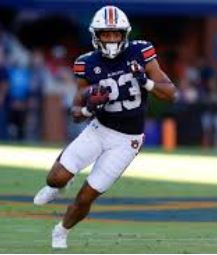
Jeremiah Cobb has been described as “the only source of positivity coming from Auburn’s offense for much of last season,” a statement that says as much about the state of the Tigers’ program as it does about Cobb’s individual performance.
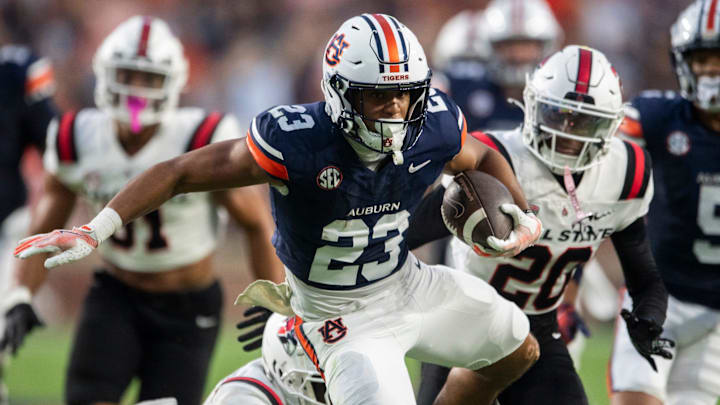
Over the past three years, few coaching tenures in Auburn Tigers football history have been as disappointing as that of Hugh Freeze. What was once viewed as a promising era quickly unraveled into what many now consider one of the most underwhelming stretches the program has endured in recent memory. Talent was abundant on the Plains results were not.
Freeze assembled an impressive group of offensive weapons. Highly touted recruits such as Cam Coleman, Eric Singleton Jr., Perry Thompson, and Horatio Fields arrived with expectations of forming a dynamic receiving corps for quarterback Jackson Arnold. Instead, frustration mounted as the season progressed. One by one, those players exited the program, transferring to the Texas Longhorns football, Florida Gators football, Minnesota Golden Gophers football, and Ole Miss Rebels football, respectively, in search of better opportunities to develop and showcase their talent.
Even five-star quarterback Deuce Knight, who many believed was ready to contribute immediately, saw limited action. It wasn’t until Week 13 against the Mercer Bears with Derrick Nix serving as interim play-caller — that he received meaningful snaps. By then, much of the season’s damage had already been done.
Calling Auburn’s 2025 campaign “mismanaged” hardly captures the full scope of the disappointment. Despite boasting skill-position talent capable of competing at a high SEC level, the Tigers consistently failed to translate potential into production. Cobb, notably, remained one of the few bright spots and chose to stay with the program after Alex Golesh took the reins. His steady output only underscored how ineffective the broader offensive scheme had been.
The financial commitment makes the struggles even more glaring. Auburn reportedly spent over $20 million assembling its roster for 2025. Add nearly $19 million more for coaching and support staff salaries, and the investment becomes staggering especially considering the team’s output. A three-point showing against the Kentucky Wildcats. Just 37 combined points during a critical stretch against the Oklahoma Sooners, Texas A&M Aggies, and Georgia Bulldogs. Only one SEC victory.
For a program with championship aspirations, those results were unacceptable.
Despite repeated assurances from Freeze that the team was “close,” the on-field product suggested otherwise. The gap between rhetoric and reality widened as losses mounted and top talent departed.
In the end, Jeremiah Cobb being labeled the lone offensive bright spot doesn’t merely highlight his resilience it serves as a pointed reminder of how dramatically the program underperformed during Freeze’s tenure.
Leave a Reply