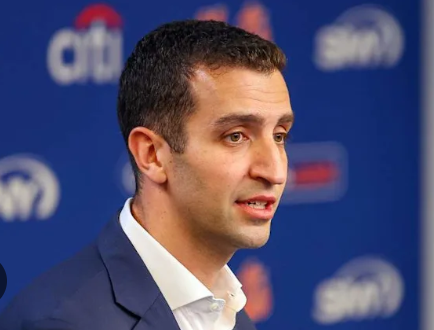
Not every move a front office makes turns into a success story. Even the most respected baseball executives inevitably carry a mix of wins and regrets throughout their tenure. The same is proving true for New York Mets president of baseball operations David Stearns, whose time in charge has already featured both strong roster-building moments and costly miscalculations.
Now over two seasons into his leadership of the Mets’ baseball operations, Stearns has operated under immense pressure in one of the sport’s most demanding markets. Coming off a successful run with the Milwaukee Brewers, he arrived in New York with a reputation for sharp decision-making and long-term roster efficiency. As a lifelong Mets fan, however, his choices are scrutinized even more closely by both the fanbase and his personal circle.
Despite some clear organizational progress, a few key decisions—spanning the past, present, and a potentially risky future—are increasingly shaping how his tenure is being evaluated.
A Costly 2025 Trade Deadline Still Echoes Today
One of the most damaging moments of Stearns’ early Mets tenure came during the 2025 trade deadline, a period that continues to cast a shadow over the franchise’s recent struggles. While the immediate effects have partially faded, the impact of those midseason moves played a major role in the team narrowly missing the postseason by a single game.
At the deadline, the Mets aggressively reinforced their roster, acquiring multiple veterans including relievers Gregory Soto, Tyler Rogers, and Ryan Helsley, along with outfielder Cedric Mullins. Unfortunately, none of those additions delivered the expected impact down the stretch.
The biggest setbacks came from Helsley and Mullins. Helsley, who arrived from the St. Louis Cardinals with strong closing numbers, struggled badly in New York, dealing with mechanical issues and consistency problems. After posting a 3.00 ERA and 21 saves in St. Louis, he failed to record a save with the Mets and instead posted a 7.20 ERA while blowing multiple late-game opportunities.
Mullins also regressed significantly after the trade. Once an offensive spark with Baltimore, his production dipped sharply in Queens as his batting average fell below .200 and his power numbers disappeared, making him far less impactful than the Mets had hoped.
Bo Bichette Signing Becoming a Major Early Concern
Another major storyline defining the present is the Mets’ aggressive pursuit and signing of star infielder Bo Bichette. Originally considered one of the top free agents in baseball, Bichette was expected to bring elite contact hitting and postseason experience to New York.
After missing out on their primary target, Kyle Tucker, the Mets pivoted quickly and signed Bichette to a massive three-year, $126 million contract—one of the largest deals of the offseason. The agreement also included position changes and opt-out flexibility, signaling both confidence and risk from the front office.
However, through the early portion of the 2026 season, the results have been disappointing. Bichette’s offensive numbers have fallen well below his career standards, with a batting line that would represent career lows if sustained. His usual production in high-pressure situations has also dipped significantly, raising concerns about his adjustment to New York.
That said, underlying metrics suggest some positive regression could be coming. His batted-ball data indicates he may be hitting into poor luck, and his expected slugging percentage remains much higher than his current output. Still, the uncertainty remains whether he will rebound—or opt out if he does, potentially limiting the long-term value of the deal.
Future Concern: The Mets’ Ongoing Rotation Strategy
Looking ahead, perhaps the most pressing strategic issue facing Stearns involves the team’s starting rotation. Across multiple offseasons, the Mets have avoided committing heavily to long-term contracts for frontline starting pitchers, preferring shorter deals and internal development.
While this cautious approach reduces financial risk, it has also created instability on the mound. Recent struggles from veterans such as David Peterson and Kodai Senga have exposed the lack of reliable depth, forcing the Mets to rely on inexperienced arms and midseason call-ups during critical stretches.
Injuries and inconsistency have further complicated the situation, with pitchers like Sean Manaea transitioning roles and the organization scrambling for answers early in the season.
Meanwhile, other franchises that invested heavily in top-tier starters—such as the Yankees with Gerrit Cole and Max Fried—have enjoyed more stability at the top of their rotations, even with some injury setbacks.
The debate now centers on whether the Mets must rethink their philosophy. While avoiding risky long-term pitching deals has merit, the lack of a consistent ace-caliber presence has left the rotation vulnerable during key moments of the season.
Final Outlook
As the Mets navigate another competitive season, the evaluation of David Stearns’ leadership continues to evolve. His tenure has already produced both sharp roster moves and clear missteps, and the balance between those outcomes will define how this era is ultimately remembered.
Whether it’s past trade deadline regrets, present-day contract concerns, or future rotation decisions, the pressure in New York remains constant—and every choice carries long-term consequences.
Leave a Reply