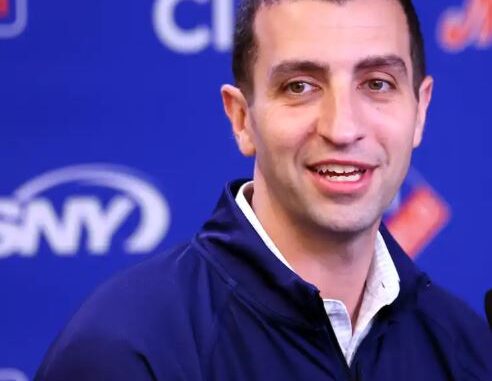
The New York Mets’ 2026 season has been filled with disappointment, frustration and unexpected setbacks, and President of Baseball Operations David Stearns has naturally found himself at the center of much of the criticism.
When a team with significant expectations struggles this badly, the front office is usually one of the first places fans and analysts look for answers. Stearns has faced questions about roster construction, player decisions, contracts and the team’s overall direction.
However, not every problem that has affected the Mets this season can reasonably be placed on the front office.
Some setbacks are simply the unpredictable part of baseball. Injuries, poor individual seasons and circumstances that no executive can control can derail even the most carefully constructed roster.
Here are three major developments that have hurt the Mets in 2026 without necessarily being failures on Stearns’ part.
1. Francisco Lindor and Juan Soto barely had a chance to play together
The Mets entered the season expecting Francisco Lindor and Juan Soto to serve as the foundation of one of baseball’s most dangerous lineups.
Both players entered the year with superstar expectations, and the idea was simple: if Lindor and Soto consistently performed at their usual levels while occupying the top spots in the lineup, New York would have one of the strongest offensive cores in the league.
Instead, the two stars have spent far too little time playing alongside one another.
That lack of continuity has been particularly damaging because the Mets needed their two biggest offensive names to establish rhythm together. When both are healthy and in the lineup, opposing pitchers have very little room for error.
Their limited time together also made it more difficult for the Mets to build the type of offensive consistency they expected entering the season.
There have been plenty of stories surrounding the relationship between the two players, including speculation about tension and differences in personalities. Whether those reports were exaggerated or not, the situation became an unnecessary distraction.
Still, the most important point is that Stearns cannot control whether two players are simultaneously available to play.
The Mets can make decisions about roster depth and lineup construction, but no front-office executive can guarantee that two stars will remain healthy and available at the same time.
In many cases, winning solves clubhouse problems. Had Lindor and Soto been on the field together consistently and producing at their expected levels, much of the noise surrounding the situation might have disappeared.
2. Freddy Peralta’s struggles were difficult to predict
Another major disappointment has been the performance of Freddy Peralta.
Peralta was expected to provide important stability on the pitching staff, but his season has instead turned into a major struggle.
After joining the Tampa Bay Rays, Peralta posted a 7.17 ERA through his first four starts, with only one of those outings meeting the basic definition of a quality start.
That kind of performance is difficult to predict when evaluating an established major-league pitcher.
There may have been questions about whether Peralta would maintain his best form, but few would have expected such a dramatic decline.
It is easy to look back at a disappointing season and identify decisions that could have been made differently. However, that does not necessarily mean the original decision was unreasonable.
Baseball executives make roster decisions using available information, previous performance and projections. Sometimes those evaluations simply fail.
Peralta’s struggles fall into that category.
The Mets’ coaching staff can work with a pitcher to correct mechanical or strategic problems, but they cannot physically force a veteran pitcher to rediscover his best form.
His poor results therefore represent one of those unfortunate situations where the player simply failed to produce at the level everyone expected.
3. Bo Bichette’s disastrous start hurt the Mets badly
Bo Bichette’s slow start was another unexpected problem that complicated the Mets’ season.
The veteran shortstop has looked much more like himself as the year has progressed, but his first two months were extremely difficult.
Bichette finished April with only a .590 OPS before struggling even more in May. He hit .207 during the month, producing only one double and three home runs.
For a player expected to provide consistent offensive production, that kind of start was a major problem.
Things began to change in June when Bichette started making more authoritative contact and hitting the ball with greater consistency. He batted .321 that month while posting a .883 OPS.
The turnaround has made his early-season struggles even more frustrating because it demonstrates that the ability was still there.
Bichette had already shown signs that his performance could decline after an abbreviated and disappointing 2024 season with the Toronto Blue Jays. During that campaign, he hit .225 with four home runs in 81 games.
However, his 2026 season was never expected to reach those same lows.
The question now is whether Bichette’s resurgence can continue into 2027.
If he remains with the Mets, the organization could ultimately look back on the move much more favorably if he continues producing at the level he has shown recently.
The concern, of course, is the financial commitment involved. If Bichette continues to perform well, the Mets could have a valuable middle-of-the-order player. If the struggles return, the cost of keeping him could become more difficult to justify.
Stearns still has plenty to answer for
None of this means Stearns is completely free from criticism.
The Mets’ disappointing season has raised legitimate questions about roster construction, player development, clubhouse management and the organization’s overall strategy.
A front-office executive ultimately has to accept responsibility for the team’s results.
But there is an important distinction between mistakes made by management and unfortunate events that no executive could realistically prevent.
Lindor and Soto failing to spend enough time together, Peralta unexpectedly struggling and Bichette beginning the season in a prolonged slump are examples of the unpredictable nature of baseball.
Every general manager and president of baseball operations experiences situations like these.
The real test for Stearns will be how he responds.
Can he identify which problems are temporary and which require major changes? Can he strengthen the roster around his best players? Can he improve the pitching staff and add enough depth to withstand injuries and poor individual performances?
Those questions will ultimately determine how much responsibility Stearns deserves for the Mets’ 2026 disappointment.
For now, it is fair to criticize the decisions that were within his control while recognizing that not every bad outcome was something he could have prevented.
The Mets’ season has certainly produced more than enough frustration, but baseball is rarely that simple. Sometimes the best-laid plans fail because circumstances outside the front office’s control simply take over.
For Stearns and the Mets, the challenge now is turning those lessons into a better 2027 season.
Leave a Reply