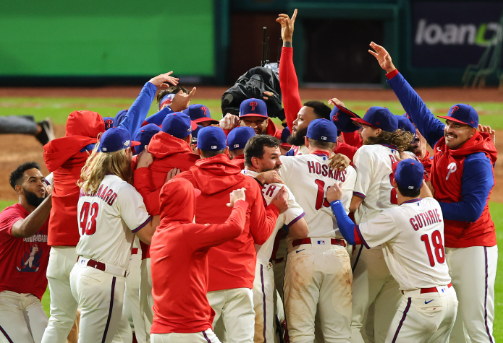
Before you scroll further, here’s a quick challenge: who closed out the Phillies’ 1983 National League pennant clincher? If you know, you already understand how much hidden history sits inside Philadelphia baseball lore.
As the Philadelphia Phillies prepare to host the 2026 Major League Baseball All-Star Game at Citizens Bank Park, this retrospective series from The Good Phight revisits the franchise’s long and sometimes uneven relationship with the Midsummer Classic. The focus this time: the “one-and-done” All-Stars—players who earned All-Star honors just once in their careers while wearing a Phillies uniform.
The 1980s mark a defining era in this story. It was a decade that began with triumph, including the franchise’s first World Series championship in 1980 and another NL pennant run in 1983. Yet, as the decade progressed, the Phillies gradually slipped back into inconsistency and mediocrity. That rise-and-fall arc created a perfect backdrop for a wave of brief All-Star appearances—players who shone brightly, if only for a moment, on baseball’s biggest midseason stage.
This is Part 1 of a two-part breakdown of that era.
Al Holland (1984) — The Bullpen Firebrand and Forgotten Hero of 1983
Al Holland’s journey to the Phillies bullpen was anything but ordinary. A multi-sport standout from Roanoke, Virginia, Holland excelled in both baseball and football at North Carolina A&T State University, where he delivered a legendary 1972 season featuring dominant pitching numbers and multiple no-hitters. Despite being drafted twice, he initially chose education over baseball, delaying his professional career.
Eventually signing with the Pittsburgh Pirates as an undrafted free agent, Holland steadily climbed the minor-league ladder before making his MLB debut in 1977. After brief early stints with Pittsburgh and later the San Francisco Giants, he established himself as a reliable bullpen arm, posting a breakout 1980 season with a 1.75 ERA over 54 appearances.
By 1983, Holland had become a key bullpen piece for Philadelphia following a trade from San Francisco. That season, he delivered one of the most productive relief campaigns in Phillies history, recording a 2.26 ERA, 25 saves, and 100 strikeouts across 91.2 innings. His role in the postseason was critical, including a scoreless run through the playoffs and his involvement in the moment that sealed the 1983 NL pennant.
Nicknamed “Mr. T” for his signature gold chains, Holland reached his career peak in 1984 when he was selected as an All-Star. Ironically, the game was held at Candlestick Park—his former home in San Francisco. Despite his strong first-half performance, he did not pitch in the game, a decision that left him openly frustrated.
Holland’s performance declined sharply in the second half of 1984, and he eventually became part of a roster shake-up that led to his departure from Philadelphia in 1985. His career after the Phillies involved multiple trades, league controversies, and injury setbacks that ultimately ended his playing days.
Glenn Wilson (1985) — From Trade Chip to Defensive Standout
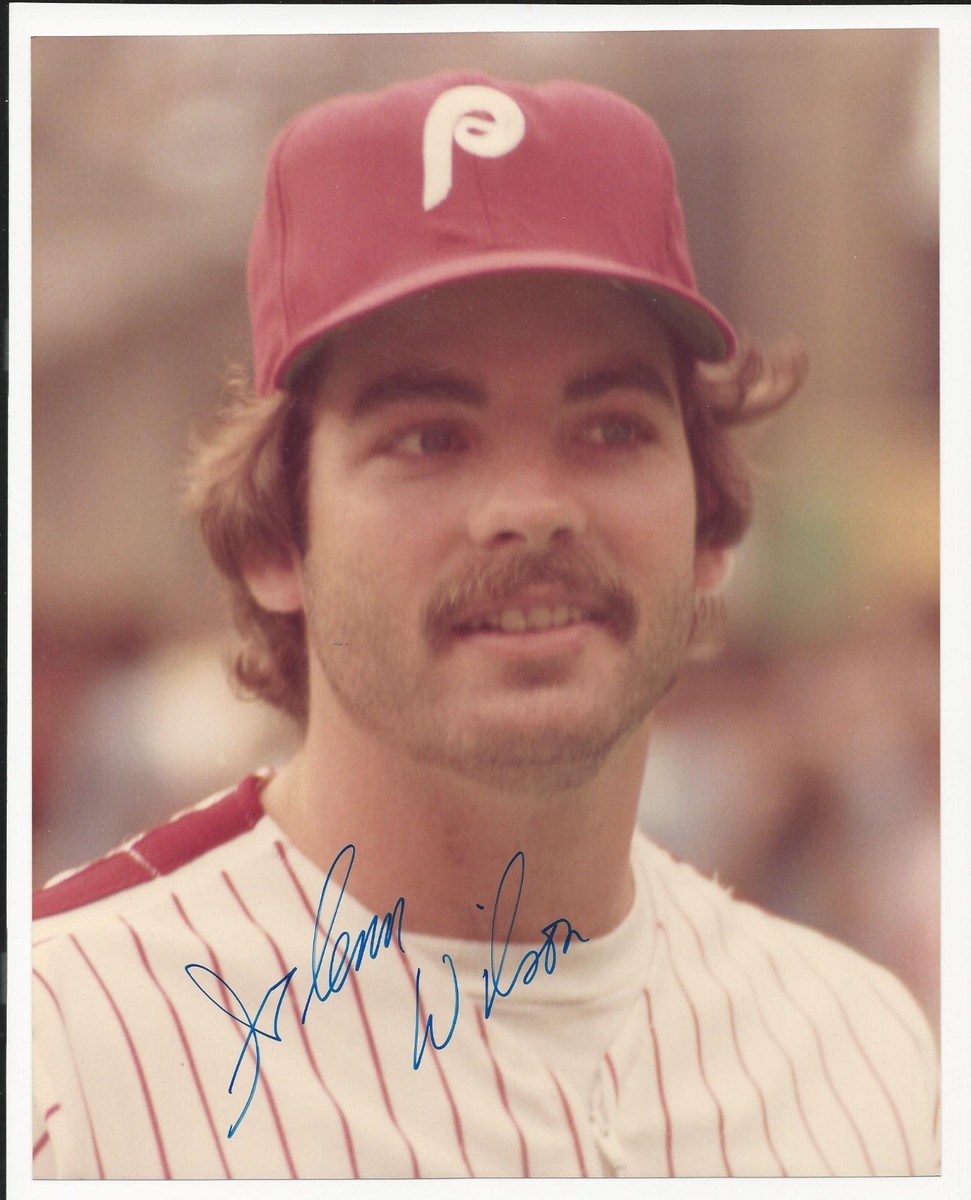
Glenn Wilson entered professional baseball with high expectations after being selected 18th overall by the Detroit Tigers in 1980. A strong collegiate hitter at Sam Houston State, Wilson quickly advanced through the minors and debuted in 1982, immediately showing promise with a solid rookie season that included double-digit home runs and a near .300 average.
By 1984, Wilson found himself traded to the Phillies in a major roster overhaul. His first season in Philadelphia was underwhelming offensively, as he struggled to produce consistent power and average. However, his defensive value in the outfield kept him firmly in the lineup.
Everything changed in 1985, when Wilson rebounded with one of his strongest seasons. He was hitting for a respectable average, driving in runs at a high rate, and showcasing elite defensive range. His efforts earned him an All-Star selection as an injury replacement, marking the peak of his career.
Wilson’s All-Star appearance came with a dramatic twist. In the game, he pinch-hit in a high-pressure situation with the bases loaded facing Willie Hernandez, the very pitcher involved in his earlier trade history. The symbolic matchup underscored the unpredictable nature of baseball careers and roster moves.
While Wilson remained a valuable contributor through the mid-to-late 1980s, his production gradually declined. He later transitioned through several teams, including Seattle, Pittsburgh, and Houston, before ultimately fading out of the major-league picture in the early 1990s.
Shane Rawley (1986) — The Left-Handed Workhorse Who Briefly Anchored the Rotation
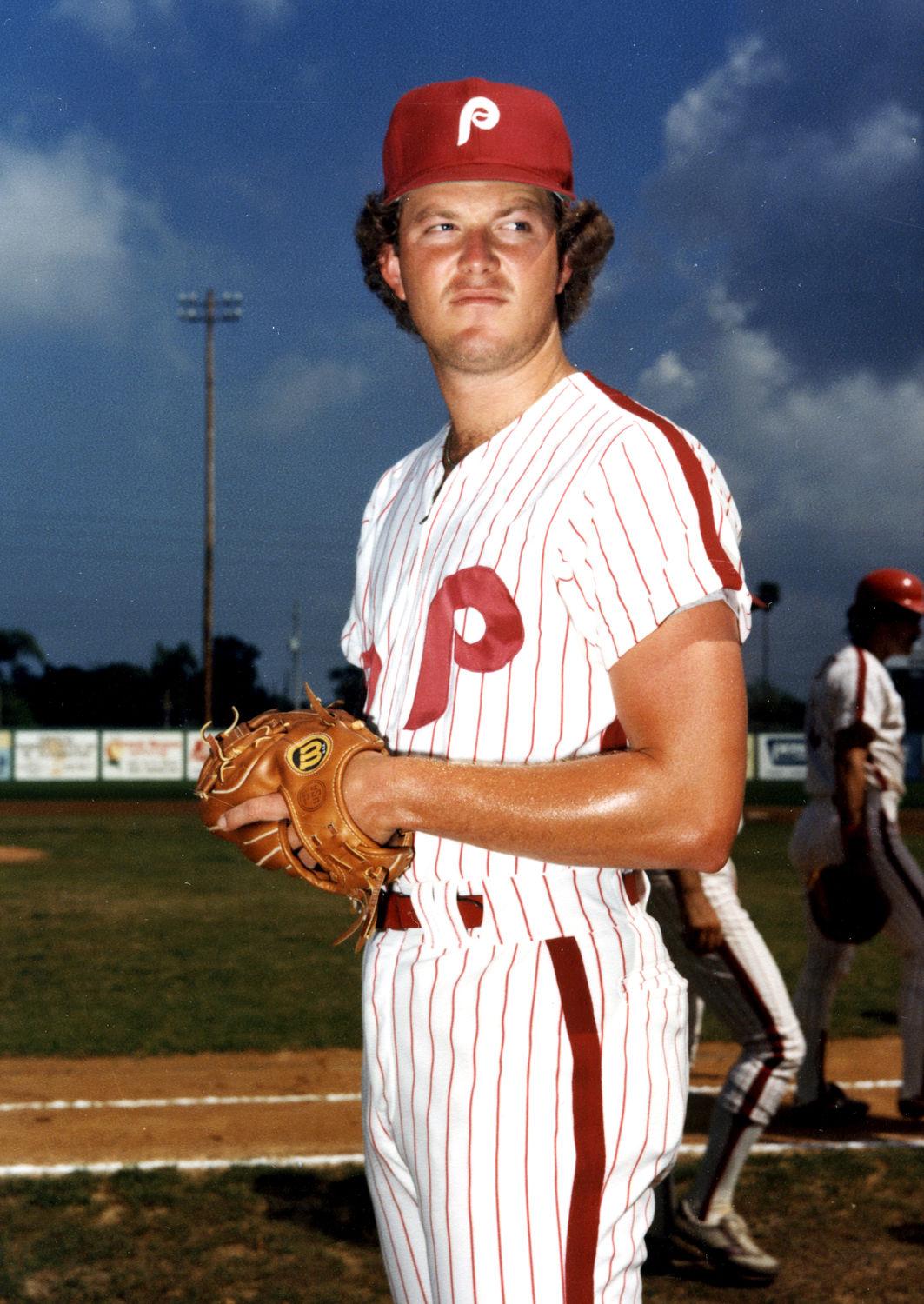
Shane Rawley’s path to the majors was shaped by persistence and movement across multiple organizations. After showing early promise in college ball, he was drafted and traded multiple times before finally breaking through with the Seattle Mariners in 1978.
Rawley initially worked as a reliever but gradually transitioned into a starting role. By the early 1980s, he had developed into a durable and reliable arm, highlighted by a strong 1983 season with the New York Yankees that included over 230 innings pitched and multiple complete games.
His arrival in Philadelphia came in 1984 via trade, and he immediately stabilized the rotation. Rawley posted solid numbers across multiple seasons, including a standout 1985 campaign that solidified his reputation as a dependable mid-rotation starter.
In 1986, Rawley reached his peak performance with the Phillies. At the All-Star break, he held an impressive record with strong ERA numbers and had established himself as one of the National League’s more consistent left-handers. His efforts earned him an All-Star selection, representing the pinnacle of his career.
However, injuries and fatigue quickly derailed his momentum after the break. A back issue ultimately ended his season prematurely and contributed to a decline in effectiveness over the following years.
Rawley’s career concluded in the early 1990s after brief stints with multiple teams, marking the end of a long journey defined by durability, transitions, and flashes of high-level performance.
Closing Context
These players represent a unique slice of Phillies history—talented athletes whose peak seasons aligned perfectly with All-Star recognition but whose careers with the team were often brief or uneven. As Philadelphia prepares to welcome the baseball world in 2026, revisiting these stories highlights just how deep and complex the franchise’s history with the All-Star Game truly is.
Part 2 will continue exploring additional one-time All-Stars from the latter part of the decade.
Leave a Reply