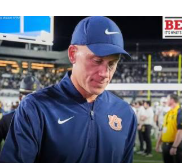
NewAuburn’s defensive stability under coordinator DJ Durkin has become one of the program’s more quietly important storylines, but it may also be setting the stage for future change as his coaching profile continues to rise within college football circles.
Durkin has taken on a highly influential role within Auburn’s coaching structure, operating under head coaches Hugh Freeze and now Alex Golesh in a system where defensive coordinators often carry expanded responsibility. In practice, his position extends beyond typical coordinator duties, as he plays a major part in shaping defensive strategy, player development, and recruiting direction. His presence has helped Auburn maintain continuity on defense during a period of broader program adjustment.
A key part of Durkin’s value has been his ability to recruit effectively across multiple regions, particularly in talent-rich areas on the East Coast such as Maryland, Virginia, and the Washington D.C. corridor. His established connections in those areas have helped Auburn remain competitive for prospects outside its traditional recruiting base. Recent commitments from players in that region highlight his continued influence and ability to expand Auburn’s recruiting reach nationally.
Because of this combination of on-field leadership and recruiting success, Durkin’s name continues to surface in broader coaching discussions. Even with past controversies in his career, his defensive track record has kept him relevant as a potential candidate for future head coaching opportunities or elevated roles elsewhere.
Across college football, coaching turnover often creates openings for coordinators with strong defensive identities and proven recruiting ability. Programs looking to rebuild or stabilize could view Durkin as a fit depending on timing, opportunity, and institutional direction. Whether at smaller programs seeking leadership or larger programs needing defensive expertise, his profile aligns with the type of coordinator who eventually re-enters the head coaching market.
If Auburn were ever to lose him, it would represent a meaningful shift for a defense that has developed continuity under his guidance in recent seasons. The Tigers have benefited from consistency on that side of the ball, and any change would require a careful transition to maintain performance and recruiting momentum.
While Durkin remains in place, attention within coaching circles often turns to potential successors, and one name that has surfaced in broader discussions is Todd Orlando.
Orlando, currently working as a defensive coordinator at South Alabama, brings extensive experience from multiple high-level programs across the country. Over the course of his career, he has served in defensive leadership roles at schools such as Houston, Texas, and USC, giving him exposure to both Power Five competition and major recruiting environments.
His current role also places him within the state of Alabama, where he continues to build familiarity with regional talent and coaching networks. That geographic presence can be an advantage in college football, where recruiting relationships and regional knowledge often play a significant role in staffing decisions.
Orlando’s background includes working under different systems and adapting to varying team structures, which adds to his appeal as a potential coordinator option for programs seeking experience and flexibility. His coaching résumé reflects a long history in defensive development and game planning at multiple levels of competition.
From a broader perspective, Auburn’s situation reflects a common reality in college football: successful coordinators often attract attention from other programs, while schools must continuously evaluate potential replacements even when no immediate change is planned. Staff continuity is valuable, but it is rarely permanent.
As long as Durkin remains at Auburn, the defense benefits from his experience and leadership. However, the combination of his growing reputation and the ever-changing coaching landscape means that discussions about future possibilities will likely continue in the background.
For now, Auburn remains steady on defense, but like many programs across the country, it operates within a coaching ecosystem where change is always a possibility rather than an exception.
Leave a Reply