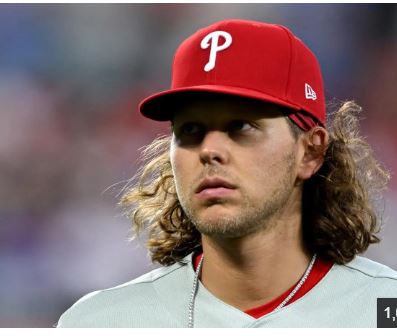
Despite experiencing an inconsistent offensive season, the 30-year-old infielder demonstrated his value during several important stretches, particularly when the Phillies were fighting to keep their postseason hopes alive. His ability to deliver with runners in scoring position, handle multiple infield positions, and provide much-needed production against left-handed pitching makes him a player Philadelphia should seriously consider retaining. With uncertainty surrounding several other roster pieces, offering Bohm a contract extension could represent one of the organization’s most practical offseason decisions.

Phillies’ Disappointing 2026 Campaign Raises Questions About Alec Bohm’s Future
Philadelphia entered the 2026 season hoping to build on the success of its veteran core and finally capture the World Series championship that has remained out of reach. However, injuries, inconsistent performances, and difficult stretches throughout the schedule complicated those ambitions. Rather than establishing itself as one of the National League’s most dominant teams, the club found itself battling simply to secure a postseason berth.
The Phillies eventually managed to edge out the Arizona Diamondbacks in the National League Wild Card race, earning another opportunity to compete in October. Their reward was a difficult postseason matchup against the Atlanta Braves, a familiar NL East rival capable of exposing even the smallest weaknesses.
Although Philadelphia produced a memorable victory in Game 2 of the Wild Card Series, the overall postseason ended in disappointment. The team’s inability to advance reinforced concerns about whether continuing with essentially the same roster would produce a different outcome in 2027.
That uncertainty has placed several established players under increased scrutiny, including Bohm, whose future has already generated considerable discussion among supporters and analysts. Philadelphia must now decide whether to continue investing in a player it developed internally or explore alternative options at the corner-infield positions.
The decision is particularly significant because the Phillies have not always demonstrated a willingness to retain their homegrown contributors over the long term. Aaron Nola remains one of the organization’s most prominent examples of loyalty to a player developed within its system, but Bohm could present another opportunity to demonstrate that productive homegrown talent still has an important place in Philadelphia’s future.
Alec Bohm’s Offensive Production Shows Why Phillies Should Consider an Extension
One of the strongest arguments for keeping Bohm is his ability to remain productive even when his overall offensive numbers fall short of expectations. Throughout his major league career, Bohm has developed a reputation as a contact-oriented hitter capable of contributing meaningful run production without necessarily relying on overwhelming home run totals.
His career batting average of .273, combined with a .735 OPS and the 4.9 WAR figure cited in the original analysis, illustrates the type of player Philadelphia would be retaining. Although those numbers do not place him among baseball’s most dominant offensive superstars, they reflect a contributor who can provide stability in a lineup filled with players whose performances sometimes fluctuate dramatically.
During the 2026 season, Bohm struggled to establish consistency early in the year. His offensive difficulties contributed to questions about his future, and some observers viewed his campaign as another reason for Philadelphia to consider moving in a different direction.
However, his production improved as the season progressed, particularly after the middle of May. Once Bohm began finding his rhythm, he provided several important contributions during a period when the Phillies desperately needed dependable offense.
Even with his struggles, Bohm finished the season with 15 home runs and 88 RBIs. Those numbers are especially noteworthy because they demonstrate that his ability to drive in runs did not disappear during an otherwise disappointing offensive campaign.
For Philadelphia, replacing that level of run production would not necessarily be straightforward. While the front office could pursue a more powerful hitter, finding a player who combines positional versatility, familiarity with the organization, and reliable situational hitting could require a substantial financial commitment.
Bohm’s value therefore extends beyond his final batting average. His ability to contribute during difficult offensive stretches could make him a useful piece of Philadelphia’s next competitive roster.
Bohm’s Remarkable Numbers With Runners in Scoring Position Strengthen His Case
Perhaps the most convincing statistical argument in favor of extending Bohm involves his performance when runners are in scoring position.
During the 2026 campaign, Bohm produced an impressive .347 batting average, .418 on-base percentage, and .542 slugging percentage in those situations. Those numbers demonstrate his effectiveness when Philadelphia had opportunities to turn baserunners into runs.
For a team that has frequently struggled with offensive consistency during important games, retaining a hitter capable of producing in high-leverage situations could prove valuable.
Although RBIs are sometimes criticized because they depend heavily on opportunities created by teammates, Bohm’s success with runners in scoring position suggests that his contributions were not simply the product of batting behind talented offensive players.
His approach at the plate, ability to make contact, and willingness to use different parts of the field have helped him capitalize on scoring opportunities throughout his career.
This becomes particularly important when considering Philadelphia’s postseason ambitions. The Phillies have enough established offensive talent to produce impressive regular-season numbers, but postseason success often depends on converting limited scoring chances against elite pitching.
A hitter who can consistently put the ball in play and avoid wasting opportunities could provide a useful complement to the lineup’s more power-oriented contributors.
Bohm’s performance during the Phillies’ late-season push further strengthened that argument. When the club needed victories to remain in the postseason race, he emerged as one of the players capable of delivering timely offense.
His contributions were especially memorable during the Wild Card Series against Atlanta, when he hit a crucial home run in the tenth inning of Game 2. The blast helped Philadelphia secure a dramatic 4-3 victory and temporarily kept its postseason hopes alive.
Although the Phillies ultimately failed to advance, Bohm’s performance offered another reminder of his ability to make an impact when the stakes are high.
Phillies Could Lose One of Their Most Reliable Hitters Against Left-Handed Pitching
Another important reason Philadelphia should consider retaining Bohm is his effectiveness against left-handed pitchers.
The Phillies’ lineup has featured several prominent left-handed hitters, including Bryce Harper and Kyle Schwarber, making offensive balance an important consideration for the front office.
Bohm has historically provided that balance with his right-handed bat.
Across his career, he has produced a .302 batting average, .351 on-base percentage, and .503 slugging percentage against left-handed pitching. Those numbers make him a valuable option when opposing teams attempt to exploit Philadelphia’s left-handed offensive core.
Removing Bohm from the lineup without securing a comparable replacement could create additional matchup problems, particularly against opponents with strong left-handed starting pitchers or specialized bullpen options.
This concern becomes even more significant during postseason competition, when opposing managers carefully construct pitching strategies around individual hitters and lineup weaknesses.
Philadelphia could certainly pursue another right-handed bat through free agency or the trade market, but that approach would introduce additional uncertainty. A new acquisition might require a larger contract, valuable prospects, or a lengthy adjustment period.
By contrast, Bohm already understands the team’s offensive environment and has demonstrated his ability to produce against major league pitching.
His familiarity with Philadelphia’s roster, coaching structure, and competitive expectations could make him a relatively low-risk option compared with an external replacement.
Strong Late-Season Finish Suggests Bohm Still Has More to Offer
Despite finishing the 2026 regular season with a relatively modest .249 batting average, .315 on-base percentage, and .383 slugging percentage, Bohm showed encouraging signs during the final two months.
Over that stretch, he recorded a .305 batting average, .383 on-base percentage, and .424 slugging percentage, providing evidence that his offensive struggles earlier in the year did not necessarily reflect a permanent decline.
For Philadelphia’s decision-makers, that improvement could be particularly meaningful.
Baseball players frequently experience extended periods of inconsistency, and evaluating a player exclusively through his season-ending statistics can sometimes obscure important developments.
Bohm’s late-season performance suggests he was capable of making adjustments and rediscovering the approach that previously made him a productive contributor.
At 30 years old, he is not necessarily a long-term developmental project, but he could still provide several useful seasons if his offensive performance remains consistent.
The Phillies must determine whether his late-season improvement represents a sustainable trend or simply a temporary hot streak. However, the combination of his career production, strong numbers against left-handed pitching, and success with runners in scoring position provides legitimate reasons to consider keeping him.
A short-term extension could allow Philadelphia to benefit from that potential without making a lengthy financial commitment.
Aidan Miller’s Injury Adds Another Complication to Phillies’ Infield Plans
Philadelphia’s decision regarding Bohm also involves the organization’s younger players, particularly highly regarded prospect Aidan Miller.
Miller has been viewed as an important part of the Phillies’ future infield plans, but uncertainty surrounding his recovery from a back injury creates questions about how quickly he can become a dependable major league contributor.
Although the organization remains optimistic about its young talent, relying entirely on an inexperienced prospect to replace an established player could introduce unnecessary risk.
Miller’s development may eventually create a pathway for Philadelphia to transition away from Bohm, but the timing of that change remains uncertain.
Keeping Bohm for another season or two could provide the Phillies with valuable flexibility while allowing Miller to recover, continue developing, and establish himself without excessive pressure.
The organization would also have additional options when managing injuries or adjusting its defensive alignment.
Bohm’s experience at both first and third base could make him particularly useful in a roster that may undergo several positional changes during the offseason.
Rather than forcing an immediate decision between veteran experience and future potential, Philadelphia could use a short-term contract to maintain both options.
That approach would allow the front office to evaluate Miller’s progress while keeping an established major league contributor available.
Luis Arraez’s Uncertain Future Makes Bohm Extension More Important
The situation involving Luis Arraez adds another layer of complexity to Philadelphia’s offseason planning.
Arraez joined the Phillies during the 2026 season and played a role in the team’s defensive adjustments, including the decision to move Harper back into right field.
However, with Arraez potentially departing through free agency, Philadelphia could face another significant vacancy in its infield.
If Arraez leaves and Bohm is also allowed to depart, the Phillies may find themselves needing multiple replacements rather than addressing one isolated weakness.
Such a scenario could force the organization to spend additional money or surrender valuable assets in trades simply to restore the depth it previously possessed.
The possibility of labor uncertainty surrounding the next collective bargaining agreement could also complicate offseason planning and the timing of transactions.
Against that backdrop, retaining Bohm could provide some much-needed stability.
His ability to handle different corner-infield responsibilities would give Philadelphia more freedom when evaluating Harper’s defensive position, pursuing free agents, or considering possible trades.
For a team that has already experienced significant roster disruption, preserving a dependable internal option could prove more valuable than making another aggressive change.
A Two-Year Extension Could Be the Smartest Move for Philadelphia
While committing to Bohm through a lengthy, expensive contract might raise legitimate concerns, a shorter agreement could represent a reasonable compromise.
A two-year extension would allow Philadelphia to retain a productive veteran without sacrificing significant long-term flexibility.
Such a deal could give the Phillies time to evaluate Miller’s development, address uncertainty surrounding Arraez, and determine how their infield should be constructed for the next several seasons.
It could also benefit Bohm by providing stability and allowing him to remain with the organization that developed him.
The financial terms would naturally be important. Philadelphia must consider Bohm’s age, offensive consistency, defensive value, and projected market demand before determining what kind of offer would make sense.
However, the cost of replacing him should also factor into the equation.
An established right-handed hitter with experience at multiple positions and a history of delivering with runners in scoring position could attract interest from other organizations.
Allowing such a player to leave without a clear replacement plan might create another unnecessary roster problem.
A reasonable short-term agreement could therefore represent a more balanced strategy than immediately moving on from Bohm.
Phillies Must Decide Whether Loyalty or Another Roster Overhaul Offers the Better Future
Philadelphia’s situation highlights a broader question about how the franchise intends to approach the next stage of its championship pursuit.
The organization has invested heavily in established stars, but some of its most important contributors have also come through its own developmental system.
Nola remains a prominent example of a homegrown player who received a significant long-term commitment from the Phillies. Bohm now presents another opportunity for the franchise to demonstrate confidence in a player who has spent years developing within the organization.
That does not mean Philadelphia should offer contracts based solely on loyalty.
The front office must prioritize performance, financial responsibility, and the team’s long-term competitive outlook.
Nevertheless, Bohm’s contributions suggest that he deserves serious consideration rather than an automatic departure simply because the Phillies are searching for changes.
His late-season improvement, ability to hit left-handed pitching, positional flexibility, and strong production with runners in scoring position all strengthen the argument that he can still help Philadelphia compete.
For a franchise attempting to return to the World Series, maintaining proven contributors while selectively addressing weaknesses may offer a better path forward than completely dismantling a familiar roster.
Ultimately, the Phillies face an important decision: allow Bohm to pursue another opportunity or offer him a contract that keeps him in Philadelphia while the organization develops its next generation of talent.
No extension agreement has been announced, and the case for retaining him remains an argument rather than confirmation of the team’s intentions. Still, a carefully structured two-year deal could provide stability, preserve valuable offensive depth, and give Philadelphia additional flexibility heading into 2027.
With the Phillies facing uncertainty across several positions and their championship window under increasing pressure, keeping Alec Bohm could prove to be one of the most practical moves of the offseason.
Leave a Reply