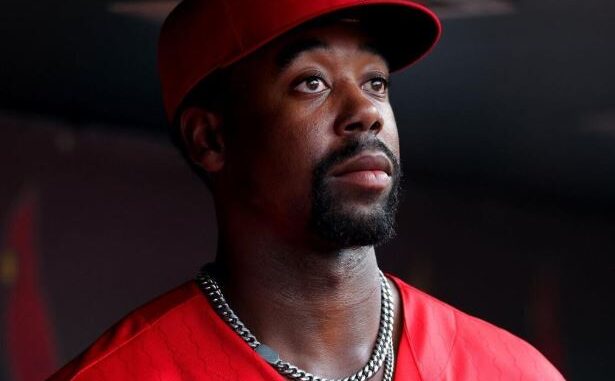
Jordan Walker’s difficult journey from one of baseball’s most promising young talents to a player fighting to rediscover his potential has become an important lesson for the St. Louis Cardinals. His experience is now influencing how the organization prepares its next generation of prospects for the major leagues, with president of baseball operations Chaim Bloom taking a more cautious approach to player promotions.
When Walker made his major-league debut in 2023, expectations were enormous. He entered professional baseball as a consensus top-five prospect, and his impressive minor-league performances convinced the Cardinals that they had a future cornerstone of their lineup. His combination of extraordinary power, elite exit velocities, and imposing six-foot-six-inch frame made him one of the most exciting young hitters in the organization. At just 20 years old, he represented the possibility of a new era of offensive production in St. Louis. However, his subsequent struggles exposed serious weaknesses in the Cardinals’ player development system, and the lessons from that experience are now shaping decisions about several highly regarded prospects.
Walker’s Early Promise Turned Into a Difficult Learning Experience
Walker’s arrival in the majors generated considerable excitement because of his unusual combination of youth, physical strength, and offensive potential. At the time, he was the youngest player to debut for St. Louis since Rick Ankiel in 1999. His ability to generate tremendous power and hit the ball with exceptional force suggested that he could quickly establish himself as one of the Cardinals’ most important offensive players.
His rookie campaign initially appeared to justify those expectations. Walker enjoyed an outstanding June in 2023, hitting .338 with a .427 on-base percentage and a .549 slugging percentage. He recorded a .976 OPS and four home runs across 21 games, demonstrating the offensive potential that had made him such a highly regarded prospect. Although he could not maintain that pace throughout the season, he finished his rookie year with a respectable .787 OPS, an encouraging achievement for a player who was only 20 years old.
Unfortunately, Walker’s early success did not translate into sustained production over the following seasons. His OPS dropped to .619 in 2024 before falling further to .584 in 2025. The decline was particularly concerning because it extended beyond an ordinary adjustment period for a young hitter entering the major leagues. Instead of steadily improving as he gained experience, Walker struggled to establish consistent offensive habits, leaving the Cardinals searching for answers.
Analysts frequently pointed to two major weaknesses in his approach at the plate: chasing pitches outside the strike zone and hitting too many balls into the ground. Those problems limited his ability to take advantage of his natural power. A hitter with Walker’s physical tools should be capable of producing substantial extra-base damage, but power becomes far less effective when a player struggles to identify hittable pitches or consistently make the right type of contact.
His experience also raised questions about whether he had been promoted before his development was sufficiently advanced. The concern was that Walker had entered the major leagues without completing several important stages of his preparation in the minors. That decision may have exposed him to challenges that could have been addressed more effectively in a developmental environment.
The Cardinals’ Player Development System Came Under Scrutiny
Walker’s struggles became part of a wider discussion about the Cardinals’ organizational approach to developing young talent. Following the 2024 season, reporting by Katie Woo, then a Cardinals beat reporter for The Athletic, highlighted concerns from people within the organization about the quality and direction of its player development operations.
The criticism centered on the perception that St. Louis had fallen behind competing organizations in several important areas. Questions were raised about the club’s investment in coaching personnel, minor-league instruction, and modern technology designed to help hitters and pitchers refine their skills. Some individuals reportedly believed that the organization had placed too much emphasis on spending at the major-league level while failing to invest sufficiently in the infrastructure needed to prepare prospects for success.
That distinction is important because developing a successful major-league player involves much more than identifying natural ability. Prospects need individualized coaching, consistent feedback, effective swing and pitch-recognition programs, and enough time to turn their physical tools into repeatable on-field performance. Without those resources, even exceptionally talented players can struggle when they encounter the higher velocity, better command, and more sophisticated pitching strategies of the majors.
Walker’s case became a particularly visible example of the consequences of getting that process wrong. His promotion and positional adjustments shortly before reaching the major leagues may have complicated his transition, while the demands of competing at the highest level left him little room to work through his weaknesses away from the spotlight.
Once he was established in the majors, simply sending him back to the minors or making isolated mechanical adjustments could not instantly replace the developmental time he might have benefited from earlier in his career. His struggles demonstrated how difficult it can be to correct foundational problems after a young player has already been exposed to major-league competition.
The broader lesson for St. Louis is that prospect rankings and impressive minor-league statistics should not automatically determine when a player is ready for promotion. The organization must also evaluate whether the player has developed the necessary skills, decision-making ability, and consistency to handle the next level.
Chaim Bloom Is Taking a More Patient Approach
Since taking over as the Cardinals’ president of baseball operations, Chaim Bloom has adopted a more measured approach to promoting young players. Walker’s experience provides an important example of why that strategy could matter as St. Louis attempts to build a sustainable pipeline of major-league talent.
Rather than rushing prospects into the spotlight because they appear capable of contributing immediately, Bloom has emphasized allowing them to complete important stages of their minor-league development. The objective is not simply to delay promotions. It is to ensure that players arrive in St. Louis with a stronger foundation and a better chance of maintaining their performance against major-league opposition.
JJ Wetherholt offers one example of this philosophy. Despite showing signs that he could contribute at the major-league level, he did not make his debut late in 2025. The decision allowed him to accumulate additional experience at Triple-A while preserving his rookie eligibility for the 2026 season. By the time he was ready to take the next step, he had logged more than 200 plate appearances at Triple-A, providing the organization with a larger body of evidence about his readiness.
The approach reflects a willingness to consider the long-term benefits of patience rather than focusing exclusively on the immediate advantages of adding a promising young player to the major-league roster. Even when a prospect appears close to being ready, additional time in the minors can help address weaknesses before they become persistent problems at the highest level.
Joshua Báez has also benefited from this strategy. Despite producing impressive results at Memphis, Bloom elected to keep him in the minor leagues for an extended period. Báez appeared in 103 games at Memphis, giving him additional opportunities to improve his swing decisions and become more selective at the plate.
That decision highlights an important distinction between producing good statistics and developing the skills necessary for long-term success. A prospect might dominate minor-league pitching because of superior physical ability, but major-league pitchers are often better equipped to exploit weaknesses in pitch recognition and strike-zone discipline. By requiring Báez to continue working on those areas, the Cardinals are attempting to prepare him for the more demanding environment he will eventually encounter.
More Cardinals Prospects Are Being Given Additional Development Time
Bloom’s cautious philosophy extends beyond Wetherholt and Báez. Other prospects, including Leonardo Bernal, Quinn Mathews, and Cooper Hjerpe, have also been part of an approach that prioritizes further development before major-league promotion.
For St. Louis, the underlying objective is to create a more reliable transition between the minor leagues and the major-league roster. Prospects must demonstrate more than flashes of potential. They need to show that they can make adjustments, recognize weaknesses in their own performance, and consistently execute the skills required at the next level.
This philosophy could prove especially valuable for pitchers, whose development often requires careful management of workload, command, pitch quality, and secondary offerings. A young pitcher might possess a powerful fastball or an impressive breaking ball but still need additional time to improve control, develop complementary pitches, or learn how to navigate opposing lineups multiple times.
Hitters face a similarly demanding process. They must learn to recognize different pitch shapes, manage the strike zone, respond to adjustments from opposing pitchers, and maintain productive mechanics against increasingly sophisticated competition. Rushing those improvements can leave prospects vulnerable to prolonged slumps once major-league opponents identify their weaknesses.
By keeping players in the minors until they have made sufficient progress, the Cardinals hope to reduce the likelihood of repeating the problems that affected Walker. The strategy also gives minor-league coaches more time to work closely with prospects without the immediate pressure of major-league results.
However, patience alone cannot guarantee success. The quality of instruction, the availability of development resources, and the organization’s ability to identify individual weaknesses will ultimately determine whether the approach produces better outcomes. The Cardinals must ensure that additional minor-league time is being used productively rather than simply postponing difficult roster decisions.
Liam Doyle and Jesús Báez Could Be the Next Test
The Cardinals’ approach could become particularly important as the organization evaluates prospects such as Liam Doyle and Jesús Báez ahead of the 2027 season. Both players could eventually help the major-league team, but the organization appears conscious of the importance of giving them enough time to develop before making their debuts.
Their situations illustrate the challenge facing Bloom and his staff. When a prospect shows enough ability to potentially strengthen the major-league roster, there is an understandable temptation to promote him quickly. A team looking for immediate improvement may view a promising young player as an opportunity to address an existing weakness without acquiring an established veteran.
Yet the short-term benefit of a promotion must be weighed against the possibility that the player is not fully prepared. If a prospect reaches the majors before developing the necessary skills, the organization risks exposing him to a difficult adjustment period that could affect both his performance and confidence.
Giving Doyle, Báez, and other emerging talents additional time in the minors could help the Cardinals avoid that outcome. Their progress throughout 2027 will be important in determining when they are ready to contribute, rather than allowing expectations or roster needs alone to dictate the timetable.
For a franchise seeking to strengthen its long-term competitiveness, that distinction is crucial. A successful development system should not be judged simply by how quickly it produces major-league debuts. It should be evaluated by how effectively it prepares players to remain productive after reaching the highest level.
Walker’s Resurgence Could Reinforce the Lesson
Walker’s difficult seasons do not necessarily mean that his major-league career will be defined by his early struggles. His progress during the 2026 spring training period and subsequent resurgence have offered encouragement that his considerable talent can still translate into more consistent production.
His journey also gives the Cardinals a valuable example of the difference between raw potential and fully developed ability. Walker possessed the physical tools to succeed from the beginning, but converting those tools into reliable offensive production proved more difficult than the organization initially anticipated.
For the Cardinals, his experience is a reminder that development cannot end when a prospect reaches the majors. Players continue to require instruction and adjustments throughout their careers, particularly when opponents identify weaknesses and begin exploiting them. Nevertheless, building a stronger foundation before promotion can make that adjustment process more manageable.
The organization must also avoid treating Walker’s experience as proof that every prospect needs an identical development timetable. Different players progress at different rates, and some will be ready for the majors sooner than others. The challenge for Bloom is to establish a system that evaluates each player individually while resisting the temptation to rush prospects simply because their immediate contributions would be convenient.
Ultimately, Walker’s struggles between 2023 and 2025 have become an important reference point for the Cardinals as they reshape their approach to developing young talent. Bloom’s decisions involving Wetherholt, Báez, Bernal, Mathews, Hjerpe, Doyle, and other prospects reflect a broader effort to prioritize preparation over haste.
The central lesson is clear: the Cardinals cannot afford to confuse a prospect’s potential with his readiness. If the organization can combine patience with better instruction, modern development resources, and more effective evaluations, it could give its next generation of prospects a stronger chance of succeeding in St. Louis. Walker’s career remains a work in progress, but the lessons drawn from his early struggles may help the Cardinals avoid repeating the same mistakes with the players who follow him.
Leave a Reply