
The 2025–26 season marked a difficult and unfamiliar chapter for the New York Rangers, a franchise traditionally associated with high expectations, playoff contention, and a demanding New York spotlight. Instead, the team struggled through a campaign defined by inconsistency, lack of structure, and underwhelming performances that left both fans and analysts searching for answers.
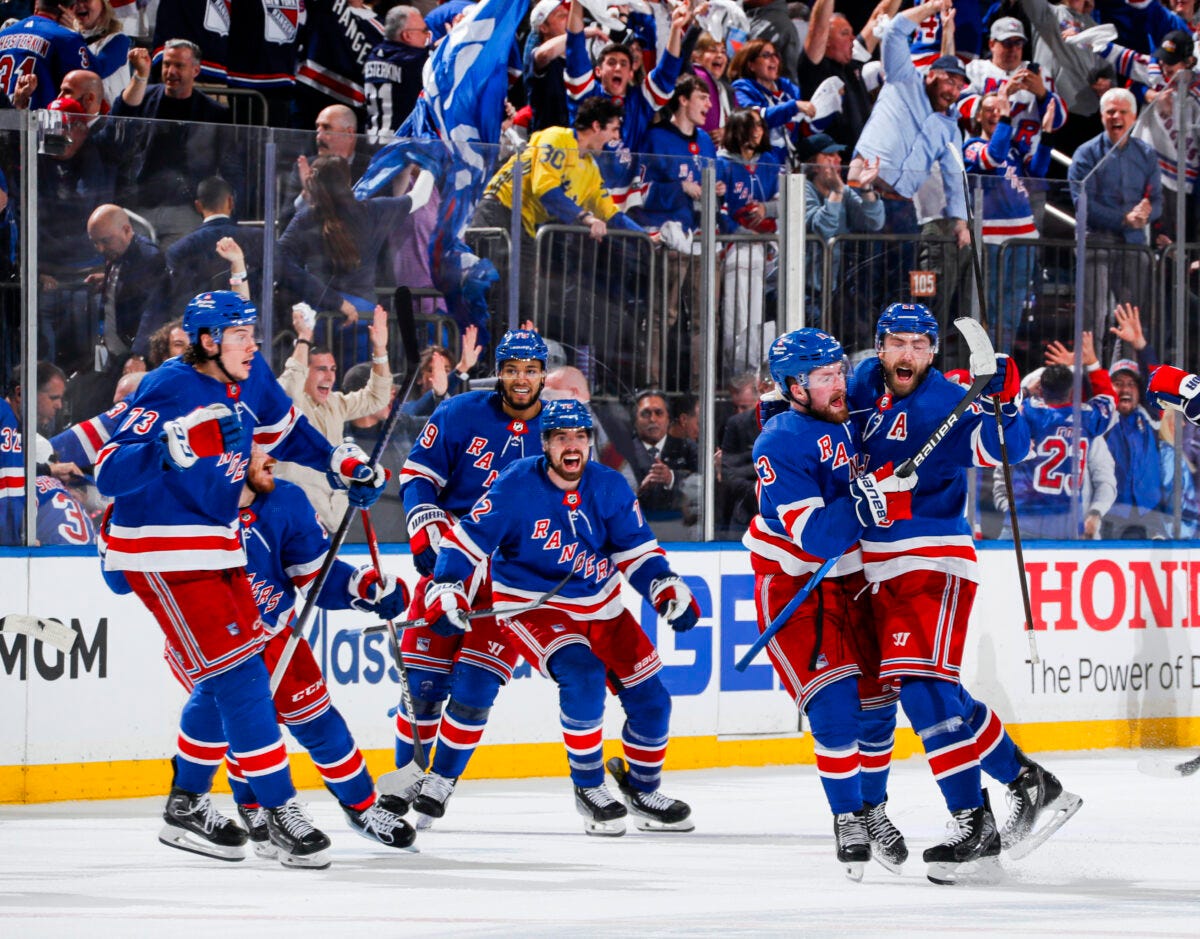
Despite being part of an Original Six franchise in one of the most scrutinized sports markets in the world, the Rangers failed to meet even modest expectations. With the added backdrop of success across town from the New York Knicks, the contrast only intensified the scrutiny surrounding the hockey club. What was once a proud contender has, for the moment, become a team searching for direction and identity.
The struggles were not just reflected in the standings but also in broader league perception. As noted in season evaluations across the NHL, the Rangers’ 2025–26 campaign was widely characterized as a “rock-bottom” period—an assessment that underscores just how far the team fell relative to its usual standards. The label reflects not only poor results on the ice but also a sense that the roster lacked cohesion and long-term competitiveness.
That perception has been further reinforced by the organization’s recent moves, including front office messaging and roster adjustments that suggest a reset or retooling phase is underway. Rather than pushing forward as a contender, the team appears to be transitioning into a period of restructuring, with an emphasis on reshaping the roster and re-evaluating long-term direction.
As a result, expectations around the franchise have shifted significantly. What was once a team expected to challenge for postseason success now finds itself positioned at the bottom tier of the league hierarchy, with limited immediate solutions in place. Analysts have pointed toward a reliance on future development, drafting, and potential free-agent acquisitions as the primary pathways back to competitiveness.
The responsibility now falls heavily on general manager and president of hockey operations Chris Drury, who faces a critical offseason in determining how quickly the team can rebound. His decisions in the coming months—particularly around roster construction and prospect development—will likely shape the trajectory of the franchise for years to come.
While the 2025–26 season may not represent the worst statistical performance in team history, it is widely viewed as one of the most frustrating eras in terms of expectations versus reality. For a franchise built on pride and performance, the challenge ahead is not just improvement, but restoring identity and credibility within the league.
Leave a Reply