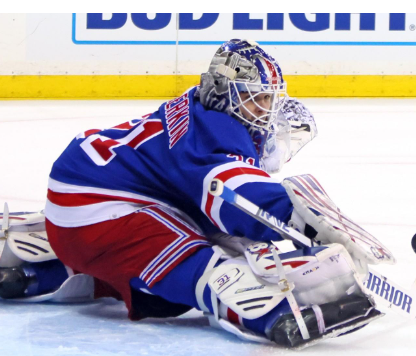
The 2025–26 season has pushed the New York Rangers into a full organizational reset, and amid that transition, one reality is becoming increasingly clear: goaltender Igor Shesterkin is now carrying an outsized share of responsibility for the team’s short-term direction.
Once viewed as the final piece of a championship-ready core, Shesterkin signed a record-setting contract during a period when the Rangers appeared poised to contend annually for the Stanley Cup. Instead, the team’s recent decline has shifted expectations dramatically, placing him at the center of a roster no longer built for immediate contention but for restructuring and development.
As the Rangers move through a retooling phase, the pressure surrounding Shesterkin has intensified rather than eased. While younger players and leadership figures like J.T. Miller are expected to help guide the team’s evolution, the reality is that the franchise’s stability in the present largely depends on its goaltender’s ability to consistently keep games competitive.
Statistically, the Rangers’ defensive performance last season was not among the league’s worst, but it also did not reflect a strong enough foundation to compensate for offensive inconsistency. The team conceded 249 goals, placing them around the middle tier of NHL defensive rankings, yet their overall results still left them near the bottom of the standings. That gap highlights a deeper issue: the inability to convert adequate goaltending and defense into wins.
Shesterkin himself posted respectable individual numbers, including a .912 save percentage and a 2.50 goals-against average. Under normal circumstances, those metrics would translate into significantly more victories. However, a lack of offensive support repeatedly undermined those efforts, with the team struggling to score more than three goals in the vast majority of its games throughout the season.
That imbalance has created a challenging environment heading into the next campaign. Rather than being supported by a structured, high-performing roster, Shesterkin is now expected to anchor a younger, less predictable group still finding its identity. The margin for error has effectively disappeared, placing him in a position where near-elite consistency is not just expected but required on a nightly basis.
In essence, the Rangers’ current trajectory means Shesterkin’s role has expanded beyond that of an elite goaltender. He is now the stabilizing force of a team in transition, tasked with masking growing pains while still delivering results in a highly competitive division. If the Rangers are to remain competitive during their retool, much of that responsibility will rest on his ability to elevate his game even further under increasing pressure.
Leave a Reply