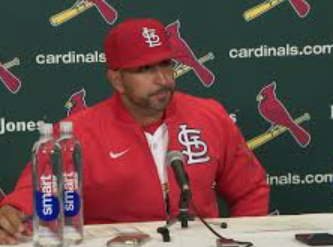
The St. Louis Cardinals entered the 2026 MLB trade deadline with a clear objective: prioritize the future rather than make a desperate attempt to salvage the current season. Their decision to sell for the third time in four years reinforced the direction of the organization under president of baseball operations Chaim Bloom, who is focused on rebuilding the roster and replenishing the farm system.
St. Louis parted ways with several established players, including Lars Nootbaar, who was sent to the Arizona Diamondbacks, while starting pitcher Dustin May and reliever JoJo Romero were dealt to the Milwaukee Brewers in exchange for additional prospect capital. The Cardinals also made a quieter move by acquiring left-handed reliever Caleb Ferguson from the Cincinnati Reds.
Those transactions made the organization’s priorities obvious. Rather than sacrifice future assets for a short-term postseason push, the Cardinals are attempting to build a deeper and younger roster that can eventually return to sustained contention.
However, making trades is only the first part of a rebuild. What St. Louis does with the players remaining on the roster over the final weeks of the 2026 season could be just as important. With September call-ups approaching, the Cardinals have three major roster decisions to settle.
1. Establish a Clear Plan for the Outfield
The departure of Nootbaar created an immediate opening in the Cardinals’ outfield and forced the organization to determine which young players deserve regular opportunities during the final stretch of the season.
St. Louis responded by claiming Everson Pereira off waivers from the Chicago White Sox while designating Nelson Velazquez for assignment. Velazquez struggled to establish himself with the Cardinals, hitting .216 with a .432 slugging percentage across 83 plate appearances, making the roster move understandable from both a performance and development standpoint.
Still, adding Pereira does not completely solve the larger question surrounding the Cardinals’ outfield.
Alec Burleson and Jordan Walker should receive significant opportunities, while Pereira now enters the competition for playing time. Walker’s return from a knee issue adds another intriguing piece to the mix, particularly after his impressive showing in the 2026 Home Run Derby.
The organization also needs to think beyond the current major league roster. Prospects Alexander Frías and Josiah Ragsdale need meaningful developmental opportunities as they continue progressing through the minor leagues.
The Cardinals should therefore use August and September to determine which players deserve consistent at-bats, which ones need additional time in Triple-A and which prospects should receive a September promotion.
The objective should not simply be finding the best lineup for a few remaining games. Instead, St. Louis needs to identify which outfielders can realistically become part of the organization’s long-term core. Every at-bat should provide useful information heading into the 2027 offseason.
2. Give the Young Starting Pitchers as Many Meaningful Innings as Possible
The trade of Dustin May significantly changed the Cardinals’ rotation and created an opportunity for the organization to evaluate several younger arms.
St. Louis is currently leaning on a group that includes Hunter Dobbins, Matthew Liberatore, Michael McGreevy, Kyle Leahy and Andre Pallante. With the Cardinals no longer building around a potential playoff chase, these pitchers should be given every opportunity to demonstrate whether they belong in the 2027 rotation.
Liberatore has experienced some inconsistency, including a difficult outing against Colorado in which he surrendered five runs and nine hits. Leahy, meanwhile, has emerged as one of the more dependable pitchers in the group and recently collected his eighth victory of the season.
Those performances should be viewed as part of a larger evaluation rather than isolated results.
The Cardinals also need to carefully manage the development of Quinn Mathews, who was sent to Memphis around the trade deadline, as well as Tekoah Roby, who is progressing toward facing hitters again while recovering from an elbow issue.
There is little reason for St. Louis to prioritize squeezing out a few additional victories at the expense of learning more about its young pitchers. The final weeks of the season should function almost like an extended audition.
Every start should help answer important questions: Who can consistently work deep into games? Which pitchers have the stuff to handle a major league rotation spot? Who needs more time in the minors? And which arms could eventually become part of a competitive Cardinals rotation?
Those answers could be considerably more valuable than a handful of extra wins in a rebuilding season.
3. Determine Who Will Be the Cardinals’ Long-Term Closer
The Cardinals also need to bring more clarity to their bullpen, particularly when it comes to the ninth inning.
Riley O’Brien has quietly established himself as one of St. Louis’ most reliable high-leverage relievers. He recently recorded his 28th save after throwing a scoreless ninth inning against Colorado, giving the Cardinals another reason to consider him their primary closer moving forward.
If O’Brien continues performing at that level, the Cardinals should give him an extended opportunity to prove that he can handle the closer job heading into 2027.
The bigger question involves Ryne Stanek. The veteran reportedly attracted trade interest before the deadline, although no deal materialized. That leaves St. Louis with an important offseason decision: Is Stanek part of the club’s next competitive bullpen, or should the organization revisit the possibility of trading him when the offseason market opens?
Ferguson’s arrival from Cincinnati gives the Cardinals another experienced left-handed option, while George Soriano and Peter Strzelecki also remain candidates for important bullpen assignments.
Instead of continuing to rotate relievers through different roles without a long-term plan, St. Louis should use the final two months to establish a clearer hierarchy.
The Cardinals need to determine which relievers can be trusted in the highest-leverage situations, which pitchers are better suited for middle relief and which players should be considered expendable trade assets. That evaluation could help Bloom enter the offseason with a much better understanding of what the bullpen needs.
The Cardinals’ Real Evaluation Period Begins Now
The Cardinals’ deadline strategy was never designed to maximize their 2026 win total. Trading Nootbaar, May and Romero demonstrated that the organization was willing to sacrifice short-term production in exchange for additional prospects and future flexibility.
Now comes the difficult part.
St. Louis has to turn those acquisitions into an actual development plan. The organization must identify its most promising outfielders, give its young starting pitchers meaningful innings and determine which relievers can become part of the 2027 bullpen.
The August 3 trade deadline may have marked the end of the Cardinals’ selling period for now, but it also opened an important evaluation window. The decisions made over the final weeks of the season could influence roster construction throughout the offseason.
If Bloom and the Cardinals make the right choices, the remainder of 2026 can become much more than a lost season. It can serve as a blueprint for the next phase of the franchise and potentially move St. Louis closer to ending its recent sell cycle for good.
With 2027 already becoming the bigger priority, every roster decision from this point forward should be viewed through one question: Which players can help the Cardinals become legitimate contenders again?
If you want, I can also turn this into a more dramatic, highly clickable sports-news version with a stronger opening and headline optimized for Google Discover.
Leave a Reply