
Tommy John, the longtime Major League Baseball pitcher whose career became inseparably linked to one of the most important medical breakthroughs in sports history, has died at the age of 83. His death was announced Sunday after he had battled bladder cancer for some time.
John leaves behind a remarkable baseball legacy that extends far beyond his statistics. He became the namesake of Tommy John surgery, the revolutionary elbow procedure that has allowed thousands of professional and amateur pitchers to return to competition after suffering devastating ligament injuries.
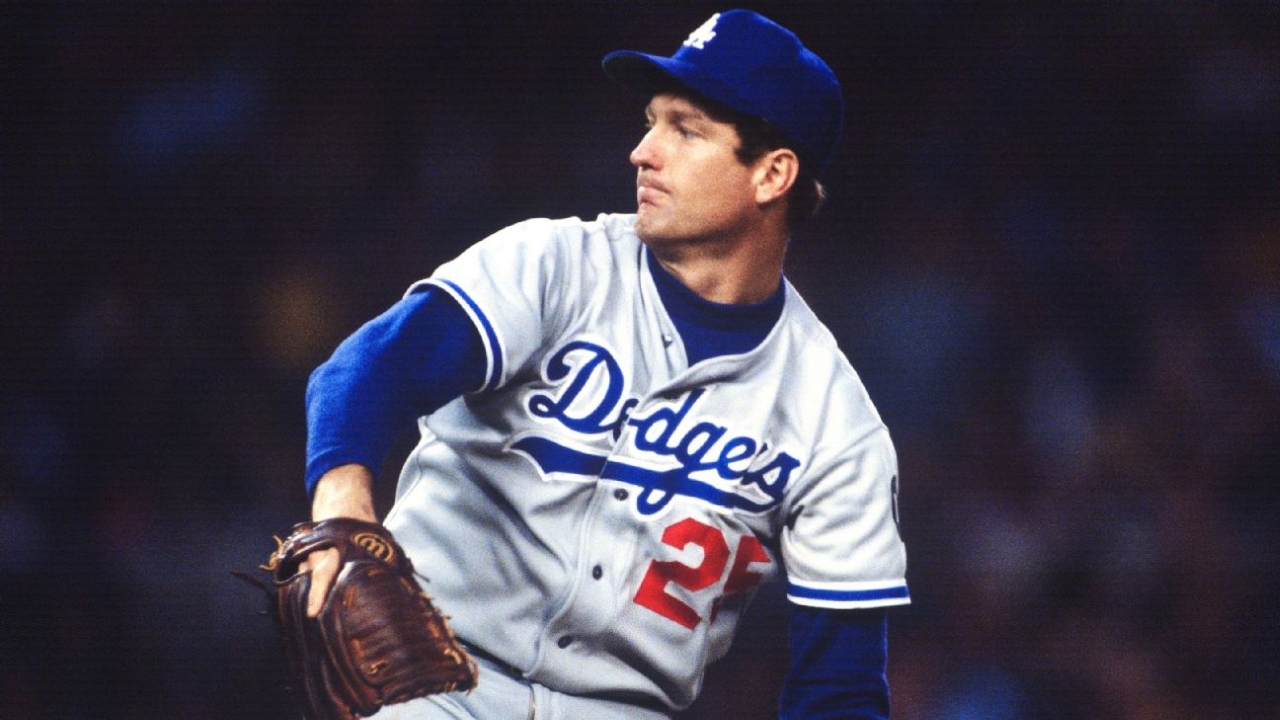
Long before his name became synonymous with the surgery, however, John had already established himself as an accomplished and durable major league pitcher.
A Long Road to the Major Leagues
John began his professional career after signing with the Cleveland Indians and eventually made his major league debut with the club. His time in Cleveland was relatively brief before he became part of a three-team trade that sent him to the Chicago White Sox.
The left-hander would spend six seasons with Chicago and gradually develop into one of the more dependable pitchers in the White Sox rotation.
From 1968 through 1970, John produced three consecutive seasons worth more than five Baseball-Reference Wins Above Replacement, demonstrating that he was far more than simply a durable innings eater. He combined command, intelligence and an ability to keep hitters off balance, traits that would define his career for decades.
Following the 1971 season, Chicago traded John to the Los Angeles Dodgers in a deal involving Dick Allen.
The move to Los Angeles became another important chapter in John’s career.
A Career-Changing Injury
John quickly became an important part of the Dodgers’ rotation and enjoyed some of the best seasons of his career in Los Angeles.
He led the National League in winning percentage in both 1973 and 1974, establishing himself as one of the league’s most effective starting pitchers. But his 1974 season was cut short when he suffered a serious injury to the ulnar collateral ligament in his pitching elbow.
At the time, an injury of that nature was widely viewed as potentially career-ending.
John, however, was willing to take a chance on an experimental procedure.
In September 1974, he underwent surgery performed by orthopedic surgeon Dr. Frank Jobe. The procedure involved replacing the damaged ligament in John’s elbow with a tendon taken from his forearm.
It was the first time the procedure had been performed on a major league pitcher.
Nobody knew whether John would ever be able to pitch competitively again.
His Return Changed Baseball Forever
After an extensive rehabilitation process, John made his return to the mound in 1976.
The comeback was extraordinary.
Rather than simply returning to professional baseball, John went on to pitch for another 14 seasons after the groundbreaking procedure. His successful return demonstrated that a pitcher could potentially recover from a devastating UCL injury and resume a high-level major league career.
The procedure soon became widely known as Tommy John surgery, and the name eventually became part of everyday baseball language.
What began as an experimental operation on one pitcher evolved into one of the most common and transformative procedures in baseball.
Over the decades, countless pitchers at the professional, collegiate and amateur levels have undergone the surgery. For many of them, it has represented a second chance at their careers.
John therefore became one of the rare athletes whose influence extended far beyond his playing statistics.
An Outstanding Second Act
John’s return from surgery was not merely a feel-good comeback story. He continued to perform at an elite level for many years.
In 1977, he finished second in the National League Cy Young Award voting after another outstanding season. The following year, he helped the Dodgers reach the World Series.
John later joined the New York Yankees and continued to excel. In his first season with New York in 1979, he finished second in the American League Cy Young voting.
His ability to remain productive well into the later stages of his career was remarkable considering that many people had believed his career was finished when he suffered the elbow injury in 1974.
Instead, he transformed what appeared to be the end of his playing days into the beginning of a second major chapter.
A 288-Game Winner
John ultimately finished his major league career with 288 victories, an impressive total that places him among the most successful pitchers of his generation.
He accumulated 61.6 career Baseball-Reference WAR, ranking 58th all time among major league pitchers according to the cited measure.
His career included stops with several organizations, but his accomplishments with the Dodgers and Yankees were particularly memorable. His longevity was equally impressive, as he continued pitching professionally for years after undergoing a procedure that had never previously been performed on a pitcher.
The numbers alone tell only part of the story.
John’s greatest contribution may have been demonstrating what was possible after a catastrophic elbow injury.
His Name Became Bigger Than His Career
Few players in sports history have had a medical procedure named after them, and even fewer can say that the procedure changed the course of an entire sport.
Today, the phrase “Tommy John surgery” is familiar to baseball fans everywhere. When a pitcher suffers a torn UCL, the procedure is often discussed almost immediately as a potential path back to competition.
Although surgical techniques and rehabilitation programs have evolved dramatically since John’s original operation, the basic legacy remains.
The surgery that helped save John’s career became a standard treatment for pitchers facing similar injuries.
Every successful recovery by a pitcher following UCL reconstruction is, in some way, connected to the gamble John and Dr. Jobe took more than five decades ago.
A Legacy That Will Endure
Tommy John’s death marks the passing of a pitcher who was both an accomplished major leaguer and an unlikely pioneer in sports medicine.
He was not simply remembered because a surgery carried his name. He earned his place in baseball history through nearly three decades of professional pitching, remarkable durability and an extraordinary comeback from an injury that once appeared to have ended his career.
His story also changed how baseball viewed serious elbow injuries. Before his surgery, a torn UCL could effectively spell the end of a pitcher’s career. John’s successful return helped create a new possibility: rehabilitation, recovery and another chance to compete.
Tommy John leaves baseball with a legacy that goes far beyond his 288 victories. He proved that a seemingly career-ending injury did not necessarily have to be the end, and his remarkable comeback ultimately helped change the careers and futures of generations of pitchers who followed him.
Leave a Reply