The New York Mets have been linked to plenty of criticism surrounding Freddy Peralta’s struggles since the Tampa Bay Rays acquired the right-hander, but the numbers suggest the Mets may not deserve the blame. Peralta’s disappointing run in Tampa Bay appears to be more complicated than a simple case of New York mishandling the pitcher.
Peralta entered the trade-deadline conversation with some people suggesting that the Mets had failed to get the most out of him or that changes within their pitching program contributed to his decline. However, his performance with Tampa Bay has made that argument increasingly difficult to defend.\
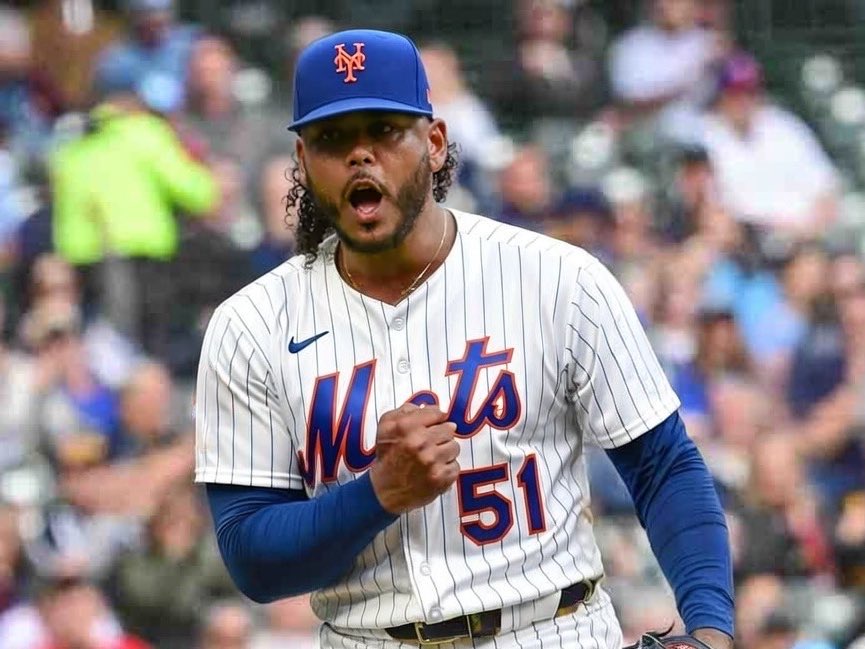
Since joining the Rays, Peralta has struggled badly, posting a 7.17 ERA through his first four starts. That level of production makes it difficult to point directly at the Mets’ coaching staff or their pitching philosophy as the primary reason for his struggles. Whatever went wrong for Peralta, the evidence suggests the issues have followed him beyond New York.
But while Peralta may not be a fair example of a pitcher the Mets mishandled, another former Mets starter is giving the organization a much more uncomfortable reason to look in the mirror.
That pitcher is David Peterson.
After the Mets watched Peterson struggle to a 6.09 ERA during the 2026 season, they ultimately found a trade partner in the Chicago Cubs. Since arriving in Chicago, however, Peterson has looked dramatically better and has begun to resemble the dependable pitcher the Mets hoped he could become.
Peterson has already thrown 50.1 innings for the Cubs across nine starts and one relief appearance while recording a 3.93 ERA. He has completed at least six innings three times, and although he has allowed 24 runs, 10 of those came during one disastrous outing.
Outside of that rough performance, Peterson has generally provided Chicago with quality innings and has established himself as a capable back-end rotation option. His turnaround naturally raises questions about what went wrong during his time with the Mets.
Peterson’s resurgence raises questions for the Mets
There is an important caveat: Peterson’s improvement cannot simply be attributed to better coaching.
The left-hander has always been more of a contact-oriented pitcher than a dominant strikeout arm, meaning the defense behind him can have a significant influence on his results. Chicago’s defense has helped him considerably, and his .279 batting average on balls in play with the Cubs is well below his career mark of .316.
That difference matters because pitchers who allow a high percentage of balls to be put in play are particularly dependent on their defense. The Cubs have arguably provided Peterson with one of the strongest defensive environments in baseball, giving him a better opportunity to turn balls in play into outs.
Still, the sample size is now large enough to make the Mets wonder whether they could have handled Peterson differently.
The Mets deserve some credit for recognizing that their original approach was no longer working. Rather than continuing to use Peterson as a conventional starter throughout the season, they shifted him into more of a bulk role once his effectiveness declined. The results were inconsistent, but the move produced enough positive moments to suggest that the organization was attempting to find a solution.
Chicago, meanwhile, has returned Peterson to a more traditional starting role, and the results have been considerably better.
He is not suddenly the same pitcher who went 10-3 with a 2.90 ERA in 2024, but he has become a legitimate and useful rotation piece. That is a significant improvement from where things stood in New York, where Peterson had reached a point at which it was difficult to trust him in virtually any role.
The situation is especially intriguing because Peterson had spent his entire professional career under Mets pitching coach Jeremy Hefner before this season. Despite that long-running relationship, Peterson never consistently produced at the level his talent suggested he could.
Now, a change of organization and pitching environment appears to have helped unlock a more reliable version of him.
That does not automatically prove the Mets were at fault. Pitching performance is influenced by numerous factors, including defense, pitch selection, mechanics, confidence, workload and simple variance. But Peterson’s success in Chicago gives the Mets legitimate reason to evaluate whether their development and usage decisions played a role in his struggles.
The bigger question may come after the season.
Peterson is headed toward free agency and could attract interest from several teams if he maintains his current level of performance. He may never become the next Zack Wheeler, but his resurgence suggests there could still be more upside in his arm than the Mets were able to extract.
For now, blaming New York for Freddy Peralta’s struggles seems increasingly difficult to justify. But David Peterson’s turnaround presents a far more compelling case for examining whether the Mets allowed another pitcher to slip away just as he was beginning to rediscover his form.
Leave a Reply