
The New York Mets have made one of their biggest decisions ahead of the 2027 season, officially removing the interim tag from Andy Green and handing him the managerial job on a three-year contract. The move represents a significant change from what the organization had originally expected and gives the Mets a clear direction in the dugout after a turbulent 2026 campaign.
Green becomes the 26th full-time manager in Mets history and is under contract through the 2029 season. The decision came after he initially took over on an interim basis when Carlos Mendoza was dismissed in late June. At the time, neither Green nor the Mets appeared to view the arrangement as a permanent one. Instead, the expectation was that Green would eventually return to the front office and continue working in player development.
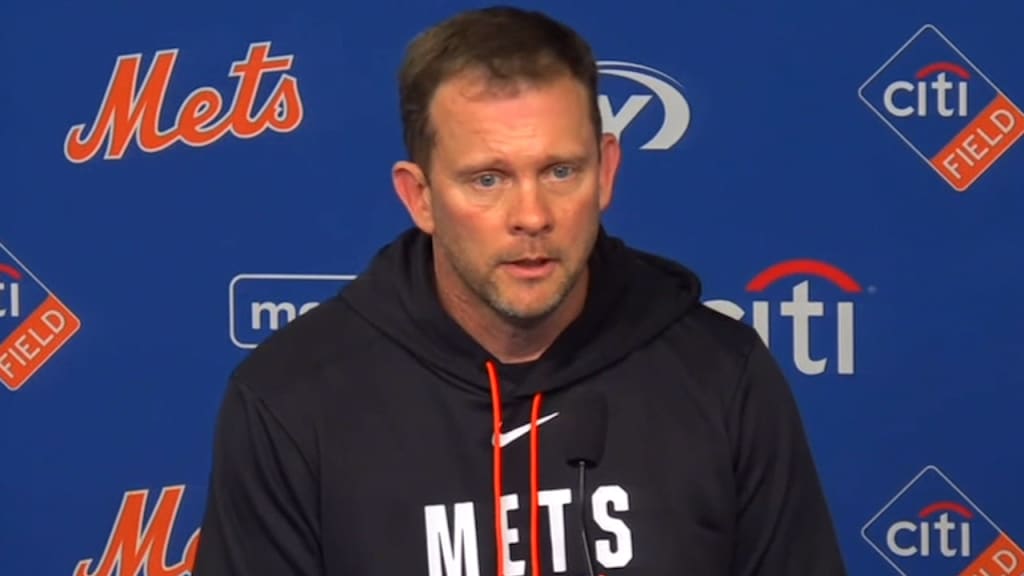
That plan changed as Green’s time in the dugout progressed. The Mets entered the second half of the season needing stability after a disappointing start, and Green quickly developed a stronger connection with the clubhouse. His previous work overseeing the organization’s player-development operation also gave him familiarity with many of the young players arriving in the majors, creating a link between the minor leagues, front office and big-league clubhouse that became increasingly important to the organization.
Green’s Unexpected Change of Heart
Green did not originally intend to return to full-time managing. His decision to accept the interim position was largely based on a sense of responsibility to the Mets organization after Mendoza was fired. He had previously managed the San Diego Padres from 2016 through 2019, but after joining the Mets following the 2023 season, his role shifted toward player development.
Family considerations were also important. Green had told his three daughters that he would not pursue another full-time managerial position while they were still growing up. However, his experience during the 2026 season caused him to reconsider that decision.
After spending more than two months in the dugout, Green realized that he had regained his passion for managing. The difficult circumstances surrounding the Mets’ season, including the trade deadline and the departure of several veteran players, actually reinforced his desire to remain in the role.
Green eventually contacted president of baseball operations David Stearns in early September and made it clear that, although he would serve the organization in whatever capacity was needed, his preference had shifted toward managing.
That conversation changed the Mets’ plans.
Stearns had previously indicated that Green would return to the front office after the season, but the organization ultimately decided that the manager it needed was already inside the building.
Stearns Chooses Continuity
For David Stearns, Green’s familiarity with the Mets’ emerging core was a major factor in the decision.
Green had previously worked closely with several young players who became important pieces of the major-league roster in 2026, including Carson Benge, Nolan McLean, Zac Thornton and A.J. Ewing. Because he had been involved with their development from the minor leagues through their major-league arrivals, Green already understood their strengths, weaknesses and personalities.
That familiarity could give the Mets greater continuity heading into 2027.
Stearns also emphasized Green’s ability to connect different parts of the organization. Rather than having a manager who needs to learn the team’s young players and organizational philosophy from scratch, the Mets will have someone who already understands how the system operates.
The Mets also credited Green with bringing discipline, accountability and positivity to a clubhouse that had endured a frustrating season.
Players have responded positively to his leadership as well. Bo Bichette described Green as an honest leader whom the clubhouse respects, while Francisco Lindor highlighted his ability to blend into the group when necessary while also taking command when required.
A Difficult 2026 Season Changed the Picture
Green inherited a Mets team that was already struggling when Mendoza was fired. New York was 34-47 at the time of the managerial change, leaving the organization facing difficult questions about the remainder of the season.
Green’s tenure produced a 37-38 record through the period covered by the announcement, a notable improvement in the team’s level of competitiveness despite the circumstances surrounding the roster.
The Mets also underwent significant changes around the trade deadline. Rather than loading up for a postseason push, the organization moved several veterans and shifted attention toward younger players and the future.
That created an unusual environment for Green. Expectations were lower, but the manager had to help players deal with uncertainty while simultaneously evaluating the organization’s younger talent.
Several prospects benefited from that environment.
Benge and McLean, in particular, became important parts of the Mets’ emerging core. Green’s previous involvement in their development meant he could help them transition into the major leagues while also understanding what the organization expected from them.
That connection became one of the strongest arguments for keeping him.
The 2027 Challenge Will Be Different
While Green’s performance as interim manager helped convince the Mets to retain him, the organization understands that the real test begins in 2027.
The circumstances will be different.
Green inherited a team that had already fallen out of contention, meaning there was little pressure to produce immediate postseason results. The Mets could use the second half of 2026 to evaluate young players, experiment with roles and focus on development.
Next season, expectations will rise again.
The Mets are expected to enter the offseason looking to reshape the roster and return to postseason contention. Green will therefore have to manage a clubhouse with considerably more pressure than the one he inherited in June.
The challenge will not simply be maintaining the discipline and accountability that the organization praised. He will also have to establish consistency when expectations become much higher.
Green himself acknowledged that there is significant work ahead. He wants to meet individually with players, identify where they need to improve and establish a clear direction for the offseason.
His message is essentially about turning the lessons of a disappointing season into a stronger foundation for the next one.
Why the Decision Matters for the Mets
The three-year agreement gives the Mets stability at a position that had been uncertain for much of 2026. Instead of entering the offseason with another managerial search, the organization can concentrate its attention on the roster.
That is particularly important because the Mets have several major personnel decisions ahead.
The front office will have to determine which veterans remain part of the long-term plan, how much responsibility younger players should receive and what additions are necessary to make the club competitive again.
Green’s presence also gives Stearns an established partner in the dugout who already understands the organization’s developmental philosophy.
Rather than starting over with a new manager, the Mets can attempt to build continuity between the front office, minor leagues and major-league roster.
That continuity could become particularly important as players such as Benge, McLean and other emerging prospects take on larger roles.
A New Era for Green and the Mets
The decision ultimately marks an unexpected second act for Green.
He joined the Mets primarily to oversee player development after his time managing the Padres, and when Mendoza was fired, he initially viewed the interim job as something he needed to do for the organization rather than something he wanted as a permanent career path.
Months later, his view changed.
The experience of working directly with the players rekindled his enthusiasm for managing, while his relationships throughout the organization made him a natural candidate for the job.
Now, instead of returning to the front office, Green will lead the Mets into the next phase of their rebuild and competitive push.
The three-year contract through 2029 gives him an opportunity to establish his own identity as the permanent manager while working with a roster that is expected to feature an increasing number of younger players.
For the Mets, the decision is about more than simply choosing a manager. It is an attempt to create stability after a chaotic season and build a stronger connection between player development and the major-league clubhouse.
The difficult part, however, begins now. The Mets will have to turn the relative progress made under Green into sustained success when the expectations surrounding the team rise again in 2027.
This version keeps the main Heavy angle but adds the 2026 context, Green’s background, his relationship with the young core, and why the three-year decision matters for the Mets’ 2027 plans.
Leave a Reply