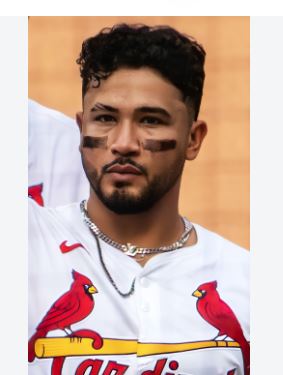
The St. Louis Cardinals could enter the offseason facing an unusual roster problem: they have too many catchers and not enough places to put them. According to a report from the St. Louis Post-Dispatch cited by Heavy, St. Louis is expected to explore trade possibilities involving Iván Herrera, Pedro Pagés and Jimmy Crooks during the upcoming offseason. The fact that Herrera is included is particularly notable because he remains one of the organization’s more valuable young offensive pieces.
The Cardinals finished 2026 at 77-85 and missed the postseason, but the organization believes the season provided encouraging signs about its young core. Jordan Walker emerged as the player St. Louis had hoped to see, J.J. Wetherholt made a strong impact, and Alec Burleson led MLB with 116 RBI. At the same time, the catching position became increasingly crowded. The emergence of Leonardo Bernal at the major-league level, combined with the continued development of top prospect Rainiel Rodriguez, has created a situation in which the Cardinals may have more legitimate catching options than available roster spots.

Herrera Suddenly Becomes a Trade Candidate
Herrera’s inclusion in the potential trade market does not necessarily mean St. Louis has decided to move him. The report makes clear that the Cardinals are expected to explore the market rather than actively shop him at all costs. The front office wants to determine what other clubs might be willing to offer before deciding whether a trade makes sense.
That distinction is important because Herrera still possesses considerable value. The 26-year-old finished 2026 with a .241/.353/.382 slash line, 19 home runs, 69 RBI, 2.9 WAR and a .735 OPS, while also earning his first All-Star selection. Those numbers were not as strong as his 2025 production, but they still make him an attractive player for clubs searching for a right-handed bat.
Herrera’s 2025 season is another reason the Cardinals could demand a significant return. He hit .284/.373/.464 with an .837 OPS, demonstrating that the offensive upside remains much higher than his 2026 numbers suggest. St. Louis therefore has little reason to sell low on him. If another organization sees Herrera as a potential everyday catcher or productive DH, Bloom could use that interest to seek a meaningful return.
The Cardinals’ Catching Depth Is Changing Everything
The biggest factor behind the trade discussion is Bernal. After reaching the majors late in the 2026 season, Bernal immediately gave the Cardinals another reason to believe they may have found their long-term answer behind the plate. He hit .284 with five home runs and 21 RBI over his first 24 major-league games, strengthening the argument that he deserves an opportunity to take over a larger role in 2027.
That creates a difficult roster puzzle. Herrera has considerable offensive value, but the Cardinals also want to keep his bat in the lineup. Chaim Bloom recently indicated that the organization believes Herrera demonstrated that he can handle more work behind the plate, having caught more than 50 games during the season. At the same time, Bloom emphasized that the club wants to find a way to keep Herrera’s bat involved even if he is not the primary catcher.
That could mean more designated-hitter opportunities, occasional catching assignments or even experimentation at other defensive positions. Herrera previously saw time at first base late in the season, illustrating the Cardinals’ willingness to find creative ways to keep him in the lineup.
Why St. Louis Could Still Trade Him
The Cardinals’ biggest argument for keeping Herrera is his bat. Their biggest argument for trading him is that his value could be converted into help elsewhere.
St. Louis has several areas that could benefit from additional talent, particularly pitching depth. If a contender needs a right-handed hitter who can catch and also contribute as a DH, Herrera could become an attractive trade chip. The Cardinals could potentially use that leverage to acquire bullpen help, starting-pitching depth or another piece that better fits the club’s long-term roster construction.
This is not a new issue for the organization. The Cardinals were already viewed as one of the teams with the greatest catching depth during the 2026 trade-deadline period. MLB reported at the time that St. Louis had three major-league catchers while also having Bernal and Rodriguez developing in the minors. That depth gave the Cardinals multiple options if another club came calling.
The situation has only become more complicated since then because Bernal received major-league experience and further established himself as a potential part of the future.
Pedro Pagés and Jimmy Crooks Could Also Be Moved
Herrera is not the only catcher whose name could surface in trade discussions. Pagés and Crooks are also expected to attract attention as the Cardinals attempt to determine the best configuration for 2027.
Pagés offers a different skill set from Herrera. His defensive ability, game-calling and throwing arm give him value even though he does not possess Herrera’s offensive upside. Crooks, meanwhile, represents more of an upside play and could become increasingly attractive to teams looking for a younger catching option.
That means Bloom has multiple ways to solve the problem. He could trade Herrera for the largest return, move Pagés because another club values his defense, or deal Crooks before his value potentially increases. He could also keep all three temporarily and allow the competition to sort itself out during spring training.
The decision will likely depend heavily on what other clubs are willing to offer.
Herrera’s Defensive Questions Matter
There is another important factor behind the uncertainty: Herrera’s defense and ability to control the running game.
The Cardinals ranked 17th in MLB in caught-stealing percentage during 2026, throwing out only 19% of attempted base stealers. Opponents attempted 113 steals against St. Louis, and Herrera has historically struggled to prevent runners from taking extra bases. That creates a difficult balance for the Cardinals because his offensive value is significant, but they also need to determine whether his defense can support a larger role behind the plate.
That is one reason a move away from full-time catching could make sense even if the Cardinals keep him. Herrera could potentially become primarily a DH who catches when needed, while Bernal and Pagés handle more of the defensive workload.
What Could a Herrera Trade Return?
If St. Louis eventually decides to move Herrera, the return will be critical.
The Cardinals should not trade him merely because the organization has too many catchers. Herrera is young, under team control and coming off an All-Star season. His 2025 production also provides evidence that his 2026 offensive decline may not represent his true ceiling. Trading him for a marginal bullpen arm or an organizational depth piece would make little sense.
Instead, Bloom would likely need to target an area where the Cardinals can improve substantially. Pitching depth could be the most logical destination for the value of a Herrera trade, particularly if another team views him as a potential everyday offensive catcher.
The Cardinals could also use the trade to address another position of need or acquire a controllable player who fits their emerging young core. The key is that Bloom has leverage. He does not have to trade Herrera, which allows him to wait for an offer that genuinely improves the roster.
The Bigger 2027 Question
Ultimately, the Herrera situation is less about whether the Cardinals like the player and more about how they intend to construct the roster around him.
Bloom has already indicated that the organization considers Herrera an important offensive piece. The challenge is finding enough at-bats for him while simultaneously giving Bernal, Rodriguez and the other young catchers opportunities to develop. Keeping three or more catchers on the major-league roster indefinitely would create an inefficient use of roster space.
That makes the offseason especially important. The Cardinals can listen to offers without committing to a trade. If the market produces an overwhelming proposal, Herrera could become one of the more significant trade chips available to St. Louis. If offers fail to meet expectations, the Cardinals can keep him and continue experimenting with his role.
For now, the most important takeaway is that St. Louis is exploring possibilities, not announcing a decision. Herrera remains a valuable part of the organization, but the emergence of Bernal and the continued rise of Rodriguez have changed the equation. The Cardinals now have to decide whether Herrera is more valuable as part of their 2027 lineup or as the centerpiece of a trade that addresses another weakness.
That could make Herrera one of the most fascinating Cardinals names to monitor throughout the offseason. His bat, age, All-Star status and previous offensive production give him legitimate trade value, while St. Louis’ catching depth gives Bloom a reason to at least listen. If another team makes an aggressive offer, the Cardinals could suddenly face one of their biggest roster decisions of the winter.
Leave a Reply