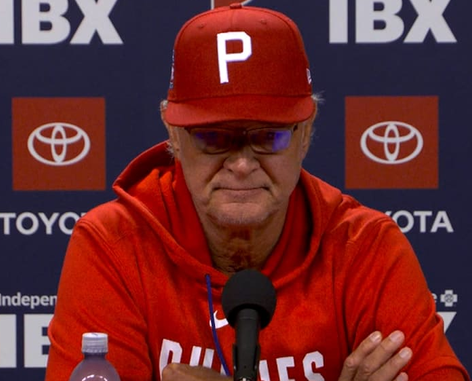
The Philadelphia Phillies have taken another significant step toward reshaping their organization ahead of the 2027 Major League Baseball season, bringing in former Boston Red Sox hitting coach Peter Fatse to lead an offense that struggled throughout the previous campaign. The decision represents an important change for a franchise attempting to restore its offensive identity after a disappointing season. However, the appointment has also generated speculation about whether Philadelphia’s growing connections to former Red Sox manager Alex Cora could eventually influence the team’s managerial future.
According to a report by The Athletic’s Charlotte Varnes, the Phillies have selected Fatse to replace longtime hitting coach Kevin Long, whose tenure began before the 2022 season. The hiring comes as Philadelphia continues restructuring its coaching staff under manager Don Mattingly, with the organization determined to address the offensive inconsistencies that contributed to its disappointing 2026 performance. Although Fatse brings considerable experience and a strong offensive track record, his previous working relationship with Cora has added an intriguing dimension to the appointment.
Phillies Make Major Change After Kevin Long’s Disappointing Final Season
Kevin Long’s departure marks the end of a significant chapter in Philadelphia’s recent history. The veteran hitting coach joined the Phillies following the 2021 campaign and played an important role in overseeing an offense featuring established stars such as Bryce Harper, Kyle Schwarber, and several other experienced hitters. During his earlier seasons with the organization, Philadelphia developed a reputation for producing timely offensive performances and possessing enough power to challenge opposing pitching staffs.
However, the 2026 season exposed serious weaknesses within the Phillies’ offensive approach. Several key hitters struggled to maintain consistent production, while the lineup frequently experienced difficulty generating scoring opportunities and capitalizing on runners in scoring position. Those shortcomings became increasingly concerning as Philadelphia attempted to remain competitive in the National League.
The team’s statistical performance highlighted the extent of its struggles. Philadelphia finished the regular season ranked 28th in Major League Baseball with a 92 weighted runs created plus (wRC+), indicating that its overall offensive production was eight percent below league average after accounting for relevant adjustments. The Phillies also ranked 22nd with a .707 on-base plus slugging percentage and 23rd with a .312 on-base percentage.
Perhaps most concerning was the team’s overall run production. Philadelphia scored 719 runs during the season, with only three National League teams—the New York Mets, San Francisco Giants, and Cincinnati Reds—finishing with fewer.
For a roster containing several highly paid offensive players, those numbers represented a disappointing return. The organization had invested heavily in assembling a lineup capable of competing for championships, but its inability to generate consistent offense became one of the defining problems of the campaign.
While Long was not solely responsible for those struggles, the Phillies ultimately determined that a different approach was necessary. His departure created an opportunity for the franchise to introduce new hitting philosophies, improve player development, and potentially unlock greater production from its established stars.
Peter Fatse Brings Strong Boston Red Sox Experience to Philadelphia
Fatse arrives in Philadelphia with an impressive coaching background, having spent several seasons working within the Boston Red Sox organization. His most notable experience came under Alex Cora, who promoted him into a prominent role on Boston’s major league coaching staff in December 2021.
Fatse subsequently served as the Red Sox hitting coach beginning in 2022, overseeing an offensive unit that regularly ranked among the American League’s more productive lineups.
Between 2022 and 2025, Boston scored the second-most runs in the American League, finishing approximately 100 runs behind the New York Yankees during that period. The Red Sox also ranked fourth in the league with a combined .741 OPS, demonstrating their ability to produce consistent offensive contributions across multiple seasons.
Another important strength of Boston’s offensive approach was its ability to generate hard contact. During Fatse’s tenure, the Red Sox recorded a 41.7 percent hard-hit rate, ranking second in the American League. That statistic reflects the percentage of batted balls struck with an exit velocity of at least 95 mph, an important indicator of a hitter’s ability to generate quality contact.
Boston also ranked fifth in the league with a 104 wRC+, indicating that its offense performed approximately four percent better than league average after relevant adjustments.
These numbers suggest that Fatse has experience working with productive major league hitters and helping an offense generate power and run-scoring opportunities.
For Philadelphia, that experience could be particularly valuable. The Phillies already possess several players capable of producing significant offensive numbers, but the challenge has been developing a more consistent approach that allows the lineup to perform effectively throughout an entire season.
Fatse’s appointment could introduce new ideas regarding swing mechanics, preparation, pitch recognition, and offensive planning.
However, his success will ultimately depend on whether those ideas translate into measurable improvements for Philadelphia’s hitters.
Alex Cora Connection Raises Questions About Phillies’ Managerial Future
Although Fatse’s coaching credentials provide a strong explanation for the hiring, his relationship with Alex Cora has become one of the most intriguing elements of the Phillies’ offseason.
Cora previously managed the Boston Red Sox and worked closely with Fatse during their time together. Their professional relationship developed as Boston attempted to maintain a competitive offense while navigating roster changes and organizational challenges.
The Phillies reportedly pursued Cora for their managerial vacancy earlier in October, but he declined the opportunity for a second time. Philadelphia subsequently continued forward with Don Mattingly, who is operating under a two-year managerial agreement.
That situation has created speculation that Fatse’s arrival could help maintain a connection between the Phillies and Cora if another managerial opportunity emerges in the future.
The theory is that bringing in someone who previously worked successfully with Cora could make Philadelphia a more attractive destination should the organization eventually reconsider its managerial situation.
However, there is no confirmed evidence that the Phillies hired Fatse specifically to influence Cora’s future decisions.
The more immediate explanation is that Philadelphia needed an experienced hitting coach with a history of overseeing productive offenses, and Fatse fit that description.
Nevertheless, the connection is difficult to ignore given the Phillies’ reported interest in Cora and the possibility of further organizational changes if the team fails to meet expectations in 2027.
Mattingly’s relatively short contract also means the Phillies could face another managerial decision sooner than many other franchises.
For now, however, Fatse’s primary responsibility will be improving the team’s offensive performance rather than serving as a potential link to a future manager.
Phillies Must Address Major Offensive Weakness Under New Hitting Coach
Despite Fatse’s impressive offensive record in Boston, his appointment does not automatically solve Philadelphia’s hitting problems.
One area that deserves particular attention is plate discipline.
During Fatse’s tenure with the Red Sox, Boston ranked 24th in Major League Baseball in walk-to-strikeout ratio. Although the team generated strong contact and scored runs at an impressive rate, its hitters also demonstrated a tendency toward strikeouts and aggressive approaches.
That could become a concern for a Phillies lineup that already struggled with swing-and-miss issues during the 2026 season.
Philadelphia’s offense frequently encountered difficulties against pitchers capable of locating breaking balls outside the strike zone or exploiting hitters who expanded their approaches during important situations.
If Fatse emphasizes hard contact without simultaneously improving pitch selection, some of those problems could continue.
The Phillies will need a balanced offensive strategy that combines power with improved plate discipline, situational hitting, and consistent on-base production.
Players such as Bryce Harper and Kyle Schwarber remain central to the team’s offensive plans, and their ability to produce at a high level will be essential to Philadelphia’s success.
However, the organization must also receive stronger contributions from the rest of its lineup.
A productive offense cannot depend entirely on a small group of established stars. Philadelphia needs consistent performances throughout its batting order, particularly from players expected to provide complementary production.
Fatse will therefore face the challenge of working with hitters who have different strengths, weaknesses, and developmental needs.
His ability to adapt his coaching methods to individual players could become one of the most important factors determining whether the Phillies experience a meaningful offensive improvement.
Tampa Bay Rays Experience Adds Another Dimension to Fatse’s Coaching Background
Following his departure from Boston during the 2026 season, Fatse joined the Tampa Bay Rays organization as a hitting consultant within its research and development department.
His involvement with Tampa Bay began in July and provided an opportunity to work within an organization known for emphasizing analytics, player evaluation, and innovative approaches to improving performance.
The Rays have developed a reputation for identifying competitive advantages through detailed statistical analysis and individualized player development strategies.
Working in that environment could have exposed Fatse to additional methods of evaluating hitters, studying opposing pitchers, and using advanced data to improve offensive production.
Tampa Bay finished the regular season with the fourth-ranked offense in the American League and advanced to the World Series, where it entered the week trailing the Milwaukee Brewers two games to none.
Although Fatse’s precise contribution to Tampa Bay’s offensive success cannot be isolated, his experience within the organization’s research and development operation could provide useful insights for Philadelphia.
The Phillies may benefit from combining traditional hitting instruction with more detailed analytical methods, particularly when evaluating why established players have struggled or identifying adjustments that could improve their consistency.
That combination of experience in Boston and Tampa Bay makes Fatse an intriguing addition to the coaching staff.
Potential MLB Lockout Could Complicate Phillies’ Offseason Preparations
One of the biggest challenges facing Fatse may have little to do with his coaching ability.
Major League Baseball is approaching another period of labor uncertainty, with the possibility of a lockout affecting offseason activities and preparations for the 2027 campaign.
If a lockout occurs, restrictions on communication between teams and players could prevent Fatse from working directly with Philadelphia’s hitters during an important part of the offseason.
That would create a difficult situation for a newly hired hitting coach attempting to introduce new techniques, evaluate individual players, and establish relationships with the roster.
Normally, a coaching change provides an opportunity for players and instructors to begin discussing adjustments well before spring training. Hitters can review video, examine statistical trends, and develop offseason training programs designed to address weaknesses.
However, a labor stoppage could delay that process.
For Fatse, the challenge would be particularly significant because he is joining a new organization rather than continuing an established relationship with players he has coached for several seasons.
He must familiarize himself with Philadelphia’s offensive personnel, understand the organization’s expectations, and develop strategies for improving the lineup.
If communication restrictions prevent meaningful interaction until spring training, Fatse may have a limited period to implement his approach before the regular season begins.
An extended labor dispute could also affect the timing of spring training itself, creating further uncertainty surrounding the Phillies’ preparations.
Although those circumstances would affect every major league organization, they could be especially challenging for teams undergoing substantial coaching changes.
Don Mattingly Faces Growing Pressure to Deliver Results in 2027
Fatse’s hiring also carries implications for manager Don Mattingly, who will enter the 2027 season facing significant expectations.
Philadelphia’s decision to retain Mattingly as manager reflects the organization’s belief that he can provide stability while guiding the team through an important transitional period.
However, the Phillies remain a franchise with substantial financial commitments and a fan base accustomed to competing for postseason success.
The organization cannot afford another season in which its offense performs significantly below expectations.
Fatse’s appointment is therefore more than a routine coaching change. It represents an effort to address one of the team’s most visible weaknesses while providing Mattingly with additional resources to improve results.
If Philadelphia’s hitters respond positively to Fatse’s instruction, the coaching staff could help restore confidence in the team’s ability to compete.
Improved offensive production would also reduce pressure on the pitching staff and give the Phillies greater flexibility when managing close games.
Conversely, if the lineup continues struggling, questions surrounding the organization’s coaching decisions and overall direction could intensify.
That possibility makes the upcoming season particularly important for both Mattingly and Fatse.
While the Alex Cora speculation may continue attracting attention, the immediate priority will be producing tangible improvements on the field.
Phillies’ Peter Fatse Hiring Could Shape Franchise’s 2027 Future
The Phillies’ decision to hire Peter Fatse represents an important move as the organization attempts to recover from a disappointing offensive campaign and prepare for a more competitive 2027 season.
Replacing Kevin Long signals that Philadelphia is willing to make meaningful changes rather than simply relying on the same coaching approach that failed to deliver consistent results in 2026.
Fatse brings experience from two American League organizations, including several productive seasons overseeing Boston’s offense and a more recent role within Tampa Bay’s research and development operation.
His background suggests that he could help Philadelphia generate stronger contact, improve its offensive preparation, and establish a more effective hitting philosophy.
However, the Phillies must also address concerns surrounding strikeouts, plate discipline, and the consistency of their established players.
The potential lockout adds another complication, while Fatse’s previous relationship with Alex Cora ensures that speculation about Philadelphia’s managerial future may continue.
Ultimately, the success of this appointment will be determined by the performance of the Phillies’ offense rather than the connections surrounding the new hitting coach.
For Philadelphia, the biggest question is whether Peter Fatse can revive an underperforming lineup and help Don Mattingly restore the Phillies’ championship ambitions—or whether another disappointing season could trigger even bigger organizational changes.
With expectations remaining high and the franchise approaching a crucial 2027 campaign, Fatse’s arrival could become one of the most consequential coaching decisions of Philadelphia’s offseason.
Leave a Reply