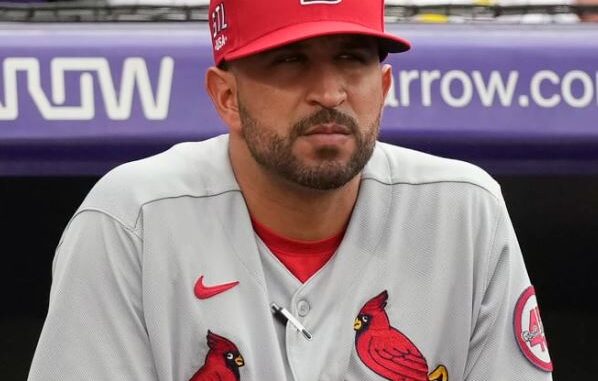
The Arizona Diamondbacks may have missed out on the 2026 MLB postseason, but their decision to acquire Nolan Arenado from the St. Louis Cardinals has given the organization an encouraging reason to look ahead with confidence. While the team fell short of its playoff ambitions, the veteran third baseman delivered a significant offensive rebound that helped justify Arizona’s decision to bring him aboard. The most important detail behind the transaction is the financial arrangement: St. Louis agreed to cover $31 million of the $42 million remaining on Arenado’s contract when the trade was completed in January, substantially reducing the Diamondbacks’ financial commitment.

For Arizona, the deal represented an opportunity to acquire an established major league player without assuming the full cost of his remaining contract. Arenado entered the season with an impressive résumé that included six Platinum Glove Awards and years of experience as one of baseball’s most accomplished third basemen. However, his declining offensive production during the previous campaign created uncertainty about what he could deliver in a new environment. The Diamondbacks took a chance that the change of scenery would help him regain his form, and his 2026 performance provided encouraging evidence that the move could pay off.
Despite failing to reach the postseason, Arizona had several positive developments to celebrate. Outfielder Corbin Carroll continued to demonstrate his speed and offensive ability, leading Major League Baseball in triples for the third consecutive season. That achievement made him the first player in MLB history to accomplish the feat, reinforcing his importance to the franchise’s future. Carroll’s historic performance offered a bright spot for the organization, while Arenado’s revival provided another reason for optimism as the team considers its next steps.
According to Bleacher Report’s Joel Reuter, Arenado was the Diamondbacks’ biggest surprise of the 2026 season. The assessment reflected the contrast between the veteran’s recent struggles and his improved production after arriving in Arizona. During the 2025 season, Arenado recorded an 89 OPS+ and accumulated 1.3 Wins Above Replacement (WAR) across 107 games. Those figures represented a difficult campaign for a player whose reputation had been built on consistent production, power and exceptional defense.
His 89 OPS+ indicated that his offensive output was below the league average after adjusting for league and ballpark conditions. Meanwhile, his 1.3 WAR reflected a relatively modest overall contribution compared with the standards he had established earlier in his career. Those numbers naturally raised questions about whether the veteran could recover his previous form, particularly as he entered his age-35 season. Arizona nevertheless saw an opportunity to acquire a proven player whose value might improve if he returned to his established offensive standards.
Arenado responded by recording 30 home runs during the 2026 campaign, marking his first season with at least that many homers since 2022. He also finished with a 122 OPS+, indicating that his offensive production was approximately 22% above the league average after accounting for relevant conditions. The improvement was a considerable change from his previous season and demonstrated that he could still provide meaningful power in a major league lineup.
That offensive recovery has strengthened the argument that Arizona benefited from the circumstances surrounding the trade. The Diamondbacks did not simply acquire a veteran with an impressive career history; they received a player who performed considerably better than his previous season might have suggested. His home-run production gave the lineup an additional power source, while his experience and defensive background offered value beyond his offensive statistics. Although individual performance cannot guarantee team success, Arenado’s resurgence gave Arizona a more encouraging outlook for the future.
The financial terms make the deal particularly noteworthy. Of the $42 million remaining on Arenado’s contract at the time of the transaction, the Cardinals agreed to pay $31 million, leaving approximately $11 million for Arizona to cover. St. Louis therefore assumed the majority of the remaining financial obligation to facilitate the move. That arrangement allowed the Diamondbacks to add a veteran player while limiting their direct financial exposure, a potentially important advantage for an organization that must balance its spending across multiple roster needs.
The reduced commitment could give Arizona more flexibility as it evaluates its offseason priorities. Building a competitive baseball team requires more than acquiring one established player; organizations must also maintain sufficient resources to address pitching, improve roster depth and retain or develop other important contributors. By avoiding responsibility for the full remaining value of Arenado’s contract, the Diamondbacks were able to obtain his services under more manageable financial terms. His return to 30-homer production made that arrangement more encouraging.
The Cardinals, meanwhile, accepted a different set of risks when they agreed to the deal. St. Louis was willing to contribute a substantial amount of money toward Arenado’s contract while moving the veteran to another organization. The decision created an opportunity to reshape the roster and acquire a different asset, but it also meant that the Cardinals would continue paying for a player who was no longer on their team. Arenado’s offensive rebound has made that financial commitment an important part of the discussion surrounding the transaction.
However, the Cardinals also received right-handed pitcher Jack Martinez in the deal, and his development could become central to the long-term evaluation. Young pitchers can take time to adjust to professional competition, improve their command and develop the consistency needed to succeed at the highest level. If Martinez eventually becomes a dependable major league contributor, St. Louis could receive meaningful value from the transaction despite the salary it agreed to absorb.
That possibility means the trade should not be judged solely by Arenado’s first season in Arizona. The Diamondbacks have already seen the immediate benefits of his offensive improvement, but the Cardinals’ return may take longer to evaluate. A developing pitcher could eventually become an important part of a rotation or bullpen, while Arenado’s production could fluctuate as he continues his career. The long-term outcome will depend on how both players perform and how effectively each organization uses the opportunities created by the transaction.
Arenado’s desire to leave St. Louis also formed part of the circumstances surrounding the move. His reported push for a trade helped create the conditions for a change of scenery, while the Cardinals’ willingness to contribute $31 million made the agreement financially possible. Arizona took advantage of the opportunity to acquire an experienced third baseman whose recent offensive decline had lowered expectations. His performance in 2026 subsequently gave the Diamondbacks a stronger reason to believe the move was worthwhile.
Still, the veteran’s individual rebound could not solve every problem facing Arizona. The Diamondbacks failed to qualify for the postseason, demonstrating that improved production from one player was not enough to achieve their broader goals. Reaching October requires consistent contributions across the roster, including reliable pitching, effective defense and a lineup capable of producing throughout the season. Arizona will need to examine the weaknesses that contributed to its disappointing finish and determine which changes could improve its chances in 2027.
Carroll’s continued development could be a significant part of that effort. His historic triples achievement showed that he remains an important offensive weapon, while Arenado’s power provides another established presence in the lineup. If the Diamondbacks can maintain strong production from both players and strengthen other areas of the roster, they could enter the next campaign with a more balanced team. Arenado’s performance gives the organization one fewer question to answer as it evaluates its plans.
The veteran’s next challenge will be maintaining his offensive production. His 30 home runs and 122 OPS+ represent a substantial improvement, but the Diamondbacks will need to see whether he can sustain that level of performance. Continued power production would strengthen the value of the trade, especially because Arizona did not assume the majority of his remaining contract. If his numbers decline again, the organization will have to reassess how much value it can expect from the remainder of his tenure.
For St. Louis, the focus will increasingly turn toward Martinez and the broader benefits of moving Arenado. The Cardinals will want to see whether the pitcher can develop into a meaningful contributor and whether the transaction ultimately supports their roster plans. The $31 million contribution remains a significant part of the deal, but a successful long-term return could help balance that cost. Until Martinez’s future becomes clearer, any definitive judgment about the Cardinals’ side of the trade remains premature.
Ultimately, the Diamondbacks have reasons to be encouraged by their acquisition of Arenado. They secured an experienced third baseman, received a 30-home-run season and benefited from a contract arrangement that left St. Louis responsible for most of the remaining financial obligation. Although Arizona missed the postseason, Arenado’s offensive recovery gave the team a tangible positive result from the transaction.
As the Diamondbacks prepare for 2027, their priority will be turning that individual success into a stronger team performance. If Arenado continues producing at a high level and Carroll maintains his momentum, Arizona could have important pieces in place for another postseason push. Meanwhile, the Cardinals will look to Martinez’s development to determine whether their decision produces lasting benefits. For now, the financial structure and Arenado’s resurgence have given Arizona an encouraging early return, while the final verdict on the trade will depend on what both organizations accomplish in the seasons ahead.
Leave a Reply