
Auburn athletes Tray Taylor and Keyshawn Hall could find themselves caught in the middle of an escalating legal battle over NCAA eligibility rules after a federal appeals court temporarily halted a ruling that had opened the door for some players from the 2022 recruiting class to receive an additional season of college competition.
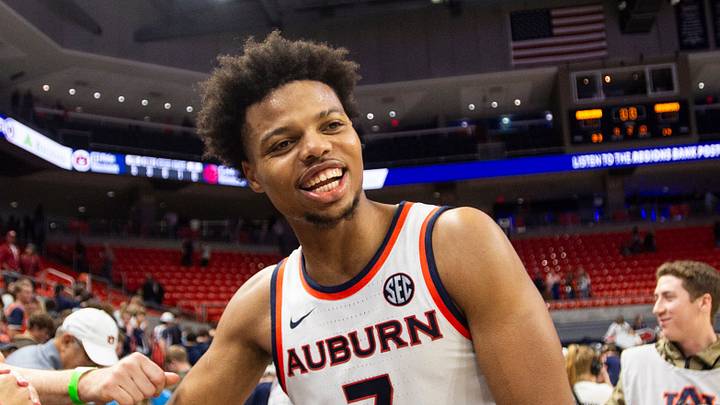
Taylor, a recent Auburn football transfer addition, and Hall, the former Tigers basketball standout, were both part of the 2022 class of student-athletes who were not automatically included under the NCAA’s newly established fifth-year eligibility framework. Their eligibility situations have therefore become closely connected to the broader legal fight surrounding athletes seeking an additional season.
The latest development came when the 10th U.S. Circuit Court of Appeals granted the NCAA’s request for a stay in the Wisne v. NCAA case. The underlying Colorado ruling had allowed athletes from the 2022 class who had remaining eligibility to compete for another season. The decision represented a significant development for players who otherwise appeared to be excluded by the NCAA’s new eligibility policy, which was adopted earlier this year.
For Taylor, the issue is particularly significant because his college career began at Tyler Junior College in 2022 before he eventually made his way to Auburn. Hall, meanwhile, has already established himself as a major name in Auburn basketball and could potentially benefit from another season if the courts ultimately allow similarly situated athletes to continue competing.
However, the appeals court’s decision does not automatically eliminate the possibility of either player pursuing relief through another legal avenue. Athletes around the country have already turned to state courts to request temporary restraining orders that would allow them to remain eligible. Those individual court decisions have created a complicated and increasingly fragmented situation for the NCAA as the start of the college football season approaches.
ESPN’s Dan Murphy noted that the stay does not erase the restraining orders that have already been granted to numerous athletes in state courts. Instead, the decision could potentially encourage even more players to pursue legal action. With the season rapidly approaching, the NCAA could face a growing number of eligibility challenges across different jurisdictions.
That creates an especially difficult situation for players such as Taylor and Hall. Even though the NCAA has secured a temporary victory in the federal appeals process, that ruling does not necessarily prevent individual athletes from asking state judges for emergency relief. If those requests continue to succeed, the NCAA could be forced to fight eligibility battles one player and one courtroom at a time.
LSU’s Eligibility Move Could Change the Landscape
The situation became even more complicated following LSU’s efforts to bring former Tigers player and current Tampa Bay Buccaneers edge rusher Jack Pyburn and other athletes back into college football.
LSU’s approach appears to have exposed just how complicated and flexible the NCAA’s evolving eligibility rules have become. The growing use of legal and regulatory loopholes has created a situation in which schools and athletes are increasingly willing to challenge the NCAA rather than simply accept its eligibility decisions.
That development could have consequences far beyond LSU.
The timing of the 10th Circuit’s ruling has drawn additional attention because it arrived shortly after LSU’s eligibility maneuver became a major topic across college football. The NCAA’s latest court victory could encourage the organization to take a more aggressive approach against future eligibility lawsuits, particularly as more schools and players attempt to exploit legal openings in the current system.
Still, the court battle appears far from finished.
Taylor and Hall could potentially pursue their own temporary restraining orders in state court, joining the growing number of athletes seeking judicial intervention. If successful, such an order could give them an opportunity to compete while the larger legal dispute surrounding the NCAA’s fifth-year eligibility policy continues to unfold.
The bigger issue is that the NCAA’s eligibility system is becoming increasingly difficult to enforce consistently. Every successful lawsuit or temporary restraining order creates another potential precedent for athletes in similar circumstances. At the same time, the NCAA risks creating further confusion by attempting to defend one interpretation of its rules in federal court while dealing with different outcomes in state courts.
With the college football season approaching and basketball eligibility questions also lingering, the dispute could become one of the most consequential off-field stories in college athletics.
For Auburn, the immediate concern is straightforward: Taylor and Hall could be forced to fight in court for an opportunity that they believe should already be available to them. Whether the NCAA’s latest appellate victory ultimately closes that door or simply pushes the eligibility fight into more state courtrooms remains to be seen.
What is becoming increasingly clear is that the battle over the NCAA’s fifth-year rules is not over. The stay may have slowed one path toward eligibility, but it has not stopped athletes from searching for another one.
Leave a Reply