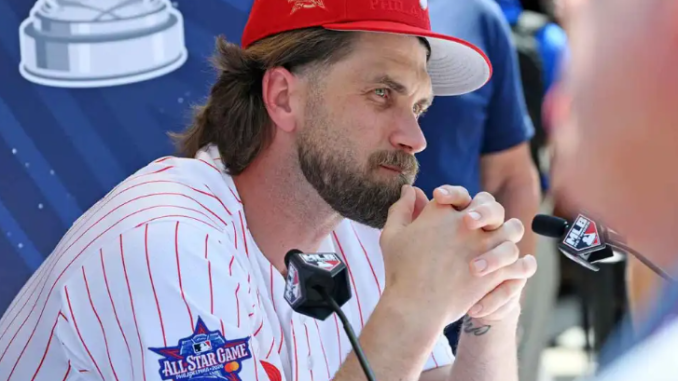
As the MLB trade deadline rapidly approaches, Philadelphia Phillies star Bryce Harper made it clear that the club cannot afford to stand pat if it hopes to make a serious World Series run. Following another frustrating offensive performance, Harper acknowledged what many around baseball have already recognized—the Phillies need reinforcements, particularly at the plate.
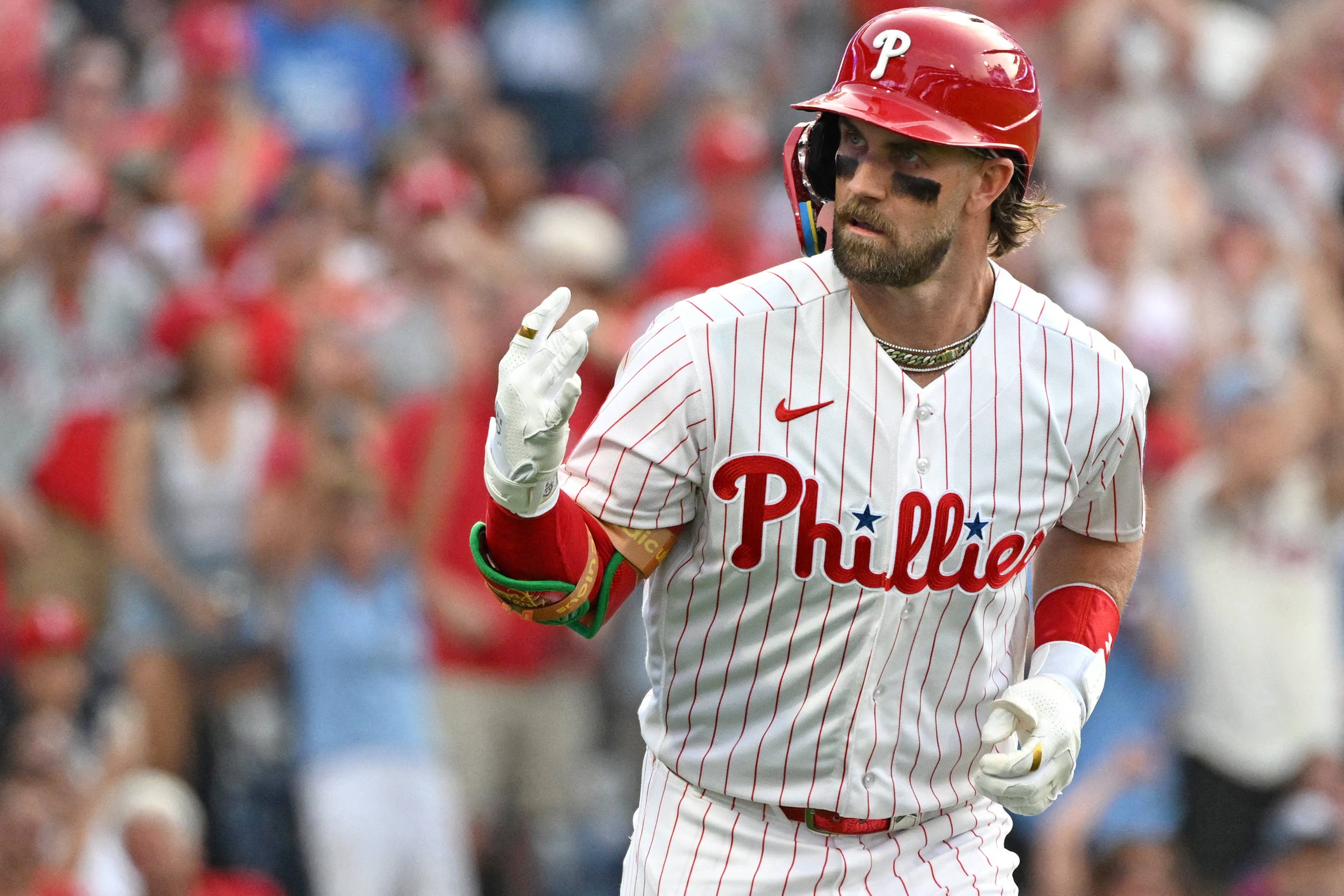
Philadelphia dropped a 1-0 decision to the Miami Marlins on Tuesday night at loanDepot Park, continuing an alarming stretch of offensive inconsistency that has raised concerns throughout the organization. Since returning from the All-Star break, the Phillies have managed just three wins in 11 games, posting a disappointing 3-8 record while repeatedly struggling to generate runs.
Interim manager Don Mattingly has done his best to maximize production from an outfield that has been one of the least productive groups in franchise history, but even he admits there is only so much lineup juggling can accomplish.
Entering Tuesday’s game, Phillies outfielders owned a combined .658 OPS, ranking 29th among all Major League teams. It also represented the sixth-lowest outfield OPS in the franchise’s 143-year history and the lowest mark since the 1942 season, highlighting just how severe the offensive issues have become.
Searching for a spark, Mattingly adjusted his lineup by starting Bryan De La Cruz in right field against Marlins ace Sandy Alcantara while rookie Gabriel Rincones Jr. watched from the bench.
Rincones had received an extended opportunity against right-handed pitching but struggled to capitalize, batting just .169 with 26 strikeouts in 77 at-bats versus right-handers.
“Rico’s been given a decent runway against right-handed pitching,” Mattingly explained before the game. “It hasn’t been as good as we’d like. De La has been getting his hits, and I know he’ll be solid defensively. I don’t think it’s going to be worse than what we’ve been seeing.”
De La Cruz provided Philadelphia’s lone bright spot offensively. He broke up Alcantara’s no-hit bid with a two-out single in the fifth inning before adding another two-out double in the seventh.
Still, those hits did little to change the outcome.
The Phillies were shut out for the sixth time in their first 11 games following the All-Star break, continuing a troubling trend in which the offense has produced one run or fewer in more than half of those contests.
Harper acknowledged that the Phillies have faced some of baseball’s top pitchers recently but emphasized that postseason success will require beating elite arms—not merely surviving them.
“I think we ran into some really good pitching,” Harper said. “Some buzzsaws, actually.”
However, Harper quickly pointed out that October baseball offers no easy matchups.
The former MVP didn’t hesitate when asked whether the Phillies need additional help before the trade deadline.
“I think we need some help,” Harper admitted. “I think we’ve done a pretty good job all year, but anytime you can bring in reinforcements, it helps.”
Harper’s comments echoed the priorities that have already emerged within the Phillies’ front office.
The organization is believed to be pursuing upgrades both offensively and on the pitching staff before the trade deadline, with adding an impact outfielder considered one of the club’s biggest priorities.
Several potential trade targets have reportedly emerged, including Lane Thomas and Starling Marte, while Toronto’s Daulton Varsho and San Francisco’s Heliot Ramos have also been linked as possible options capable of strengthening Philadelphia’s outfield.
When asked whether he believes the Phillies will successfully land the reinforcements they need, Harper deferred to President of Baseball Operations Dave Dombrowski.
“I don’t know,” Harper said. “We’ll see. That’s a Dave question.”
Dombrowski recently acknowledged that this year’s trade market has become increasingly complicated because so many teams remain within striking distance of a postseason berth.
According to the veteran executive, numerous clubs that initially appeared likely to become sellers are now delaying decisions after moving closer to Wild Card contention.
“I talked to one club today that said they’re not sure they’re going to move players anymore because they’ve gotten within 4½ games,” Dombrowski explained. “A lot of teams are waiting.”
That uncertainty has made negotiations more difficult across Major League Baseball.
Although Philadelphia’s farm system is generally ranked among the bottom third of baseball by several evaluators, Dombrowski remains confident the organization possesses enough prospect talent to complete meaningful trades.
He emphasized that every deadline comes down to one key question—not whether a team has prospects, but whether it is willing to part with them in exchange for proven major league talent.
“I’ve never been in a position where I haven’t had players to make a trade,” Dombrowski said. “It’s really about deciding what you’re willing to give up for the quality of player you’re trying to acquire.”
Beyond adding another impact bat, the Phillies are also expected to pursue starting pitching depth and another high-leverage reliever to strengthen the bullpen for the postseason.
With the trade deadline drawing near, Philadelphia’s front office faces one of its most important stretches of the season. The Phillies remain firmly in the playoff race, but recent offensive struggles have made it increasingly clear that standing still may not be enough.
As Harper emphasized, if the Phillies hope to compete with powerhouse teams like the Los Angeles Dodgers in October, reinforcements—both in the lineup and on the mound—may be essential to keeping their championship aspirations alive.
Leave a Reply