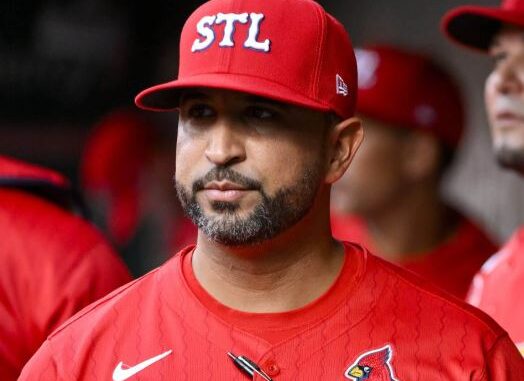
The St. Louis Cardinals entered the 2026 season with modest expectations, but the club has managed to make the year far more competitive than many anticipated. A number of young players, including Jordan Walker and JJ Wetherholt, have emerged as important pieces of the team’s future, giving St. Louis reasons to remain encouraged about its rebuilding process. However, one of the club’s most important bullpen pieces has gone in the opposite direction, creating a major concern heading into the final stretch of the season.
Riley O’Brien, who earned an All-Star selection this season and has established himself as the Cardinals’ primary closer, has experienced a significant second-half decline. Despite leading the National League with 37 saves, O’Brien owns a 4.13 ERA, and his recent performances have raised questions about whether St. Louis can confidently rely on him in high-pressure situations. What initially looked like the emergence of a dependable closer has increasingly become one of the more uncertain areas of the Cardinals’ roster.
According to ESPN’s Bradford Doolittle, O’Brien has become the biggest disappointment on the Cardinals this season because of his struggles after the All-Star break. Doolittle pointed to the broader problems within St. Louis’ relief corps, noting that only two teams have blown more saves than the Cardinals’ relievers while only one club has allowed a higher percentage of inherited runners to score. O’Brien’s numbers have become a particularly visible example of those bullpen issues, especially because he entered the season with expectations of being a dependable late-inning weapon.
The most damaging stretch of O’Brien’s season has come since the All-Star break. He has blown four saves during the second half and has posted a 5.40 ERA over that span. For a pitcher whose primary responsibility is protecting narrow leads in the ninth inning, those numbers represent a significant decline in reliability. The problem has not simply been one poor outing, either. A series of inconsistent appearances has made it increasingly difficult for the Cardinals to know what version of their closer will show up when the game is on the line.
One of the most memorable examples came during a return trip to Philadelphia. O’Brien entered the ninth inning with the Cardinals holding a seemingly comfortable 4-0 advantage and was just two outs away from securing the victory. Instead, the Phillies mounted a stunning comeback, with Kyle Schwarber ultimately delivering a walk-off home run that completed the collapse. The outing became another reminder of the growing volatility surrounding O’Brien late in games and added to the concerns about his command and consistency.
The contrast between O’Brien’s overall season and his second-half performance is particularly striking. Leading the NL with 37 saves demonstrates that he has been given significant responsibility and has successfully converted plenty of opportunities. His All-Star selection also reflects how highly his first-half performance was viewed. Yet his 4.13 ERA and replacement-level bWAR, combined with his recent struggles, have complicated the picture. The Cardinals are now faced with the challenge of determining whether the second-half decline is a temporary slump or an indication of a deeper issue.
There is still a reason for St. Louis to remain hopeful about O’Brien. Doolittle noted that the right-hander possesses the raw stuff necessary to become an elite closer, but consistency and command remain major areas that need improvement. That distinction is important because O’Brien’s struggles do not necessarily mean his future is doomed. His ability to generate saves and his underlying pitching talent suggest there is still a path toward becoming the dominant late-inning reliever the Cardinals envisioned.
For manager Oliver Marmol and the Cardinals’ front office, however, potential is not enough when games are being decided in the ninth inning. A rebuilding team can tolerate growing pains from young players, but a closer is placed in situations where every mistake can immediately change the outcome of a game. Walks, missed locations and poorly executed pitches become magnified when there are only three outs separating a team from victory. That makes O’Brien’s command and consistency particularly important as St. Louis evaluates its bullpen heading into the offseason.
The Cardinals may have believed they had discovered a long-term answer at closer when O’Brien earned his All-Star recognition and piled up saves throughout the first half. His second-half regression has now introduced considerable uncertainty into that plan. St. Louis does not necessarily need to abandon its belief in O’Brien, but the organization will have to determine whether he can regain the form that made him one of the league’s more productive closers earlier in the year.
With the 2026 season approaching its conclusion, O’Brien’s performance will be closely watched. A strong finish could help restore confidence and provide the Cardinals with a clearer path forward, while continued struggles could force the organization to reconsider how it handles the ninth inning in 2027. For now, the Cardinals have a closer with an impressive save total, an All-Star résumé and plenty of natural ability but also a troubling second-half record that has turned one of the team’s apparent strengths into a significant question mark.
Leave a Reply