
The New York Mets have endured a frustrating 2026 campaign marked by inconsistent starting pitching, disappointing performances from veteran arms, and a season that has gradually shifted from postseason aspirations to planning for the future. However, amid the struggles, one of the organization’s brightest developments has been the emergence of right-handed pitcher Christian Scott, whose impressive return from injury is giving the Mets renewed optimism about the future of their starting rotation.
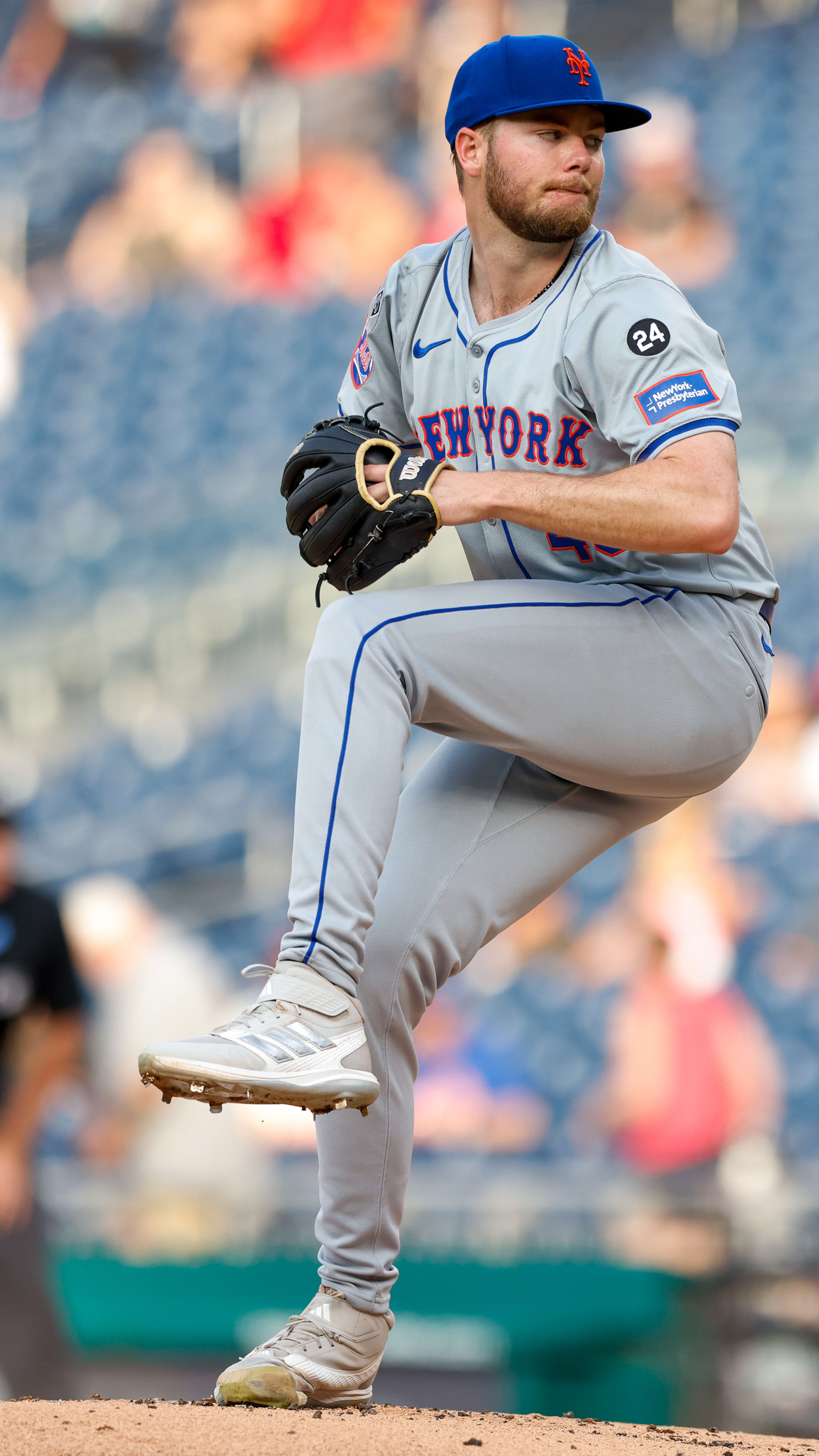
As the club prepares for the second half of the season and begins laying the foundation for a stronger 2027 campaign, Scott has established himself as one of the most encouraging stories on the roster. The 27-year-old has not only exceeded expectations after returning from Tommy John surgery but is also beginning to show signs that he could develop into one of the franchise’s frontline starting pitchers.
Mets’ rotation has fallen short throughout 2026
Starting pitching has been one of the Mets’ biggest weaknesses this season. Entering the second half, New York ranks 24th in Major League Baseball with a 4.52 ERA from its starting rotation, a disappointing figure for a club that entered the year expecting its veteran pitchers to anchor the staff.
The struggles have extended throughout the rotation. Veteran ace Freddy Peralta, who was expected to lead the pitching staff, has instead endured the most difficult season of his career, failing to provide the consistency the Mets desperately needed. Left-hander Sean Manaea has also struggled to secure a permanent role in the rotation and has spent much of the season working out of the bullpen after failing to produce reliable results as a starter.
Even highly regarded rookie Nolan McLean, who has emerged as one of the organization’s top young arms, experienced turbulence during the season. Although McLean remains one of the Mets’ brightest long-term building blocks, a difficult stretch in May caused his ERA to climb and served as a reminder that even elite prospects face growing pains at the major league level.
With veteran starters failing to meet expectations, the Mets have increasingly turned to their young pitchers for stability and hope.
Youth movement becoming foundation of future rotation
Rather than the experienced veterans carrying the club, New York’s most encouraging performances have come from its next generation of starting pitchers.
McLean has continued to demonstrate why many evaluators believe he possesses ace-level potential, while Christian Scott has quietly built one of the most impressive comeback seasons in baseball. More recently, rookie Zach Thornton has also begun making a strong case to remain part of the club’s long-term plans.
Together, the trio has provided the Mets with something they have lacked throughout much of 2026—optimism.
With the team’s postseason hopes fading, the organization has increasingly shifted its focus toward evaluating which young players can become foundational pieces entering next season.
McLean appears virtually guaranteed to occupy one of the rotation spots in 2027. Scott now seems poised to join him, while Thornton continues fighting to prove he belongs as another long-term option.
Christian Scott’s remarkable comeback continues
Scott’s emergence has been particularly encouraging considering everything he has overcome.
Once ranked among baseball’s Top 100 prospects, Scott appeared to have his development interrupted when he underwent Tommy John surgery late in the 2024 season. The procedure forced him to miss the entire 2025 campaign, creating uncertainty about whether he would regain the form that once made him one of the Mets’ premier pitching prospects.
Instead of merely returning to the mound, Scott has exceeded expectations.
His 54 innings pitched this season represent his first extended major league action since the surgery, yet he has shown little indication that the lengthy rehabilitation process has diminished his effectiveness.
Through the first half of the season, Scott has compiled an impressive 3.17 ERA while averaging 10.83 strikeouts per nine innings and maintaining a respectable 1.296 WHIP. Those numbers rank among the strongest performances by young National League starters returning from major elbow surgery and demonstrate both his ability to miss bats and limit damaging contact.
More importantly, Scott has shown that his arsenal remains intact despite the injury setback.
Elite stuff is translating into major league success
Advanced metrics further reinforce why the Mets are so encouraged by Scott’s development.
According to Baseball Savant data, Scott’s four-seam fastball has averaged just over 95 miles per hour this season, placing him comfortably in the upper third of qualified Major League pitchers in terms of velocity.
His fastball has allowed him to consistently overpower hitters while setting up his secondary pitches more effectively.
Scott has also excelled at limiting quality contact from opposing hitters. His hard-hit rate sits at only 35 percent, placing him in the 73rd percentile across Major League Baseball. At the same time, his strikeout rate of 27.9 percent ranks in the 83rd percentile, highlighting his ability to generate swings and misses against quality competition.
Those advanced numbers suggest Scott’s success has not been driven by luck but rather by genuine improvements supported by elite underlying metrics.
The combination of above-average velocity, swing-and-miss ability, and weak contact has many within the organization believing Scott possesses the raw tools necessary to eventually develop into a legitimate top-of-the-rotation starter.
Biggest challenge remains building endurance
Despite the encouraging results, Scott still has an important hurdle to overcome before reaching his full potential.
One of the primary areas requiring improvement is his ability to work deeper into games.
Because this season marks his first full campaign following Tommy John surgery, the Mets have understandably monitored his workload carefully. As a result, Scott has frequently exited games before completing five innings, limiting both his individual impact and reducing the workload on the bullpen.
That trend began to change during his final start before the All-Star break against the Kansas City Royals, when Scott successfully completed at least five innings while maintaining his effectiveness.
The Mets hope that outing represents the beginning of the next stage in his development.
If Scott can consistently pitch into the sixth and seventh innings while maintaining his current effectiveness, he could quickly evolve from a promising young starter into one of the National League’s most dependable rotation pieces.
Confidence may determine Scott’s ceiling
Perhaps the most significant factor in Scott’s continued development cannot be measured by traditional statistics or advanced analytics.
After returning from a major elbow reconstruction procedure, regaining complete confidence often proves just as important as recovering physical strength.
For many pitchers, Tommy John surgery presents both physical and mental challenges. Trusting the repaired elbow, attacking hitters aggressively, and believing the arm can withstand the demands of pitching every fifth day all take time to redevelop.
Scott appears to be making steady progress in that area.
Each successful outing has increased his confidence, allowing him to throw more aggressively while demonstrating the same electric stuff that made him one of the organization’s top prospects before his injury.
The Mets believe continued confidence could unlock another level of performance during the second half of the season.
Scott could become centerpiece of Mets’ turnaround
While Nolan McLean remains widely projected as the future ace of the franchise, Christian Scott is rapidly establishing himself as another potential cornerstone of the Mets’ pitching staff.
His impressive return from Tommy John surgery, combined with elite strikeout ability, above-average fastball velocity, and encouraging underlying metrics, has significantly changed expectations surrounding his long-term future.
Instead of merely competing for a rotation spot entering 2027, Scott is now positioning himself to become one of New York’s most important starting pitchers for years to come.
If he continues building stamina, develops greater consistency, and maintains the confidence that has fueled his comeback, the Mets could enter next season with one of baseball’s most promising young pitching duos in Scott and McLean.
Scott will have another opportunity to strengthen that case when he takes the mound Thursday night to open the Mets’ home series against the Philadelphia Phillies. Another strong performance would further reinforce the growing belief that New York has found a key piece of its future rotation—and perhaps one of the biggest reasons for optimism as the franchise looks toward a rebound in 2027.
Leave a Reply