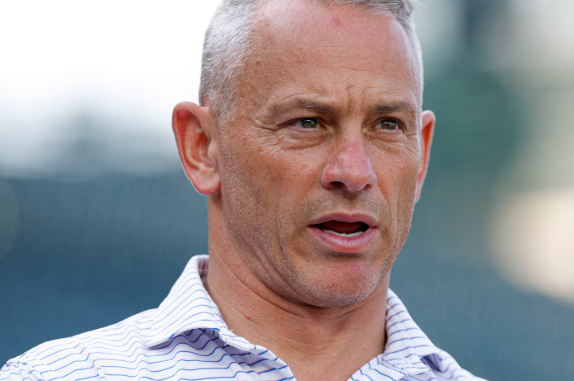
The Chicago Cubs entered the 2026 MLB trade deadline with a clear mission: strengthen a roster capable of making a deep postseason run without sacrificing the organization’s brightest young talent. President of Baseball Operations Jed Hoyer accomplished exactly that, acquiring frontline starters Kevin Gausman and Clay Holmes, a long-term bullpen arm in Ryan Zeferjahn, and left-handed pitcher Braxton Garrett while managing to keep elite prospects Josiah Hartshorn and Jaxon Wiggins out of every deal. The aggressive approach immediately earned praise across baseball, but one addition may prove valuable long after this season ends.

While Gausman and Holmes both arrived as veteran rental starters, Holmes appears to fit the Cubs’ long-term plans better than anyone initially expected. Although Chicago originally explored acquiring pitchers with multiple years of club control, those negotiations never materialized into a deal. Reports linked the Cubs to Angels left-hander Reid Detmers before the deadline, but that pursuit ultimately fell apart. Instead, Chicago pivoted to Holmes and Gausman, a move that may have unintentionally uncovered a future cornerstone for the rotation.
Holmes’ pitching style makes him an especially attractive fit on the North Side. Throughout his career, the veteran right-hander has relied heavily on generating ground balls rather than chasing strikeouts, making defensive support one of the biggest factors in his success. During his time with the New York Mets, inconsistent infield defense often turned routine grounders into extended innings and additional pressure. With the Cubs boasting one of baseball’s strongest defensive infields, Holmes could immediately benefit from cleaner defensive play behind him, potentially allowing his numbers to improve even further.
That natural fit has already sparked speculation that Chicago should consider extending Holmes beyond the 2026 season instead of treating him as a short-term acquisition. The Cubs are not expected to rush into negotiations before Holmes even makes his first appearance for the club, especially as both sides determine whether he needs another rehabilitation outing or is ready to join the major league rotation immediately. However, if Holmes performs well during the final stretch of the regular season and contributes in October, extension talks could become a significant offseason priority.
Financially, a long-term agreement also appears realistic. Even with the soaring cost of starting pitching across Major League Baseball, Holmes is unlikely to command one of the market’s largest contracts. A deal averaging roughly $20 million annually over three seasons could make sense if he finishes the year healthy and productive. Holmes will turn 36 next March, meaning teams are unlikely to commit to an exceptionally lengthy contract, but a three-year agreement would provide both stability for the player and reliable veteran leadership for Chicago’s rotation.
The timing also works in the Cubs’ favor. Several rotation spots are expected to open after the season, and the organization will have considerable financial flexibility to address those vacancies. Rather than spending heavily on another free-agent starter, Chicago could choose to invest in a pitcher who has already demonstrated he can succeed within the club’s system. Holmes’ ground-ball profile, postseason experience, and compatibility with the Cubs’ defensive identity make him an ideal candidate to remain in Chicago well beyond this playoff push.
For now, Holmes has yet to throw a pitch in a Cubs uniform, but expectations are already rising. If he lives up to those expectations during the second half and helps anchor a postseason run, the trade deadline acquisition could quickly evolve from a short-term rental into one of the franchise’s most important long-term investments. What began as a deadline upgrade may ultimately become the first major extension of the Cubs’ next competitive core.
Leave a Reply