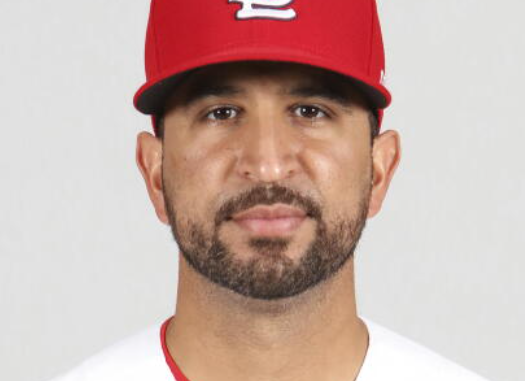
John Sipin’s baseball journey is one of perseverance, resilience, and international success. Although he was selected in the 55th round of the inaugural Major League Baseball amateur draft by the St. Louis Cardinals in 1965—a position that rarely produces future stars Sipin built a memorable career that stretched from the Cardinals’ farm system to the major leagues before blossoming into stardom in Japan.

While his time in Major League Baseball was brief, Sipin left an unforgettable mark by tying a National League record in his debut and later becoming one of the most accomplished American players to compete in Japanese professional baseball. His remarkable career showcased talent, determination, and the ability to thrive when given the right opportunity.
Early Life and Rise Through the Cardinals Organization
John Sipin grew up in Watsonville, California, an agricultural community in the Pajaro Valley near Monterey Bay. The region was well known for its farming industry, housing major agricultural companies such as Driscoll’s, Martinelli’s, and Monterey Mushrooms.
Sipin came from a hardworking family with Filipino-American roots. His father, Johnny Imperial Sipin, immigrated from the Philippines before marrying Ethel White, whose family had relocated to California from Arkansas. Johnny managed farmworker camps, instilling discipline and work ethic in his son.
Despite his father’s modest 5-foot-4 frame, John developed into a tall, athletic 6-foot-2 competitor who excelled in multiple sports, including baseball, basketball, and golf. After graduating from Watsonville High School in 1964, he attended Cabrillo College, where his baseball skills caught the attention of Cardinals scout Bill Sayles.
The Cardinals selected Sipin during the very first MLB amateur draft in June 1965. Although drafted in the 55th round, the organization quickly recognized his exceptional arm strength and offensive potential.
Sparky Anderson Recognizes His Talent
Sipin began his professional career in 1966 with the Cardinals’ Class A affiliate in St. Petersburg, Florida, under future Hall of Fame manager Sparky Anderson.
Playing shortstop, Sipin became an important contributor during an incredible 19-game winning streak. His combination of defensive ability and timely hitting made him one of Anderson’s favorite young players.
Anderson praised Sipin’s arm, once saying he had never seen an infielder with a stronger throwing arm.
His outstanding performance earned him a midseason promotion to Cedar Rapids, Iowa, where his offensive game continued to flourish.
Hall of Fame slugger Joe Medwick, then serving as the Cardinals’ minor league hitting instructor, admired Sipin’s quick hands and explosive bat speed. Medwick believed the young infielder possessed one of the quickest swings among all Cardinals prospects and predicted he would develop into a legitimate power hitter.
Sipin validated those expectations by hitting 14 home runs while driving in 63 runs during the 1966 season, convincing the Cardinals to add him to their 40-man roster.
Position Change Helps His Development
Returning to play under Sparky Anderson with Modesto in 1967, Sipin displayed tremendous power by hitting 19 home runs. However, his defensive consistency at shortstop remained a concern, as he committed 51 errors over 123 games.
Recognizing his athleticism and powerful arm, the Cardinals shifted him to second base before the 1968 season.
The move proved beneficial.
Playing for Arkansas in the Texas League, Sipin quickly adapted to his new position and became one of the league’s best defensive second basemen. He led all Texas League second basemen in putouts, assists, and double plays while earning selection to the league’s All-Star team.
With MLB preparing for expansion in 1969 through the addition of the Montreal Expos and San Diego Padres, Sipin hoped one of the new clubs would select him in the expansion draft. He especially wanted to join the Padres because they played in his home state of California.
Ironically, San Diego passed on Sipin and instead selected another Cardinals infield prospect, Jerry DaVanon.
A Trade Opens the Door to the Major Leagues
Sipin opened the 1969 season in Triple-A Tulsa while the expansion Padres struggled to find stability at second base.
Manager Preston Gomez and coach Sparky Anderson believed the club needed an upgrade in the middle infield. Anderson strongly recommended Sipin, remembering the young infielder’s exceptional talent from their days together in the Cardinals organization.
On May 22, 1969, San Diego acquired Sipin from St. Louis in exchange for Jerry DaVanon and Bill Davis.
Just two days later, Sipin received his first opportunity in the major leagues.
Historic Major League Debut
Sipin wasted no time making history.
Batting second against the Chicago Cubs on May 24, 1969, he tripled in his very first major league at-bat against left-hander Ken Holtzman. Later in the same game, Sipin tripled again off Holtzman, becoming only the second player in National League history to record two triples in his major league debut.
The only other National League player to accomplish that feat was Hall of Famer Willie McCovey, who had done it a decade earlier during his spectacular debut with the San Francisco Giants.
Sipin followed his memorable first game with another impressive performance, collecting three hits in the next contest against Chicago.
His early success continued when he hit his first major league home run in dramatic fashion. Facing Montreal in extra innings, Sipin launched a go-ahead homer in the tenth inning that lifted the Padres to a 3-2 victory.
He later homered against future Hall of Fame pitcher Don Sutton and recorded multiple hits against Cardinals ace Bob Gibson, proving he could compete against some of baseball’s greatest pitchers.
Sipin also became one of the earliest players of Filipino descent to appear in Major League Baseball, adding historical significance to his career.
Injuries and Missed Opportunities
Although Sipin showed flashes of promise, injuries interrupted his rookie season.
A serious back problem required hospitalization during August, ending his campaign prematurely.
He finished the season as San Diego’s primary second baseman, making 54 starts while playing reliable defense with only seven errors. However, his batting average settled at .223, and despite his unforgettable debut, he never recorded another triple in the majors.
Over the next two seasons, Sipin continued producing excellent numbers in the minor leagues but never received another extended opportunity with the Padres.
Outstanding Minor League Seasons
Rather than becoming discouraged, Sipin developed into one of professional baseball’s most productive Triple-A hitters.
In 1970 with Salt Lake City under manager Don Zimmer, he batted .301 while leading the team in nearly every major offensive category, including total bases, slugging percentage, runs scored, doubles, home runs, and RBIs.
The following season, Sipin expected to remain with the Padres after making the Opening Day roster.
Instead, management informed him he was being reassigned to Hawaii before the season began.
Rather than allowing disappointment to affect his play, Sipin responded with another outstanding season, batting .318 while leading Hawaii in hits, total bases, and doubles.
Despite consistently proving himself offensively, another major league opportunity never came.
Becoming a Japanese Baseball Superstar
Unable to secure a permanent place in Major League Baseball, Sipin looked overseas and signed with the Taiyo Whales of Japan’s Central League in 1972.
The move transformed his career.
Sipin quickly adapted to Japanese baseball and became one of the league’s most respected foreign players.
Nicknamed “Lion Maru” because of his long hair and resemblance to a popular Japanese television hero capable of transforming into a lion-headed warrior, Sipin became both a fan favorite and an elite performer.
During his very first season in Japan, the 25-year-old second baseman became the first foreign player ever to win a Japanese Gold Glove Award. He also hit three grand slams, demonstrating both defensive excellence and tremendous power.
Grateful for the appreciation he received from Japanese fans, Sipin immersed himself in the culture and learned to speak fluent Japanese.
Partnership With Sadaharu Oh
After six highly successful seasons with the Taiyo Whales, Sipin joined the legendary Yomiuri Giants in 1978.
Playing alongside Japanese baseball legend Sadaharu Oh, Sipin became part of one of the league’s most dangerous offensive combinations.
The pair frequently hit back-to-back in the lineup.
Their best season together came in 1979 when Oh led the Giants with 33 home runs while Sipin followed closely with 27, giving Yomiuri one of Japan’s most feared power duos.
By then, Sipin had established himself as one of the finest American players ever to compete in Japan.
The Associated Press even described him as the most consistent American playing in Japanese baseball.
Remarkable Career Overseas
Sipin retired following the 1980 season after compiling one of the most successful careers ever enjoyed by an American position player in Japan.
Across nine seasons, he appeared in 1,036 games while producing remarkable offensive numbers:
- 1,124 career hits
- 218 home runs
- .297 batting average
- Three separate 30-home-run seasons
Those achievements firmly established him as one of the premier foreign stars in Japanese baseball history.
Life After Baseball
Following his retirement, Sipin successfully transitioned into a second career in real estate, dividing his time between Japan and California.
Although his Major League career lasted only one season, his legacy extended far beyond North America. He became a trailblazer for Filipino-American players, a beloved figure in Japanese baseball, and an example of how perseverance can lead to success even when opportunities in the major leagues are limited.
John Sipin’s story serves as a reminder that baseball greatness is not measured solely by accomplishments in Major League Baseball. While he entered professional baseball as a little-known 55th-round Cardinals draft pick, he ultimately built an international legacy that earned him admiration on two continents and secured his place among the most successful American players ever to compete in Japan.
Leave a Reply