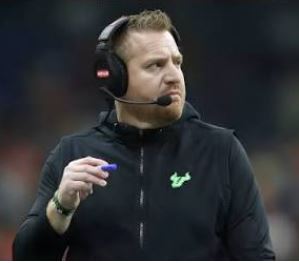
Auburn’s return to Neyland Stadium ended in disappointment for Alex Golesh, as the Tigers surrendered a halftime lead and fell 24-14 to No. 17 Tennessee on Saturday. The defeat dropped Auburn to 3-2 overall and 1-2 in SEC play, while Tennessee improved to 4-1 and secured its first conference victory of the season. For Golesh, the loss was particularly significant because of his history with Tennessee coach Josh Heupel and his previous role as the Volunteers’ offensive coordinator.
The Tigers entered the matchup hoping to give Golesh a memorable return to Knoxville, but the game ultimately exposed several issues Auburn will need to correct during its upcoming bye week. Auburn led 7-3 at halftime, but Tennessee completely changed the game after the break, outscoring the Tigers 21-7 in the second half. The Volunteers established their running game, forced turnovers and repeatedly took advantage of Auburn penalties and missed tackles.
Golesh did not try to hide from the problems after the game. In his opening remarks, he acknowledged that Tennessee simply played better, particularly in the second half. He credited the home crowd for creating a difficult environment and admitted that Auburn failed to execute well enough to turn its first-half opportunities into sustained offensive production.
Auburn’s First-Half Offense Never Found Its Rhythm
One of the biggest issues for Auburn was its inability to maintain offensive rhythm. The Tigers were repeatedly hurt by pre-snap penalties and false starts, especially while dealing with the noise inside Neyland Stadium.
Auburn was penalized 11 times for 94 yards, a figure that became one of the defining statistics of the game. Golesh acknowledged that the Tigers did not handle the crowd noise well enough and that the repeated penalties made it extremely difficult for the offense to operate efficiently.
The problem was not necessarily the overall offensive plan, according to Golesh. He said Auburn had a plan it believed could work, but the Tigers failed to execute it. His blunt assessment was that if a team does not execute its plan, the plan ultimately looks bad regardless of how good it appeared during preparation.
The penalties repeatedly put Auburn behind the chains. Golesh pointed out that Auburn found itself facing first-and-15 situations several times, forcing the offense to continually restart drives. That prevented the Tigers from establishing the tempo and rhythm they wanted.
The offense improved considerably in the second half, but the damage from the early struggles had already been done.
Golesh Takes Responsibility for Fourth-and-1 Decision
One of the biggest coaching decisions of the night came late in the fourth quarter when Auburn faced fourth-and-1 from its own 24-yard line while trailing 17-14.
Rather than punt, Golesh elected to go for the first down.
The gamble failed when Auburn was stopped short, giving Tennessee excellent field position. The Volunteers eventually turned that opportunity into the touchdown that effectively sealed the game.
Golesh defended the decision, explaining that Auburn believed it had identified an opportunity based on how Tennessee’s defense had reacted to similar formations. The plan was designed to get the ball outside and create space rather than simply challenge Tennessee’s defensive front directly.
He acknowledged that Auburn had limited possessions and needed to create something offensively. From his perspective, the Tigers had enough offensive momentum at that point to justify taking the risk.
Ultimately, though, the decision became one of the most scrutinized moments of the game because Tennessee immediately capitalized after the stop.
Tennessee’s Running Game Changed Everything
Golesh repeatedly identified Auburn’s inability to stop the run as the central reason the game slipped away.
Tennessee rushed for 237 yards, with senior running back DeSean Bishop producing a career performance. Bishop carried the ball 34 times for 220 yards and three touchdowns, repeatedly breaking through Auburn’s defense after halftime.
The contrast between the two halves was dramatic. Auburn’s defense was one of the brighter aspects of the first half, generating pressure, creating negative plays and forcing turnovers. But once Tennessee committed to its rushing attack, Auburn struggled to maintain gap discipline.
Golesh pointed specifically to missed tackles, poor fits and a lack of push from the defensive front. Tennessee began controlling the line of scrimmage, making it increasingly difficult for Auburn to force the Volunteers into obvious passing situations.
That allowed Tennessee to stay ahead of the chains and eventually wear down the Tigers.
Golesh did not completely abandon confidence in his defense, however. He said he still believes Auburn has the ability to develop into an elite-level defense but acknowledged that the team needs to become much more consistent in critical moments.
His concern was not simply effort. Golesh said Auburn’s players are willing to fight, but the level of detail and strain is not consistently where it needs to be.
George MacIntyre Changed Tennessee’s Offense
Another major storyline was Tennessee’s decision to replace freshman quarterback Faizon Brandon with George MacIntyre.
Brandon struggled badly before being removed. He completed just 3 of 8 passes for zero yards and threw an interception that helped Auburn take the lead. Tennessee coach Josh Heupel explained that Brandon was not operating effectively and did not feel 100 percent.
MacIntyre immediately provided more stability.
He finished 8-of-10 passing for 86 yards, completing his first six passes and avoiding a turnover. More importantly, Tennessee’s offense became increasingly effective after the quarterback change, particularly once the Volunteers combined MacIntyre’s passing ability with their physical rushing attack.
Golesh praised MacIntyre’s efficiency and acknowledged that Auburn failed to generate enough pressure against him. Tennessee used additional protection, allowing MacIntyre time to settle into the game.
That combination proved critical.
Once Auburn could no longer consistently pressure the quarterback, Tennessee was able to keep the offense on schedule and rely heavily on Bishop.
Golesh Continues to Defend Byrum Brown
Despite Auburn’s offensive struggles and Brown’s three turnovers, Golesh remained supportive of his quarterback.
Brown finished with 159 passing yards, one passing touchdown, two interceptions and a fumble, but he was also Auburn’s leading rusher with 107 yards and a touchdown on 19 carries.
The veteran quarterback produced several impressive individual plays, including a spectacular 57-yard run in the fourth quarter that helped set up Auburn’s second touchdown.
Golesh rejected the idea that Brown was completely out of rhythm. He argued that Brown generally operated effectively when Auburn was not constantly dealing with penalties and unfavorable down-and-distance situations.
He also pointed to several opportunities where Brown could have gained additional yardage with his legs. From Golesh’s perspective, Brown’s performance was more complicated than the final statistics suggested.
The final interception, however, proved particularly costly. Brown was attempting to throw the ball away late in the game when the pass was tipped and intercepted by Tennessee defensive back Tevis Metcalf, ending Auburn’s final realistic chance to mount a comeback.
Auburn’s Bye Week Comes at an Important Time
The loss now sends Auburn into its bye week with significant work to do.
The Tigers will have time to address the penalties, tackling problems, defensive run fits and offensive consistency before returning to action. Golesh indicated that Auburn will use the early portion of the bye week for practice before returning to a normal game-week schedule.
That break could prove especially important because Auburn’s upcoming schedule is brutal.
After the bye, the Tigers face Georgia, LSU and Ole Miss, with LSU representing the only home game in that stretch.
That means the Tennessee loss could become even more consequential if Auburn cannot quickly correct the problems exposed at Neyland Stadium.
The Tigers have already shown flashes of competitiveness under Golesh, but SEC football leaves little room for repeated mistakes. Eleven penalties for 94 yards, inconsistent tackling and an inability to stop Tennessee’s rushing attack are problems that will be difficult to overcome against the teams Auburn is about to face.
A Difficult Night for Golesh in Knoxville
The defeat also carried an emotional element for Golesh.
He spent time on Heupel’s Tennessee staff and was part of the offensive system that helped establish the Volunteers as a major SEC program. Returning to Knoxville as Auburn’s head coach created one of the more intriguing storylines of the weekend.
Heupel had praised Golesh before the game, acknowledging the familiarity between the two staffs and noting that the matchup worked both ways because of the number of coaches with connections to each program.
But once the game began, the friendship and familiarity disappeared temporarily.
Tennessee ultimately won the coaching battle on the field by making better second-half adjustments, establishing the run and taking advantage of Auburn’s mistakes.
For Golesh, the defeat was not presented as a disaster but as a clear lesson about the margins required to win SEC games.
Auburn had opportunities. The Tigers led at halftime. The defense created turnovers. Brown produced several explosive plays. But Tennessee executed better when the game became most important.
That is the message Golesh will now take into the bye week.
Auburn’s season is far from over, but the schedule ahead means the Tigers cannot afford to repeat what happened in Knoxville. The next stretch will determine whether the loss to Tennessee becomes a turning point or the beginning of a much more difficult slide.
For now, Golesh is accepting responsibility, defending his players and insisting that the Tigers still have the ability to become the team he believes they can be. But with Georgia, LSU and Ole Miss waiting, Auburn’s margin for error has become significantly smaller.
Leave a Reply