
The St. Louis Cardinals entered the 2026 MLB trade deadline with a clear understanding of where the organization stood. Rather than making a desperate attempt to remain in the postseason race, the front office once again chose to sell, continuing a rebuilding strategy that has become increasingly important under president of baseball operations Chaim Bloom.
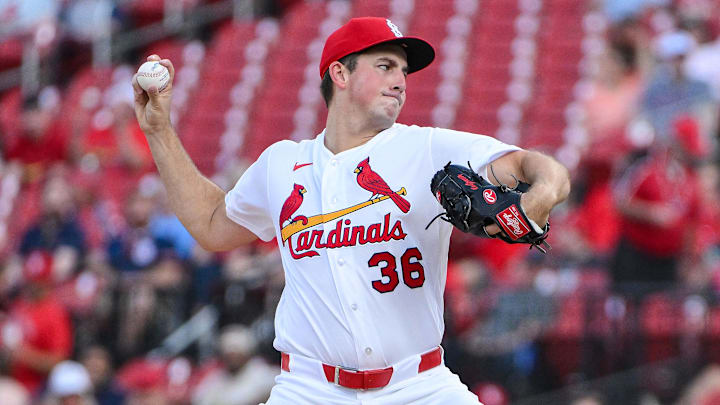
St. Louis traded outfielder Lars Nootbaar to the Arizona Diamondbacks while sending starting pitcher Dustin May and reliever JoJo Romero to the Milwaukee Brewers in exchange for additional prospects. The Cardinals also made a smaller move to acquire left-handed reliever Caleb Ferguson from the Cincinnati Reds, adding another piece to a bullpen that still needs to be evaluated.
The deadline moves were not designed to dramatically improve the Cardinals’ chances in 2026. Instead, they were intended to strengthen the organization’s long-term foundation and create opportunities for younger players.
Now that the deadline has passed, however, the Cardinals have another important phase of the rebuild ahead. The remaining weeks of the regular season should be used to gather as much information as possible about the players who could become part of the 2027 roster.
Here are three major roster decisions St. Louis needs to make.
1. Establish a Clear Direction for the Outfield
The trade of Nootbaar created an immediate vacancy in the Cardinals’ outfield and left the organization with an even greater need to determine which young players belong in the long-term picture.
St. Louis quickly responded by claiming Everson Pereira off waivers from the Chicago White Sox while designating Nelson Velazquez for assignment. The move gives the Cardinals another young option to evaluate, but it does not completely solve the larger question surrounding the position.
Alec Burleson and Jordan Walker should receive significant opportunities, while Pereira now deserves consistent playing time so the Cardinals can determine whether he can become a legitimate part of the future.
Walker, in particular, remains an important piece of the organization’s plans. After returning from a knee issue and winning this year’s Home Run Derby, he has the opportunity to demonstrate whether his power can translate into consistent production at the major league level.
Burleson also remains an intriguing offensive piece. His left-handed power and ability to contribute in multiple spots make him a player St. Louis could potentially build around, but the organization still needs to determine exactly where he fits as the roster evolves.
The Cardinals also have prospects such as Alexander Frías and Josiah Ragsdale progressing through the system. Their development should influence how aggressively St. Louis commits to its current major league outfielders.
The final two months of the season therefore should not be about simply filling the lineup card. They should be about giving the right players enough at-bats to generate meaningful information.
September call-ups will be especially important. St. Louis needs to determine which prospects are ready for Triple-A, which ones need additional development time and which young major leaguers deserve regular roles heading into spring training.
The goal should be to enter 2027 with fewer questions surrounding the outfield than the organization has today.
2. Give the Young Starting Pitchers Every Opportunity to Prove Themselves
Dustin May’s departure dramatically changed the Cardinals’ rotation and opened the door for a group of younger pitchers to receive extended opportunities.
The current rotation features Hunter Dobbins, Matthew Liberatore, Michael McGreevy, Kyle Leahy and Andre Pallante. Rather than viewing these starts simply as a way to finish the season, St. Louis should treat each outing as an evaluation period.
The organization needs to determine which of these pitchers can realistically occupy rotation spots next season.
Kyle Leahy has quietly provided some of the more encouraging performances and has emerged as one of the more consistent arms in the group. His continued progress could make him an important piece of the Cardinals’ 2027 rotation.
Liberatore, meanwhile, has experienced some difficult outings and needs to show greater consistency. His talent remains evident, but the Cardinals need to know whether he can turn that potential into dependable major league innings.
McGreevy and Dobbins also have an opportunity to strengthen their cases. With the rotation undergoing another transition, consistent performances over the final weeks could significantly influence how the front office approaches the offseason.
The organization also needs to monitor Quinn Mathews and Tekoah Roby.
Mathews was sent to Memphis around the trade deadline, giving him an opportunity to continue developing outside the pressure of the major league rotation. Roby, meanwhile, is working his way back from an elbow issue and could become another important pitching option once he is healthy enough to return to competition.
The Cardinals should resist the temptation to prioritize short-term wins over long-term evaluation.
Every remaining start should answer a question.
Can this pitcher handle a major league workload? Does his secondary stuff play against big-league hitters? Can he consistently throw strikes? Is he capable of working deeper into games? Most importantly, does he look like someone who can be trusted as part of the 2027 rotation?
Those answers are far more valuable to St. Louis right now than squeezing out a few additional victories.
3. Finally Decide Who Owns the Ninth Inning
The Cardinals also need to use the remainder of the season to establish a clearer hierarchy in the bullpen, particularly at closer.
Riley O’Brien has emerged as one of the team’s most dependable high-leverage relievers and has shown the ability to handle the pressure of the ninth inning. His recent success gives St. Louis a strong reason to consider him the leading candidate for the closer role heading into 2027.
If O’Brien continues to perform, the Cardinals should give him as many legitimate save opportunities as possible during the final weeks of the season.
At the same time, the front office needs to determine what it wants to do with Ryne Stanek.
Stanek generated trade interest before the deadline, but no deal materialized. That leaves St. Louis with an offseason decision: Is Stanek part of the 2027 bullpen, or could he become a trade candidate again during the winter?
The addition of Caleb Ferguson gives the Cardinals another experienced left-handed option. George Soriano and Peter Strzelecki also remain part of the bullpen picture, meaning the organization has several arms worth evaluating.
But simply rotating relievers through different roles without a clear purpose would waste valuable evaluation time.
St. Louis should establish defined responsibilities and see which pitchers perform when the pressure increases.
The Cardinals do not necessarily need to name a permanent closer immediately, but they do need to identify which relievers can be trusted in specific situations.
That could mean O’Brien handling the ninth, Ferguson being used in key left-handed matchups, and other pitchers receiving opportunities in the seventh and eighth innings.
The information gathered during August and September could directly influence the team’s offseason decisions.
The Deadline Was Only the Beginning
The Cardinals’ trade deadline strategy was never primarily about improving their 2026 record. The organization made the decision to sell because it believed acquiring additional prospects would provide a better path toward building a sustainable contender.
Now comes the harder part.
St. Louis must turn those prospects and young major league players into a coherent roster.
The next several weeks should therefore function almost like an extended audition. The outfield needs clarity, the starting rotation needs answers and the bullpen needs a defined hierarchy.
If the Cardinals use this stretch correctly, they could enter the offseason with a much clearer understanding of what they already have and what they still need to acquire.
The ultimate objective is not simply to survive another rebuilding season.
It is to build a roster capable of ending the Cardinals’ sell cycle and returning the organization to legitimate contention in 2027 and beyond.
Leave a Reply