
Manhattan, Kan. — Kansas State is entering a new chapter of its football program, but the transition feels unusually familiar. After Chris Klieman’s retirement, the Wildcats have turned to one of the most recognizable figures in program history to lead them forward: former star quarterback and Heisman Trophy finalist Collin Klein.
Klieman stepped away following a 6-6 season, ending a seven-year tenure that produced the 2022 Big 12 championship and six bowl appearances in seven seasons. He also became the second-winningest coach in Kansas State history with 54 victories. His departure represented a major change for a program that had enjoyed considerable stability under his leadership.
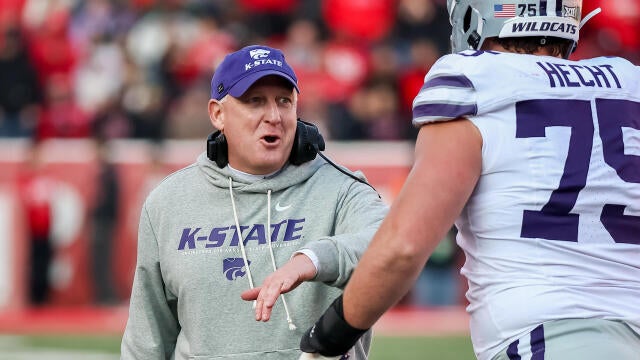
Rather than looking outside the program for a replacement, Kansas State moved quickly to bring Klein back to Manhattan. The 36-year-old former Wildcat took over as the program’s 36th head coach after spending the previous two seasons as Texas A&M’s offensive coordinator. He brings 13 years of college coaching experience, including 10 seasons connected to Kansas State.
For K-State fans, Klein’s appointment represents much more than an ordinary coaching change. He is a former star player who understands the culture of the program from the inside. During his playing career, Klein became one of the greatest quarterbacks in school history and finished third in the 2012 Heisman Trophy voting.
He later returned to the coaching staff, serving as quarterbacks coach before becoming offensive coordinator. During his two seasons directing the offense, Kansas State went 19-8 and captured the 2022 Big 12 championship. His familiarity with the program, combined with his experience elsewhere, made him a natural candidate to continue the Wildcats’ identity while also introducing new ideas.
Klein’s relationship with Klieman makes the transition even more meaningful. The two developed a close professional relationship during Klieman’s tenure, and Klieman played a role in Klein’s development as a coach. Their connection ultimately helped create a smooth succession plan when Klieman decided it was time to retire.
The Wildcats are not entering the season with diminished expectations simply because they have a new head coach. Instead, there is significant optimism surrounding Klein’s first season.
One of the biggest reasons for that optimism is quarterback Avery Johnson.
Johnson, another dynamic dual-threat quarterback, returns for the 2026 season and gives Klein a talented centerpiece around which to build the offense. Because Klein excelled in a similar style during his playing days, there is considerable interest in how he will utilize Johnson’s athletic ability and potentially help him become more consistent as a passer and decision-maker.
Johnson has already shown flashes of being one of the Big 12’s most dangerous offensive players. His ability to threaten defenses with both his arm and legs gives Klein plenty of options as he installs his system.
The schedule also provides Kansas State with reason for optimism. The Wildcats have a relatively favorable slate, including nonconference games against Nicholls, Washington State and Tulane. In Big 12 play, they avoid Texas Tech and BYU, two teams expected to present difficult challenges.
That schedule could give K-State an opportunity to remain in the conference championship race if the team quickly adapts to Klein’s system and avoids the inconsistencies that plagued portions of the previous season.
A chance to restore offensive identity
Offense is expected to remain one of the team’s biggest strengths under Klein.
His previous success at Kansas State and Texas A&M demonstrated his ability to develop quarterbacks and create systems that take advantage of athletic playmakers. Returning to a program he knows intimately should allow him to establish his philosophy without completely abandoning the culture that has made the Wildcats successful.
Klein has emphasized that the program must continue improving in every area rather than simply attempting to recreate the past.
The challenge will be balancing familiarity with innovation. K-State cannot simply attempt to reproduce the offenses Klein ran during his playing days or his earlier coaching stint. The modern college football landscape has changed dramatically, particularly with the transfer portal, expanded player movement and the increasing importance of roster management.
Klein has already spent much of his first year dealing with those changes. Building a staff, recruiting, navigating the transfer portal and preparing the roster have all been major parts of his transition into the head-coaching position. By June, the program had already completed several major phases of its offseason development.
Klieman leaves behind a strong foundation
Although Klieman’s retirement forced Kansas State into a major transition, he did not leave the program in disarray.
His tenure included several successful seasons, a Big 12 championship and multiple bowl appearances. He also helped maintain many of the cultural principles that have long defined Kansas State football.
Klieman’s decision to retire was influenced by personal considerations, including his health and his desire to spend more time with his family. His departure was therefore viewed as a personal decision rather than the result of the program collapsing.
That distinction is important for Klein.
He is inheriting a program with expectations, resources and an established identity. His task is not to rebuild Kansas State from scratch but to take the Wildcats into their next phase and push them toward a higher level of sustained success.
Klein faces immediate pressure
Despite the excitement surrounding his return, Klein will have little time to settle into the job.
Kansas State enters the season with expectations of competing in the Big 12, and a favorable schedule could make anything short of meaningful conference contention feel disappointing.
The Wildcats will need Johnson to take another step forward, the offense to quickly embrace Klein’s system and the defense to provide enough consistency to keep the team in close games.
The margin for error could be particularly small because the Big 12 remains competitive from top to bottom.
Still, Klein’s familiarity with Kansas State gives him an advantage that many first-year coaches do not have. He knows the expectations of the fan base, understands the culture inside the program and already has relationships with many people associated with the university.
Perhaps most importantly, he understands what it means to represent Kansas State.
A new era with a familiar face
Klieman’s retirement closed one successful chapter, but Kansas State has chosen to begin the next one with someone who already understands the previous era.
Klein’s return gives the Wildcats a rare combination of continuity and change. He knows the traditions and standards of the program, yet his experiences at Texas A&M have given him additional perspective as a coach.
The expectation is not simply for Klein to preserve what Klieman built. Kansas State wants its former star quarterback to take the program somewhere it has not been before.
For Klein, the opportunity represents a return home and the biggest challenge of his coaching career. For Kansas State, it is a calculated gamble on a familiar figure who has already proven that he understands what the Wildcats are supposed to be.
With Avery Johnson back at quarterback, a manageable schedule and a coach who knows the program from both the locker room and sideline perspectives, Kansas State enters 2026 with legitimate reason to believe the transition could be more than a changing of the guard.
It could be the beginning of another significant chapter in the Wildcats’ football history.
Leave a Reply