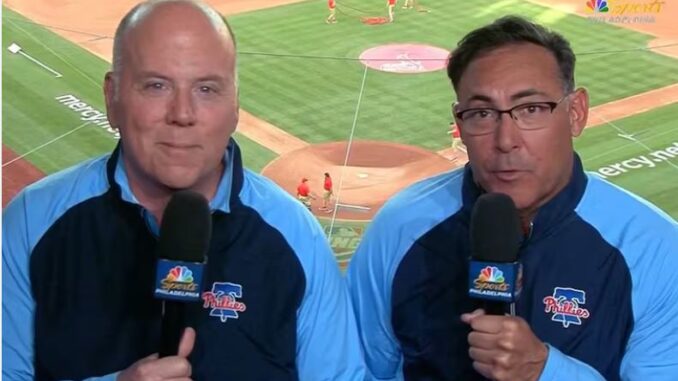
Philadelphia Phillies fans may be demanding when it comes to the performance of their team on the field, but there is one part of the organization that continues to receive widespread praise: the broadcast booth. The Phillies’ television and radio crews have built a reputation for combining knowledgeable analysis, entertaining personalities, strong storytelling and a genuine connection with the fan base.
That reputation received another boost this week when Awful Announcing ranked the Phillies’ local broadcast teams among the best in Major League Baseball. After surveying nearly 10,000 baseball fans, the outlet placed Philadelphia at No. 6 overall, putting the Phillies behind the broadcast teams of the Chicago Cubs, New York Yankees, New York Mets, San Francisco Giants and San Diego Padres.
For a fan base known for its high standards and sometimes unforgiving criticism, the recognition is particularly meaningful. Philadelphia supporters can be quick to voice their frustration when players struggle, but the broadcast crews have generally remained a source of consistency and entertainment regardless of how the team is performing.
At the center of the Phillies’ television coverage is Tom McCarthy, who has become one of the most familiar voices associated with Philadelphia sports. McCarthy has spent more than two decades around the organization, with a brief two-year stint with the New York Mets during his career. He eventually became the Phillies’ primary television play-by-play announcer following the passing of legendary broadcaster Harry Kalas in 2009.
Taking over after a voice as iconic as Kalas was never going to be easy, but McCarthy gradually established his own identity. His knowledge of the team, professional delivery and familiarity with Philadelphia have helped him become a trusted presence for generations of Phillies viewers. The latest ranking suggests that his work may be receiving more national appreciation than it has in the past.
Perhaps the most popular personality alongside McCarthy is John Kruk, whose combination of baseball knowledge, honesty and unpredictable humor has made him a fan favorite. Kruk was an important member of the Phillies’ 1993 National League championship team, and his history with the organization gives him a unique perspective when discussing the current club.
Kruk’s appeal, however, goes well beyond his playing career. His relaxed personality and willingness to make fun of himself, the players and even the most ordinary moments during a game have made him one of the most entertaining analysts in baseball. His chemistry with McCarthy is a major reason why the Phillies’ television broadcasts stand out.
For many Philadelphia fans, Kruk has become such an important part of the viewing experience that the biggest complaint is simply that he does not appear on every broadcast. His spontaneous jokes and memorable observations frequently become topics of conversation on social media, adding another layer of entertainment beyond what happens between the lines.
The television crew also features several other familiar former Phillies personalities. Ruben Amaro Jr., Ben Davis and Cole Hamels have all contributed as analysts, giving viewers different perspectives on the game. Amaro, despite the mixed feelings some fans still have about his time running the Phillies’ baseball operations department, has demonstrated his ability to provide thoughtful baseball analysis from the broadcast booth.
Davis, a former Phillies catcher, brings an understanding of the game from behind the plate, while Hamels offers the perspective of a former ace and World Series hero. Hamels’ appearances, particularly during select Sunday home games, give fans an opportunity to hear insights from someone who experienced the biggest moments of the franchise firsthand.
The Phillies’ radio operation is equally impressive. Scott Franzke has been a major part of the team’s radio broadcasts since 2006 and has developed into one of the most respected play-by-play voices in the sport. His ability to describe the action vividly without relying on television visuals has made him a favorite among listeners.
Franzke is joined by longtime Phillies broadcaster Larry Andersen, whose personality and baseball experience have made him a natural fit in the booth. Former Phillies infielder Kevin Stocker, another member of the 1993 team, also contributes to the radio coverage.
Together, the television and radio crews provide Philadelphia with a depth of broadcasting talent that few teams can match. Their collective experience, connection to the franchise and ability to entertain fans during both exciting wins and frustrating losses have helped establish the Phillies as one of baseball’s strongest broadcasting organizations.
The recent Awful Announcing survey highlighted that appreciation. Fan comments specifically praised McCarthy as potentially one of the most underrated sportscasters in the country, while Kruk was described as a true treasure. Franzke was also singled out as one of the game’s finest play-by-play announcers, reinforcing the idea that Philadelphia’s broadcasting strength extends beyond the television booth.
The recognition also continues a long tradition of outstanding Phillies broadcasters. Generations of Philadelphia fans grew up listening to legendary voices such as Harry Kalas and Richie Ashburn, creating an incredibly high standard for anyone who followed them. McCarthy, Kruk, Franzke and the rest of the current crew have managed to create their own identity while carrying forward that tradition.
Ultimately, the sixth-place ranking is a reminder that even when the Phillies give their supporters plenty to debate on the field, the broadcast experience remains something worth appreciating. From McCarthy’s steady play-by-play to Kruk’s hilarious commentary and Franzke’s polished radio calls, Philadelphia has a group of broadcasters capable of making a baseball game entertaining even when the results are disappointing.
And with many of the current voices still having plenty of years ahead of them, Phillies fans can reasonably expect this generation of broadcasters to remain a major part of the team’s identity for a long time.
Leave a Reply