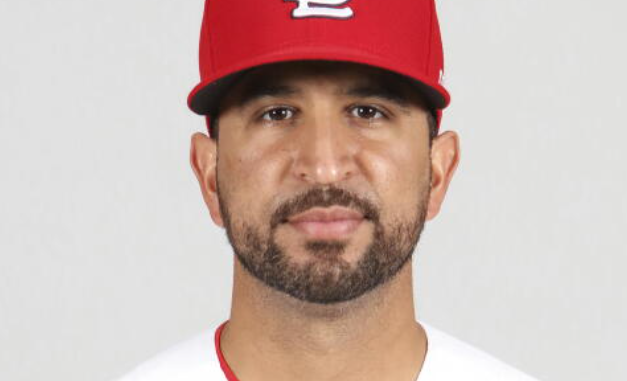
The St. Louis Cardinals have officially closed the book on the 2026 season, but manager Oliver Marmol believes the story of this young team is only beginning. After a 6-4 loss to the Milwaukee Brewers at American Family Field ended the Cardinals’ campaign at 77-85, Marmol reflected on a season that produced a losing record but also gave the organization valuable answers about the direction of its rebuilding roster.
For Marmol, one phrase captured the philosophy that guided the Cardinals throughout the year: “elite patience.” St. Louis entered 2026 with a dramatically younger roster after a series of offseason trades involving established veterans. That created an unusual challenge for the coaching staff. Instead of relying heavily on experienced players to stabilize the team, Marmol and his staff had to give younger players extended opportunities, allow them to experience difficult stretches and then help them work through those struggles.
Marmol believes that approach was one of the most important things the Cardinals accomplished during the season. The coaching staff understood that many of the young players would experience inconsistency, but the goal was not to quickly move on from them whenever production dipped. Instead, the organization wanted to find out what those players could become if given enough time, instruction and confidence at the Major League level.
Cardinals Chose Development Over Short-Term Results
The Cardinals’ final record does not tell the entire story of their 2026 season. St. Louis finished 77-85, one victory worse than its 2025 record, and the club finished with consecutive losing seasons for the first time since 1958-59. However, the circumstances surrounding those two seasons were dramatically different.
The 2026 Cardinals were constructed around youth. Several veteran players who had been important parts of the roster previously were no longer there, leaving younger players with considerably larger responsibilities. That forced the organization to make decisions based not simply on whether a player was producing immediately, but on whether he could eventually become an important piece of the next competitive Cardinals team.
That philosophy became particularly important during difficult stretches. Marmol explained that the staff could not simply look at a struggling young player and conclude that he was incapable of succeeding. Their responsibility, in his view, was to help that player improve.
That meant allowing players to play through slumps, defensive mistakes, inconsistent at-bats and the general challenges that come with learning how to survive an entire Major League season.
The Cardinals also demonstrated that patience while remaining competitive. The club remained within reach of a Wild Card position as recently as Aug. 20, giving the young roster meaningful games deep into the season.
Jordan Walker Finally Delivers a Breakout
Perhaps the clearest example of the Cardinals’ patience was Jordan Walker.
Walker entered the season with considerable uncertainty after spending multiple seasons moving between the Major Leagues and the Minors. He barely secured a spot on the Opening Day roster, but instead of giving up on him, St. Louis gave him another opportunity to establish himself.
Walker responded with one of the biggest individual breakthroughs on the team.
He finished the season with 29 home runs and 102 RBIs, turning what had been a prolonged development story into a legitimate breakout campaign. His performance provided the Cardinals with evidence that the patience they had shown could eventually produce results.
Walker’s emergence is particularly important because the Cardinals were looking for young players who could become foundational pieces during the rebuild. His 2026 performance does not guarantee future production, but it gave the organization a much stronger indication of what he might be capable of becoming.
JJ Wetherholt Adds Another Major Piece
Another major development came from rookie JJ Wetherholt.
With an opening at second base, Wetherholt was able to make the Cardinals’ roster out of Spring Training. Rather than spending his first season simply learning from the bench, he received an opportunity to establish himself as a significant contributor.
His performance throughout 2026 put him into the conversation for the National League Rookie of the Year Award. That represents another important development for a Cardinals organization attempting to identify which young players can form the backbone of its next competitive roster.
Wetherholt’s emergence alongside Walker gave St. Louis two different examples of young players taking advantage of expanded opportunities.
The significance extends beyond their individual statistics. The Cardinals entered the season with major questions about which members of their younger group could actually translate their potential into Major League production. By the end of the year, they had considerably more information.
Alec Burleson Produces a Historic Offensive Season
Alec Burleson also became one of the biggest beneficiaries of the Cardinals’ youth-focused approach.
After moving around the field during the 2025 season, Burleson settled into the everyday first-base role in 2026. The change provided him with greater consistency and responsibility, and he responded with a historic offensive season.
Burleson finished with 116 RBIs, becoming the first Cardinals player to lead Major League Baseball in RBIs since Joe Torre accomplished the feat in 1971.
That accomplishment gave the Cardinals another significant answer about their future.
Burleson also credited the coaching staff for helping him manage the inevitable ups and downs of a long season. Rather than allowing short-term struggles to become prolonged problems, the staff helped him regain consistency and remain productive.
His development is another reason Marmol believes the 2026 campaign provided the organization with more clarity than it had entering the year.
Leo Bernal Shows What Patience Can Produce
The same philosophy was extended to late-season call-ups, including prospect Leo Bernal.
Bernal, ranked by MLB Pipeline as the Cardinals’ No. 4 prospect, did not reach St. Louis until Sept. 1. Despite joining the team with only a month left in the regular season, Marmol gave him an extended opportunity rather than treating him as a temporary September addition.
Bernal started all 24 games he played for St. Louis after his promotion. That consistent playing time allowed him to experience Major League pitching and defense while also giving the coaching staff a better look at how he could fit into the organization’s future.
For Bernal, the confidence shown by Marmol and the coaching staff mattered.
He said the coaches made him feel comfortable enough to be himself and play with confidence. That is precisely the environment Marmol described when discussing “elite patience”: young players are expected to learn, but they also need to know that the organization remains committed to helping them improve.
The 2026 Season Was Not About Celebrating a Losing Record
There is an important distinction in how the Cardinals view the season.
Nobody within the organization is treating a 77-85 record as a reason to celebrate. St. Louis missed the postseason and finished below .500 for a second consecutive full season. The club also ultimately fell short of its Wild Card chase after remaining competitive deep into August.
But the organization entered 2026 with a different objective.
The Cardinals had already signaled that they were entering a rebuilding phase, and the season was designed to answer questions about their young players. By that standard, the campaign gave the front office considerably more information about the roster.
Marmol previously explained that the team entered the season with numerous questions but was finishing it with far more answers about which players could contribute moving forward.
That clarity could become particularly important heading into 2027.
St. Louis Still Has Major Areas to Address
The progress of the young players does not mean the Cardinals are finished rebuilding.
There are still obvious areas that require attention, particularly if the club wants to move from being competitive to genuinely contending.
Third base remains unsettled. Cardinals third basemen collectively produced a .215/.278/.352 slash line through 156 games, placing the position among the weaker offensive groups in baseball. Nolan Gorman did not secure the position with a .585 OPS in 258 at-bats, while Blaze Jordan and Thomas Saggese showed flashes that could keep the competition open.
The bullpen is another concern. St. Louis relievers finished with a 4.52 ERA, ranking 24th in MLB, and recorded 29 blown saves, the third-highest total in the league. That leaves the Cardinals with a significant area to address during the offseason.
The starting rotation was considerably more encouraging, posting a 4.14 ERA, which ranked 11th in MLB. However, the Cardinals still lacked an established ace at the top of the rotation. Michael McGreevy and Andre Pallante performed well but profile more naturally as middle- or back-end starters, while Kyle Leahy emerged as the closest thing St. Louis had to a No. 1 starter during the season.
Young pitching prospects such as Liam Doyle, Tanner Franklin and Jurrangelo Cijntje could eventually become important, but expecting them to immediately solve the rotation’s top-end problem would be unrealistic.
The Bigger Picture for the Cardinals
Ultimately, Marmol’s season-ending message was less about the final record and more about what the Cardinals discovered.
The club entered 2026 with a roster heavily tilted toward youth. That youth produced inconsistency, but it also produced some of the team’s most encouraging developments. Walker broke through. Wetherholt established himself as an important rookie. Burleson transformed into a major run producer. Bernal received meaningful Major League exposure. Other young players also received opportunities to demonstrate whether they could remain part of the organization’s long-term plans.
That is why Marmol believes the Cardinals have reason to be encouraged despite missing the postseason.
The manager emphasized that this group is still learning how to become consistent Major League players. The young roster has not reached its ceiling, and the organization now has an entire season of information to determine which players deserve larger roles and which positions require outside help.
The Cardinals’ next step will therefore be about turning development into sustained winning.
The front office has already identified several areas where improvement could come from internal development, prospects or external additions.
For Marmol, however, the foundation is already visible.
He believes the atmosphere inside the Cardinals’ clubhouse has become something different from what he has experienced with previous teams. After watching the young players navigate the highs and lows of an entire Major League season, he sees a group that is beginning to understand what it takes to compete at this level.
The 2026 season ended with a loss, but the Cardinals believe the development of their young core may ultimately prove more important than the final number in the standings.
As Marmol put it, the fact that such a young team was able to remain competitive for as long as it did is a strong indication of where the organization could be headed.
For St. Louis, 2026 was not presented as the finished product. It was the season in which the Cardinals finally started discovering what their next team could look like.
The key takeaway is that Marmol’s “elite patience” philosophy was directly tied to giving young players enough runway to develop, while the 2026 season also exposed areas—especially third base, the bullpen and the top of the rotation—that St. Louis may need to address for 2027.
Leave a Reply