
One thing that hasn’t changed about baseball even in 2026 is how much roster turnover happens over the course of a 162-game season. No team gets through the year using the same group of players from start to finish, and the Cardinals are no exception. In fact, given that this season is partly about evaluating younger talent and building toward future contention, internal movement may be even more important than usual.
What makes things more interesting is that St. Louis has gotten off to a stronger start than many expected. By May 2nd, they had already picked up their 20th win, challenging the widespread preseason belief that they weren’t ready to compete. Even so, it’s still unlikely the front office will aggressively buy at the trade deadline. If the team wants to stay relevant deep into the season—and avoid the predicted regression they’ll need meaningful contributions from within the organization rather than outside additions.
Several young players are already safely on the 40-man roster, including Lars Nootbaar, Joshua Baez, Jimmy Crooks, Hunter Dobbins, and Brycen Mautz. Because of that, the spotlight shifts to a different group: players not yet on the roster who could emerge as unexpected contributors. If the Cardinals are going to keep surprising opponents, these under-the-radar names may be key.
Blaze Jordan (1B/3B)
Blaze Jordan has done everything possible to demand attention from the Cardinals’ decision-makers early in the 2026 season. His offensive production has been outstanding, highlighted by a .308 batting average, .357 on-base percentage, and .561 slugging percentage good for a .918 OPS. Add in a 136 wRC+ and .253 ISO, and it’s clear he’s been one of the most dangerous hitters in the system.
Jordan’s approach is aggressive he’s not known for drawing many walks but he makes consistent contact and generates real power without excessive strikeouts. Unlike some hitters who sacrifice contact for power, Jordan has managed to strike a balance. If he maintains this level of performance, the Cardinals may have no choice but to find room for him, especially if they’re looking to boost their offensive production.
Quinn Matthews (LHP)
Quinn Matthews’ journey over the past year has been anything but smooth. After earning recognition as the 2024 Minor League Pitcher of the Year, he has faced ongoing struggles with command and consistency. Adjusting to higher levels of competition—and the nuances of major league baseball—has proven challenging.
However, there are signs of progress. His recent starts with Memphis suggest he may be regaining control and confidence. If Matthews can reduce his walk rate, his ability to generate swings and misses could become a major asset. Given that the Cardinals’ pitching staff lacks consistent strikeout arms, Matthews has the potential to fill an important gap and could finally make his long-awaited MLB debut if his improvements hold.
Max Rajcic (RHP)
Max Rajcic represents a different kind of pitching option. Once developed as a starter, he has transitioned into a multi-inning reliever—a role that could prove valuable for a team searching for bullpen stability.
At just 24 years old, Rajcic brings versatility and a unique pitch mix to the table. While his fastball isn’t overpowering, his ability to vary pitch shapes and keep hitters off balance makes him effective. His profile is somewhat similar to what Kyle Leahy provided last season: a reliable bridge arm capable of covering multiple innings. For a team that will likely face ongoing workload challenges, Rajcic could quietly become an important internal solution.
Hancel Rincon (RHP)
Another bullpen arm worth watching is Hancel Rincon, who has been steadily gaining attention within the organization. The Cardinals gave him meaningful opportunities during spring training, signaling their confidence in his potential, and they’ve been relatively aggressive with his development path.
Rincon’s standout pitch is his changeup, which features unusually low spin and has proven effective at disrupting hitters’ timing. His fastball sits in the mid-90s and has produced strong results in limiting batting average, though it does allow a fair amount of hard contact—something that will need refinement. He also mixes in a slider, though his command of that pitch remains a work in progress.
If Rincon can fine-tune his arsenal particularly improving fastball shape and slider consistency he has the tools to become a legitimate bullpen weapon for manager Oli Marmol later in the season.
Ramon Mendoza (2B/3B)
Rounding out the list is Ramon Mendoza, whose path to the roster may depend on circumstances elsewhere on the team. Specifically, a potential move involving Ramon Urias could open the door for Mendoza to step in.
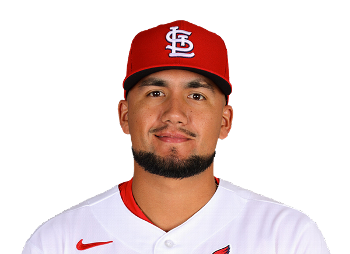
While Mendoza’s statistical profile isn’t particularly eye-catching, he offers potential value as a right-handed bench bat. The Cardinals appeared to trust him in key moments during spring training, frequently giving him late-game opportunities. That usage suggests the coaching staff sees something in him, even if it hasn’t fully translated into standout numbers yet. If the team needs infield depth or situational hitting, Mendoza could find himself in St. Louis.
Final Thoughts
The Cardinals’ depth both on and beyond the 40-man roster could play a crucial role in shaping their 2026 season. With the team exceeding expectations so far, the timing and effectiveness of these internal call-ups may determine whether they can sustain their success.
For now, the Cardinals are enjoying an unexpectedly strong start. Whether that momentum continues will depend in part on players like these stepping up when opportunities arise.
Leave a Reply