
The Philadelphia Phillies are entering one of the most important stretches of their regular-season schedule, and that means their bullpen is likely to come under even greater pressure. At the center of that workload is closer Jhoan Duran, whose recent usage has raised questions about how aggressively the Phillies should rely on their hard-throwing reliever over the final month.
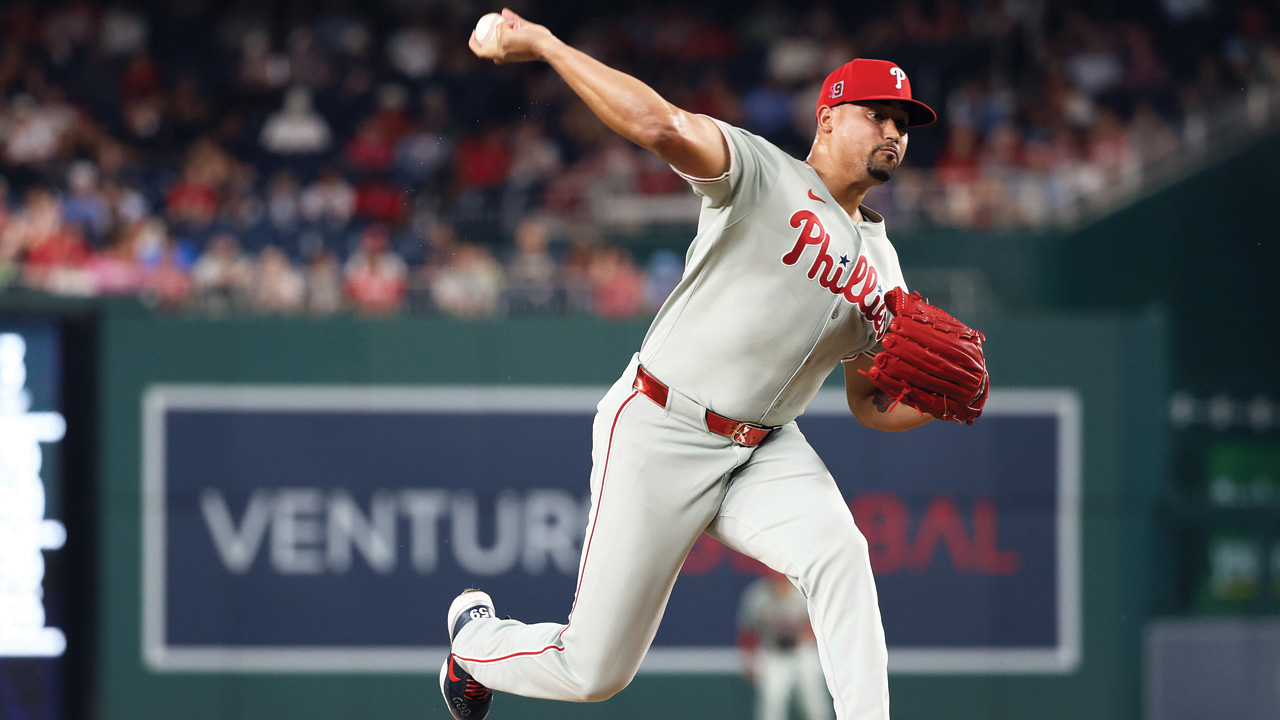
Duran has quickly become one of Philadelphia’s most trusted weapons at the back end of games. His ability to generate elite velocity and overpower hitters has made him the preferred option when the Phillies need to protect a narrow lead. As the postseason race becomes more intense, however, the club has increasingly turned to him, leaving fewer recovery days between appearances.
Over the past week, Duran has pitched in four games, illustrating just how frequently Philadelphia is calling on him. His demanding stretch began Sunday, when he recorded a save after throwing 33 pitches. Rather than receiving an extended break, he was brought back into another save situation the following night and needed only 10 pitches to finish the job.
Duran received Tuesday off, but Philadelphia again summoned him Wednesday for another save opportunity. Across those three appearances, he threw 61 pitches, a substantial workload for a reliever who is being asked to operate at maximum intensity.
Duran Has Been Reliable Despite Earlier Injury
There is understandable concern whenever a closer begins appearing on a near-daily basis, particularly during the latter portion of a long season. Relief pitchers are expected to throw at extremely high effort levels, and repeated appearances with limited recovery time can eventually affect both performance and durability.
Duran has generally handled his responsibilities well since joining the Phillies. Although an oblique strain cost him time earlier this season, he has otherwise been dependable and has established himself as one of the most important pieces of Philadelphia’s bullpen.
Interestingly, that early-season injury may provide the Phillies with at least one reason for optimism.
Duran has thrown only 45.1 innings so far this season, considerably fewer than the 70 innings he logged last year. At the same point in the 2025 campaign, he had already accumulated approximately 55 innings by August 19.
That difference means Duran has not carried the same cumulative workload he did a year ago. With roughly a month remaining in the regular season, Philadelphia can therefore make the argument that he has some additional capacity to handle an increased workload down the stretch.
Rest Could Become the Bigger Concern
The number of innings, however, is only one part of the equation.
For a reliever, the amount of time between appearances can be just as important. A pitcher may not accumulate a huge innings total but can still become fatigued if he is repeatedly required to warm up and pitch on consecutive days.
That is particularly relevant for Duran because the Phillies are increasingly involved in close games. When the team holds a narrow lead late, the temptation to hand the ball to its most dominant reliever becomes difficult to resist.
The rest of Philadelphia’s bullpen has already demonstrated what can happen when relievers are repeatedly used without sufficient recovery time. Fatigue can eventually affect command, movement and velocity, potentially turning a strength into a weakness.
So far, there is little evidence that Duran has reached that point.
His velocity has not shown a troubling decline. In fact, his fastball has actually ticked upward slightly as the season has progressed. That is encouraging, especially considering how heavily Philadelphia has relied on him recently.
Still, the Phillies will need to keep a close eye on those numbers as his appearances become more frequent.
Philadelphia Will Likely Continue Leaning on Its Closer
The reality is that the Phillies have every incentive to continue using Duran aggressively.
With the postseason race tightening, every game carries greater importance. Philadelphia will likely prioritize winning individual games over preserving Duran for an ideal workload, especially when the club is involved in one-run contests and needs a reliable arm to close them out.
Duran’s importance becomes even greater if the Phillies continue playing a large number of close games. In those situations, having a dominant closer available can be the difference between adding a win and suffering a late collapse.
The challenge will be finding the right balance.
Philadelphia cannot afford to save Duran so carefully that it leaves victories on the table, but it also cannot push him so hard that his effectiveness declines just before the postseason. A tired or injured Duran would represent a major problem for a team with championship ambitions.
For now, his workload is heavy but not necessarily alarming, particularly because he remains below last year’s innings pace and continues to show strong velocity. However, the next month will provide the real test.
As the Phillies chase a postseason berth, Duran is likely to remain one of the busiest and most important players on the roster. The question is whether Philadelphia can maximize his impact without asking too much of his arm before October arrives.
Leave a Reply