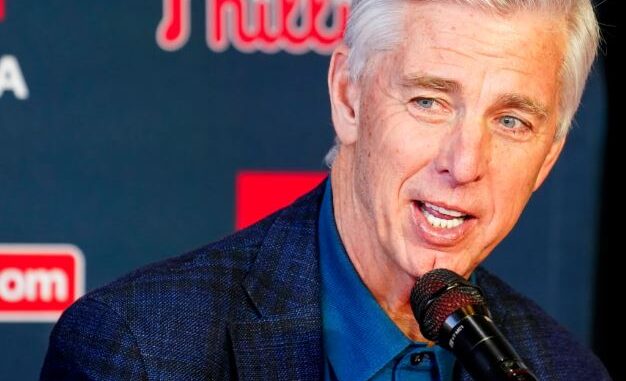
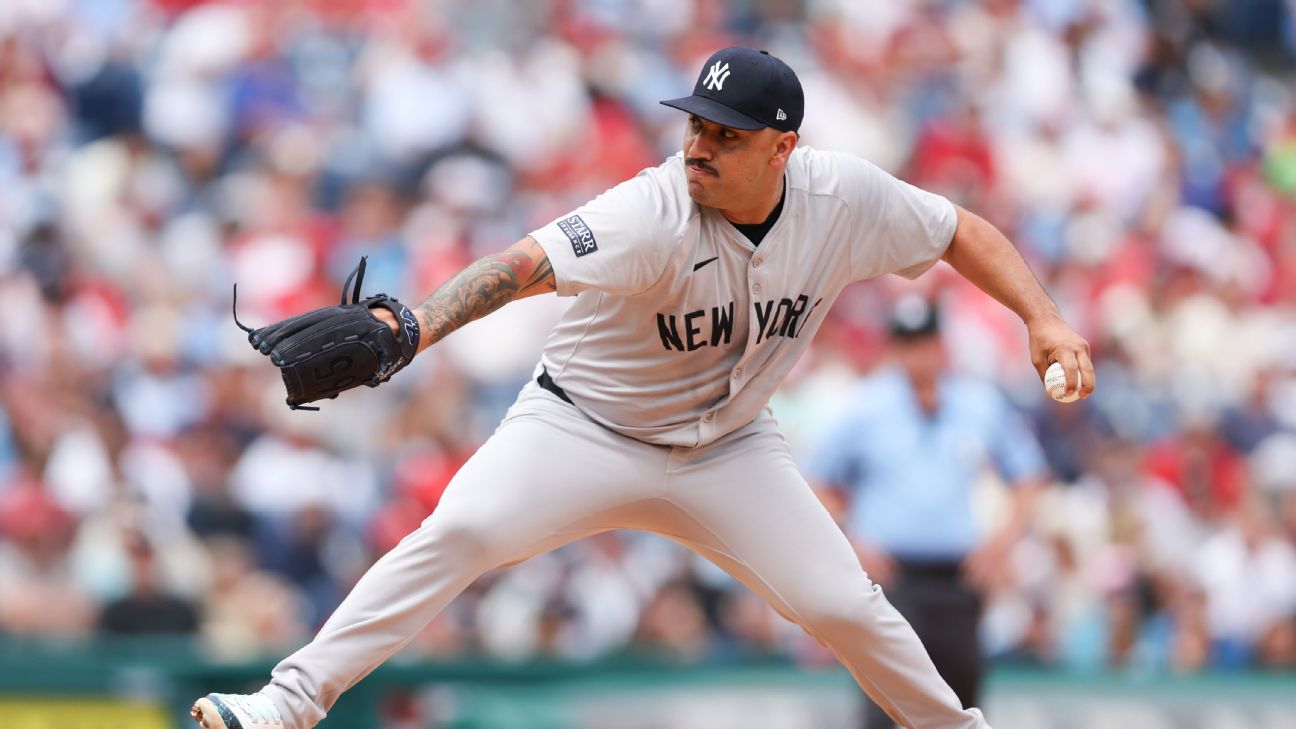
The Philadelphia Phillies have finally addressed a major weakness in their starting rotation, but the timing of the move has raised plenty of questions. More than four months into the regular season, Philadelphia brought in former New York Yankees All-Star Nestor Cortes, hoping the veteran left-hander can provide much-needed depth for a rotation that has increasingly looked vulnerable.
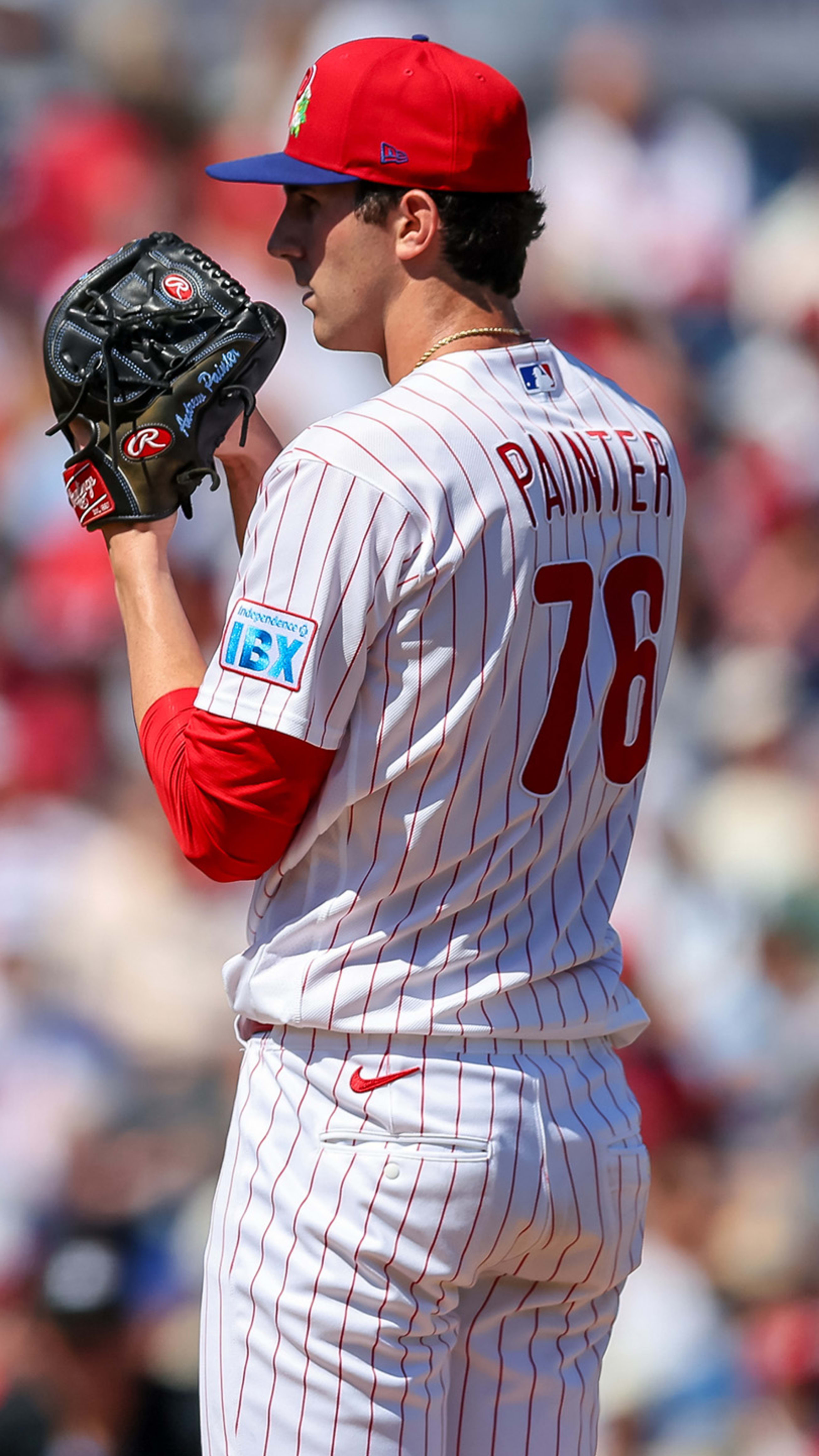
Cortes is a reasonable low-risk gamble, particularly given his previous success in the majors, but the bigger issue is why the Phillies waited until the middle of the season to make this kind of addition. The club entered the year knowing that its rotation had several potential trouble spots, particularly behind its established starters. Andrew Painter represented an exciting but inexperienced option, while injuries, workload concerns and inconsistent depth made it clear that additional insurance would have been valuable.
Philadelphia did not necessarily need to spend heavily on a frontline ace. There were several affordable veterans available during the offseason who could have provided innings, stability and competition without requiring a massive contract. In hindsight, several of those pitchers have gone on to produce useful seasons elsewhere.
Here are five pitchers the Phillies could have pursued earlier.
1. Nick Martinez
Nick Martinez might be the clearest example of an opportunity the Phillies allowed to slip away. Philadelphia did not need to make a nine-figure commitment to improve the back end of its rotation. Elite free agents such as Dylan Cease, Framber Valdez or former Phillie Ranger Suárez were always going to be more expensive and therefore less realistic solutions.
Martinez, however, represented exactly the type of affordable, versatile pitcher Philadelphia could have used.
The veteran entered the offseason following a somewhat ordinary 2025 campaign with the Cincinnati Reds, where he posted a 4.45 ERA while splitting his time between the rotation and bullpen. His ability to handle both roles should have made him particularly attractive to a team looking for flexibility.
Instead, the Tampa Bay Rays signed him to a one-year, $13 million contract in February. That decision has turned into a major win for Tampa Bay.
Martinez has elevated his performance considerably, producing a 3.05 ERA over 24 starts and earning his first All-Star selection. His ability to consistently take the ball every fifth day would have provided Philadelphia with exactly the kind of dependable depth it has lacked.
Had the Phillies signed Martinez during the offseason, they could have entered the season with a much more stable rotation and potentially avoided the need for a midseason scramble.
2. Erick Fedde
If Martinez represented a potential home run, Erick Fedde was the kind of inexpensive gamble that could have been worth taking.
Fedde’s career has been anything but straightforward. After struggling to establish himself as a reliable major league starter following his time with Washington, he revitalized his career overseas before returning to North American baseball. His 2025 season was uneven, with two organizations eventually moving on from him.
However, Milwaukee gave him another opportunity late in the 2025 campaign, and Fedde responded by posting a strong 3.38 ERA in seven appearances.
Despite that encouraging finish, the rest of the league remained skeptical. Fedde stayed on the market until February before signing a remarkably modest one-year, $1.5 million deal with the Chicago White Sox.
Philadelphia could easily have afforded that kind of gamble.
Fedde has not duplicated his best Milwaukee numbers this season, but his 4.33 ERA across 114 1/3 innings demonstrates why he would have been useful. He may not have transformed the Phillies’ rotation, but simply providing more than 100 competitive innings could have prevented the organization from being forced into a desperate search for pitching later in the year.
3. Tomoyuki Sugano
Tomoyuki Sugano offered Philadelphia an opportunity that went beyond simply adding another arm. The veteran right-hander could have helped the organization strengthen its international presence while also providing experienced rotation depth.
The Phillies have pursued some of the biggest names in Asian baseball in recent years, most notably Japanese superstar Yoshinobu Yamamoto, but they have struggled to establish a strong track record with Japanese players.
Sugano would have been a relatively affordable way to begin changing that perception.
A highly decorated pitcher in Nippon Professional Baseball, Sugano entered Major League Baseball after a remarkable career in Japan that included two MVP awards and three Sawamura Awards. His first MLB season with Baltimore was underwhelming, as he finished with a 4.64 ERA across 30 appearances, but his extensive experience and previous dominance suggested there was still value to be extracted.
The Colorado Rockies ultimately signed him to a one-year, $5.1 million contract.
His 4.70 ERA this season may not immediately jump off the page, but pitching half of his games at Coors Field makes traditional statistics particularly difficult to evaluate. His 104 ERA+ indicates that he has actually performed slightly better than the league average when adjusting for ballpark and league conditions.
For Philadelphia, a low-cost veteran such as Sugano could have provided another layer of protection behind its established starters and developing young pitchers.
4. Michael Soroka
Michael Soroka was another reclamation project worth considering.
Not long ago, Soroka looked like one of baseball’s brightest young starting pitchers. He exploded onto the scene with Atlanta in 2019, earning an All-Star selection as a rookie and appearing to have the makings of a long-term rotation cornerstone.
Unfortunately, injuries dramatically altered the trajectory of his career.
Soroka appeared in only 10 games between 2020 and 2023, leaving considerable doubt about whether he could ever return to his previous level. His subsequent seasons showed flashes of his old ability, but he remained far removed from the pitcher who had once looked like a future star.
That uncertainty allowed Arizona to acquire him for only $7.5 million on a one-year contract.
The Diamondbacks have been rewarded handsomely when Soroka has been healthy. A glute injury cost him almost two months this summer, but he has otherwise delivered a superb season, recording a 2.93 ERA over 92 innings.
The Phillies have also demonstrated a willingness to help pitchers maximize their potential, making Soroka an especially intriguing hypothetical addition. It is difficult not to wonder what pitching coach Caleb Cotham could have accomplished with a healthy Soroka.
Even if the right-hander had not returned completely to his All-Star form, the potential reward would have justified the relatively modest investment.
5. Martín Pérez
Martín Pérez might be the most frustrating name on the list because of where he ended up.
The veteran left-hander joined the Atlanta Braves on a minor league deal during the offseason and has since become an important piece of their pitching staff. That is particularly painful for Philadelphia because Atlanta is a direct National League East competitor.
Pérez has never been viewed as a dominant frontline starter, but reliability has always been one of his biggest strengths. Entering 2026, he had accumulated 325 games and a 4.41 career ERA over 14 seasons.
His 2025 campaign was limited to just 11 appearances with the Chicago White Sox, although he performed well enough to post a 3.54 ERA. Despite that, he entered the offseason without a major league contract and ultimately settled for a minor league agreement with Atlanta.
The Braves have gotten far more than they could have reasonably expected.
Pérez has delivered 111 1/3 innings with a 3.15 ERA, becoming a valuable stabilizing presence for an Atlanta rotation that has dealt with its own challenges. His production has helped the Braves remain ahead of Philadelphia in the division, making the Phillies’ decision not to pursue him even more difficult to understand.
For a team trying to win a division, an inexpensive veteran capable of giving the rotation more than 100 innings can be extremely valuable.
The Phillies’ bigger problem was the lack of early rotation insurance
The common thread connecting these five pitchers is not that any of them was guaranteed to become an ace. Philadelphia did not need five stars. It needed one or two dependable arms who could absorb innings, protect its younger pitchers and give the organization breathing room when injuries or performance issues emerged.
Instead, the Phillies entered the season with limited margin for error and eventually found themselves searching for help in the middle of the campaign.
Nestor Cortes could still turn out to be a smart acquisition. If he returns to something resembling his previous All-Star form, the Phillies may ultimately be pleased with the move. But his arrival also highlights a larger offseason decision that now looks increasingly questionable.
The organization had several inexpensive avenues for strengthening the rotation. Martinez, Fedde, Sugano, Soroka and Pérez were all attainable without requiring the Phillies to dramatically restructure their payroll.
Some would have been better than others. Some might have failed completely. But the risk associated with signing them was considerably smaller than the risk of entering the season without enough established depth.
For a Philadelphia team with postseason ambitions, the lesson is straightforward: rotation depth is rarely something a contender can afford to address only after a problem becomes urgent. The Phillies are now paying the price for waiting, while several pitchers they could have acquired cheaply are helping other clubs win games.
Cortes may eventually prove to be the solution. But the more interesting question is whether Philadelphia should have prevented the problem from becoming this urgent in the first place.
Leave a Reply