
Philadelphia Phillies prospect Caden Bogenpohl is wasting little time making an impression in professional baseball. The club’s 2026 second-round selection delivered an extraordinary display of raw power Friday night, crushing a three-run home run that registered an exit velocity higher than any home run hit by a Phillies Major Leaguer during the Statcast era.
Bogenpohl, Philadelphia’s No. 8 prospect, helped Single-A Clearwater defeat the Fort Myers Mighty Mussels 12-10 at Hammond Stadium. His fifth-inning blast came off right-handed pitcher Brad Rudis and immediately became the highlight of an explosive offensive night for the young prospect.
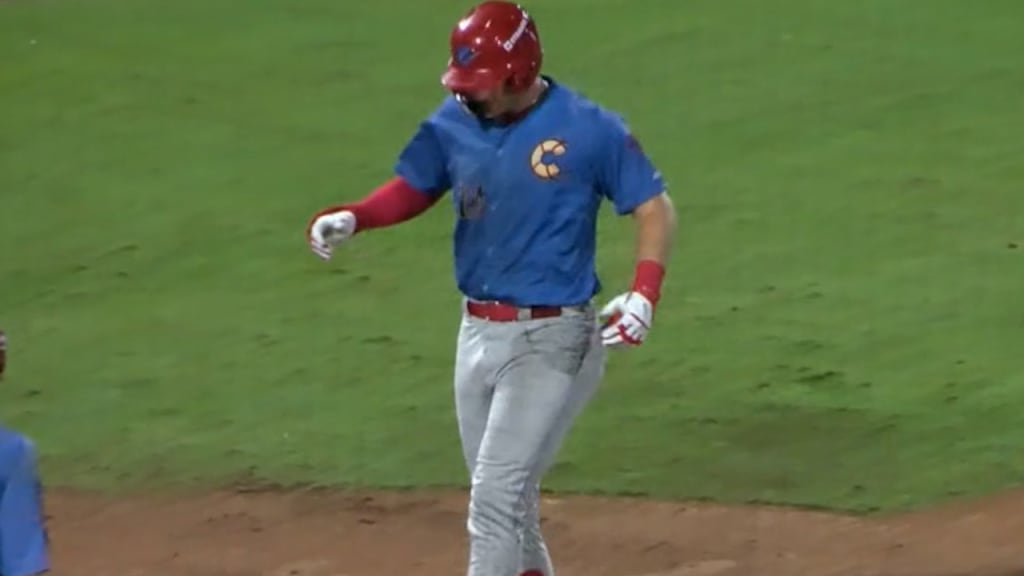
The home run left Bogenpohl’s bat at a staggering 117.1 mph. While the important caveat is that the blast came against a Single-A pitcher, the number is still remarkable when placed in the context of Phillies history. Since Statcast began tracking MLB batted-ball data in 2015, no Phillies player has hit a home run harder than Bogenpohl’s blast.
Kyle Schwarber owns seven of Philadelphia’s 10 hardest Statcast home runs, including the previous franchise-best mark of 116.7 mph, recorded on April 8, 2025. Bogenpohl’s 117.1 mph homer therefore narrowly surpassed one of the most powerful hitters in the organization.
And the home run was not an isolated display of elite contact. Bogenpohl also produced two singles that reached triple-digit exit velocities. His first-inning single came off the bat at 107 mph, while another single in the eighth inning was struck at an impressive 116.6 mph.
The overall performance was equally encouraging. Bogenpohl collected four hits in the victory, continuing an extraordinary beginning to his professional career. Through his first nine games, he is batting 14-for-33, good for a .424 average. His early production has provided an exciting first glimpse of the offensive potential that made him an intriguing selection for Philadelphia.
The Phillies selected Bogenpohl 64th overall in the second round of the 2026 MLB Draft after his collegiate career at Missouri State. Philadelphia signed him for approximately $1.4166 million, roughly matching the assigned slot value.
At 21 years old, Bogenpohl entered professional baseball with an impressive offensive résumé. He posted a 1.000 OPS in consecutive seasons in 2024 and 2025 and finished his final college season with a .427 on-base percentage. Although his home-run production dropped during his final collegiate campaign, his broader offensive performance remained strong.
Bogenpohl hit only six home runs and posted a .414 slugging percentage in his final college season, a noticeable decline from his previous power numbers. Nevertheless, his overall body of work suggested that the underlying power remained an important part of his offensive profile.
Across 165 college games, Bogenpohl finished with 39 home runs, helping scouts assign him a 55-grade power tool. Friday night’s performance offered an early indication of why that tool could become one of the most intriguing aspects of his professional development.
The Phillies will obviously want to avoid placing too much significance on one game, particularly because Bogenpohl is competing at the Single-A level and has only played nine professional games. Still, the combination of his four-hit performance, multiple balls struck above 100 mph and record-setting 117.1 mph home run makes the outing difficult to ignore.
For Philadelphia, Bogenpohl’s early emergence adds another exciting name to an organization already focused heavily on developing its next wave of talent. If he continues making this kind of hard contact while refining the rest of his offensive game, his prospect stock could rise quickly.
For now, the headline number is impossible to miss: 117.1 mph harder than any Phillies home run recorded during the Statcast era. It is only the beginning of Bogenpohl’s professional journey, but it was certainly a memorable way to announce his arrival.
Leave a Reply