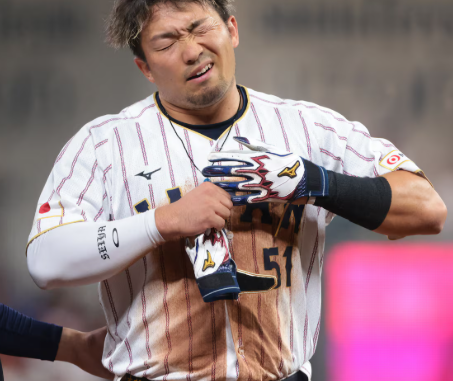
The Chicago Cubs could be heading toward a difficult offseason decision involving one of their most productive hitters. Seiya Suzuki, the veteran outfielder who originally signed an $85 million contract with Chicago, could enter free agency this winter with his future in the organization increasingly uncertain.
Suzuki’s potential departure would be a significant development for the Cubs because he has continued to provide valuable offensive production during the 2026 season. However, Chicago is expected to enter the offseason with pitching at or near the top of its priority list, creating a potential financial conflict that could make it difficult to keep every important player on the roster.

Suzuki joined the Cubs ahead of the 2022 season on a five-year, $85 million deal after establishing himself as one of Japan’s most accomplished hitters. Since arriving in Chicago, he has become an important part of the team’s lineup, providing power, run production and middle-of-the-order stability.
Now, however, that original contract is approaching its end, and Suzuki is positioned to test the free-agent market.
The Cubs’ decision could ultimately come down to how much they are willing to spend to retain him and whether that expenditure prevents them from addressing more pressing weaknesses elsewhere on the roster.
Suzuki’s production makes him difficult to replace
The strongest argument for bringing Suzuki back is his performance.
During the 2026 campaign, Suzuki has remained one of Chicago’s most productive offensive players. He ranks near the top of the Cubs in several major offensive categories and has provided the type of consistent production that is difficult to find on the open market.
His overall value has also been reflected in his WAR, placing him among the more productive players around the league. That makes a potential departure especially significant because the Cubs would not simply be losing a veteran nearing the end of his usefulness. They could be losing one of their best current offensive contributors.
Suzuki’s power and ability to drive in runs have made him an important part of Chicago’s lineup, while his experience gives the Cubs another established presence around their younger players.
The timing, therefore, creates an unusual dilemma: Suzuki’s success makes him more valuable to the Cubs, but it could also make him more expensive to retain.
Chicago’s offseason priorities could push Suzuki out
The primary reason Suzuki’s future remains uncertain is not necessarily his performance. Instead, it is the Cubs’ broader roster construction.
Chicago is expected to make pitching a major focus this winter. The organization needs to strengthen its rotation and bullpen if it wants to remain a serious contender, and quality pitching is rarely inexpensive.
The Cubs also have multiple players approaching free agency or requiring future financial commitments. That means the front office will have to make difficult decisions about where its available payroll should be allocated.
If Suzuki receives a large offer on the open market, Chicago could determine that the money would be better spent on multiple pitching additions rather than committing a significant portion of its budget to one offensive player.
That would be a painful decision, but potentially one the organization believes is necessary to build a more balanced roster.
Suzuki’s market could become particularly strong
Another factor working against the Cubs is the composition of the free-agent market.
If the available pool of quality outfielders is limited, Suzuki could become one of the most attractive offensive players available. Teams looking for a proven bat could view him as a reliable option, particularly if they believe his offensive production can remain at a high level over the next several seasons.
A competitive market could drive his asking price beyond what Chicago is comfortable paying.
The Cubs would then have to decide whether matching that price is worth sacrificing some of their flexibility to improve other areas of the roster.
That is where Suzuki’s situation becomes complicated. The Cubs may genuinely want him back while simultaneously recognizing that another team could simply offer more money.
Chicago already considered moving him
Suzuki’s future with the Cubs was not completely secure even before the trade deadline.
Chicago reportedly listened to trade offers involving the outfielder during the season, with teams such as the Seattle Mariners being linked to potential interest. The Cubs’ willingness to consider moving him suggested that the organization was already thinking about his long-term situation.
A trade ultimately did not materialize, partly because Chicago’s circumstances changed as the team continued competing and Suzuki remained an important part of the lineup.
His contract also included trade protections that complicated the possibility of moving him.
By keeping him through the season, the Cubs effectively chose to make another run with Suzuki while accepting the possibility that he could reach free agency afterward.
Now that decision could become one of the most important storylines of Chicago’s winter.
Losing Suzuki could create another roster problem
Allowing Suzuki to leave would not be as simple as removing one name from the payroll.
Chicago could potentially lose multiple established outfielders during the same offseason, creating a significant hole in its lineup. Replacing Suzuki’s production internally would also place additional pressure on younger players to immediately perform at a high level.
The Cubs have intriguing young talent capable of taking on larger roles, but relying heavily on inexperienced players would create more uncertainty.
Suzuki, by comparison, already understands the major-league environment and has demonstrated that he can produce in the middle of a competitive lineup.
That reliability is something Chicago would have to account for before allowing him to walk.
Pete Crow-Armstrong could also influence the decision
The Cubs also have to think beyond the immediate offseason.
Pete Crow-Armstrong has emerged as an important part of the organization’s long-term plans, and Chicago could eventually want to secure its young star with a significant contract.
If the front office believes Crow-Armstrong is someone it wants to build around for years, maintaining financial flexibility could become increasingly important.
That does not automatically mean Suzuki has to leave, but it could influence how aggressively Chicago approaches negotiations.
The Cubs must balance their current championship aspirations with the financial commitments that could shape the roster several years from now.
Fans have plenty of reasons to want Suzuki back
From a fan perspective, there is an obvious argument for retaining him.
Suzuki has become a recognizable part of the Cubs’ lineup and has produced enough offensively to justify another contract. Supporters can reasonably argue that allowing one of the team’s better hitters to leave while trying to improve the pitching staff could create one problem while solving another.
There is also the possibility that the Cubs could regret allowing Suzuki to reach the open market if he signs elsewhere and continues producing at a high level.
Replacing his production could require multiple moves, and there is no guarantee that Chicago would successfully find another middle-of-the-order hitter capable of providing comparable numbers.
The Cubs must determine what matters most
Ultimately, Chicago’s decision will come down to roster philosophy and financial priorities.
If the Cubs believe their current lineup is close to championship caliber but desperately needs pitching, they could decide that Suzuki’s salary is better redirected toward the rotation and bullpen.
If they believe the offense would take too significant a hit without him, retaining Suzuki could become the preferred option even if it means spending less aggressively on pitching.
There is no risk-free choice.
Keeping Suzuki provides offensive stability but consumes payroll. Letting him leave creates financial flexibility but potentially opens another hole in an already important part of the lineup.
The Cubs also have to consider Suzuki’s age, expected contract demands and projected performance over the life of a new deal. A long-term commitment could become expensive if his production declines, but allowing him to walk could prove equally costly if the offense struggles without him.
A crucial winter awaits
For now, there is no indication that the Cubs have formally decided to move on from Suzuki. The idea that he is “unlikely” to return should be viewed as an assessment of the current situation rather than an official organizational decision.
Chicago still has time to determine its priorities, evaluate the free-agent market and decide how much money it can reasonably devote to Suzuki.
What is clear is that his future will be one of the Cubs’ biggest offseason storylines.
Suzuki has produced enough in 2026 to make a compelling case for another contract, but his next deal could be significantly more expensive than the $85 million agreement that brought him to Chicago.
If the Cubs choose to prioritize pitching and future payroll flexibility, Suzuki could become one of the more notable departures of the winter.
If they decide that his offensive production is too valuable to lose, however, the organization could make a strong effort to keep him as a central piece of its next championship push.
For Chicago, the decision will ultimately be about more than one slugger. It will determine how the Cubs balance present contention, pitching investment, offensive consistency and long-term financial flexibility and whether Seiya Suzuki remains part of that equation.
Leave a Reply