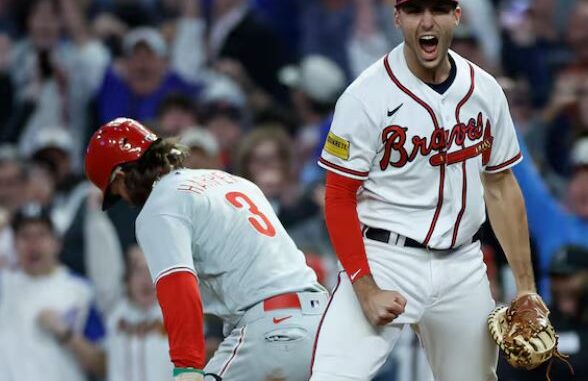
Bryce Harper did not try to hide the pain of the Philadelphia Phillies’ stunning Game 1 defeat to the Atlanta Braves. After Philadelphia appeared to be in control of the opening game of the National League Wild Card Series, Austin Riley delivered a devastating three-run home run in the eighth inning that completely changed the contest and sent the Braves to a 5-3 victory. For Harper and the Phillies, the loss was particularly difficult because they had built a 3-2 lead and appeared to have the game exactly where they wanted it. Instead, Atlanta rallied late, leaving Philadelphia one defeat away from seeing its postseason come to an abrupt end.
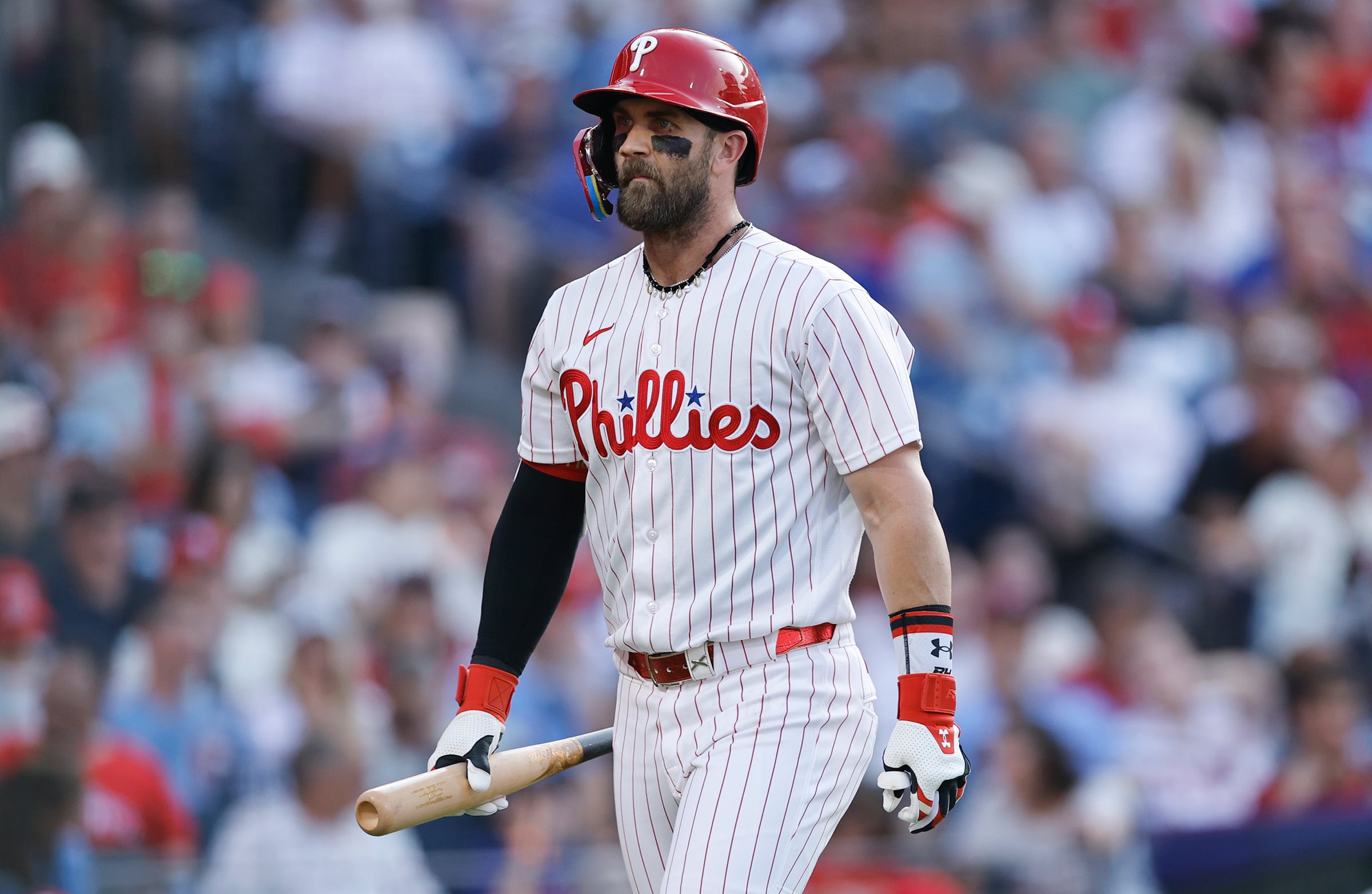
Speaking after the game, Harper openly acknowledged just how damaging Riley’s home run was. The Phillies star described the moment as a “dagger,” particularly because Philadelphia had its most trusted reliever, Jhoan Duran, on the mound with the lead. Duran had entered the game in the seventh inning and was asked to continue into the eighth, but the strategy ultimately unraveled when Riley launched his three-run blast. Harper’s comments captured the frustration inside the Philadelphia clubhouse while also emphasizing that the team cannot afford to spend too much time dwelling on what happened.
Harper pointed out that the Phillies had done enough earlier in the game to put themselves in position to win. Philadelphia produced quality at-bats and managed to take a lead into the late innings, but Atlanta’s response turned the momentum completely. The Phillies’ offense had opportunities against Braves pitching and felt it had generally competed well at the plate, making the late collapse even more difficult to accept. For a team entering October with World Series aspirations, losing a game after holding a late advantage can feel particularly painful because there is little room for mistakes in a short postseason series.
Still, Harper’s message was clear: Philadelphia has to move on immediately. Rather than allowing Riley’s home run or the Game 1 loss to linger, the Phillies need to prepare for the next game and give themselves another opportunity to extend the series. Harper acknowledged that Atlanta is a very good team and will enter the next contest with the confidence that comes from taking the opening game on the road. Philadelphia therefore cannot afford to let frustration turn into hesitation or carry the emotional weight of Tuesday’s defeat into the next game.
The situation is made even more urgent by the structure of the Wild Card Series. With Atlanta taking a 1-0 lead in the best-of-three matchup, Philadelphia now has no margin for error. The Braves need only one more victory to advance, while the Phillies must win the next two games to keep their season alive. That puts enormous pressure on Philadelphia’s pitching staff, particularly after Duran was forced to throw two innings in Game 1. The closer finished with 27 pitches and surrendered three runs, meaning the Phillies will have to carefully evaluate his availability before deciding how to deploy him again.
For Harper, however, the immediate priority is not analyzing every decision from Game 1. It is extending the season. He stressed that the Phillies simply need to find a way to win the next game and give themselves another opportunity to play. That mentality is especially important because Philadelphia knows how quickly postseason momentum can change. A team that looked capable of winning the opener for much of Tuesday’s game suddenly found itself trailing after one swing from Riley.
The Phillies also have reason to believe they can respond offensively. Harper noted that he felt Philadelphia had several strong at-bats throughout the game, suggesting the lineup was not completely overwhelmed by Atlanta’s pitching. The challenge will be turning those competitive at-bats into timely production when the next opportunity arrives. In a postseason setting, creating traffic on the bases is only part of the equation; Philadelphia must also deliver the decisive hits before Atlanta has another chance to take control late.
Riley’s home run will inevitably remain one of the defining moments of Game 1, but Harper appears determined not to allow it to define the Phillies’ season. His comments reflected the reality of October baseball: painful losses have to be processed quickly because another game is waiting almost immediately. Philadelphia cannot change the eighth inning, cannot take Riley’s home run back and cannot recreate the opportunities it missed. Its only option is to respond.
The historical pressure is significant as well. Over the previous 24 Wild Card Series, the team that won Game 1 went on to advance to the Division Series 21 times. That trend illustrates just how valuable an opening-game victory can be in a short series, although it does not determine what will happen next. Philadelphia now has to overcome the early deficit by winning consecutive games against Atlanta.
For Harper and the Phillies, the message is therefore straightforward: flush the loss, regroup and fight for another day. The veteran knows the team’s margin for error has disappeared, but he also understands that the season is not over yet. Philadelphia still has an opportunity to respond, and that response begins with Game 2.
Riley supplied the swing that changed Game 1. Now the Phillies need their own answer.
Leave a Reply