
The Philadelphia Phillies opened their National League Wild Card Series against the Atlanta Braves with a painful 5-3 loss Tuesday night, but much of the postgame discussion centered on interim manager Don Mattingly’s decision to bring All-Star closer Jhoan Duran into the game earlier than usual. With Philadelphia holding a narrow 3-2 advantage, Mattingly turned to arguably his most trusted reliever in the seventh inning, hoping Duran could navigate the heart of Atlanta’s lineup and potentially protect the lead for multiple innings. The strategy initially appeared to be working perfectly, as Duran quickly retired the Braves in the seventh and gave Philadelphia another reason to believe the aggressive bullpen decision could pay off. Instead, the move unraveled one inning later when Austin Riley delivered a devastating three-run homer that turned the game around and put Atlanta ahead for good.
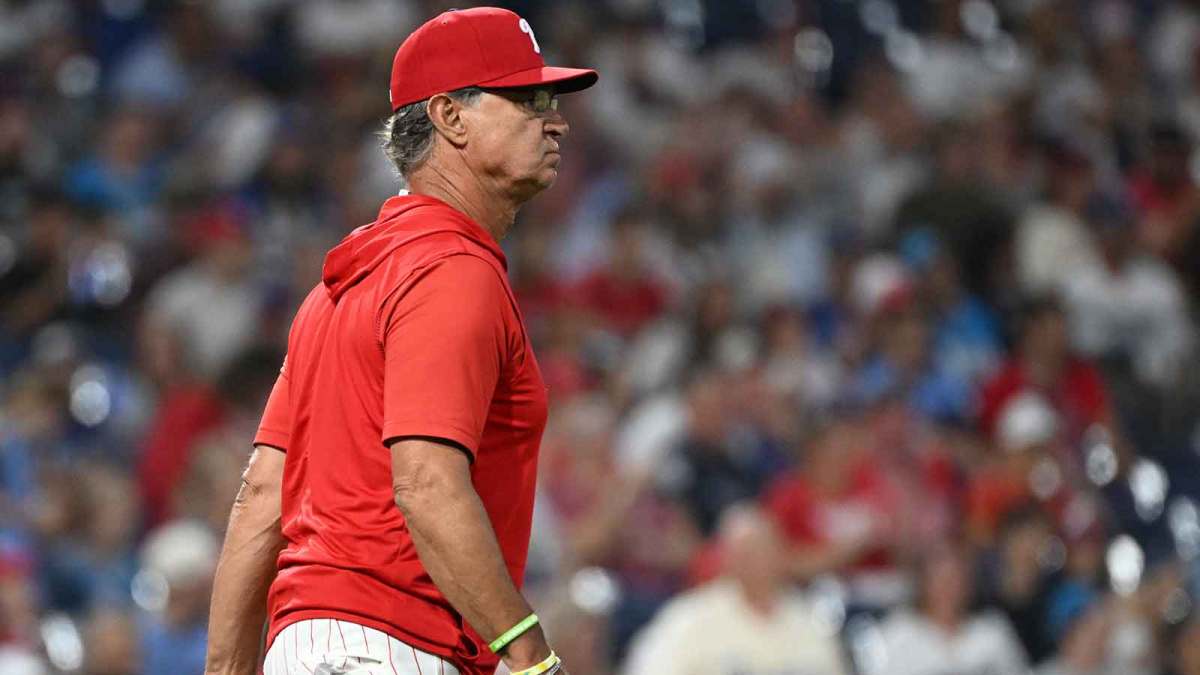
Mattingly’s decision was clearly influenced by the state of the Phillies’ bullpen entering the postseason. Philadelphia’s relief corps had struggled badly during September, posting a 5.79 ERA, the worst mark among all major-league bullpens during the month. With the stakes dramatically higher in a winner-take-all postseason environment, Mattingly opted to place the game in the hands of his most accomplished reliever rather than waiting for a traditional ninth-inning save situation. Duran had been one of Philadelphia’s most dependable weapons throughout the season, converting 33 of 35 save opportunities and surrendering only two home runs across 61 regular-season appearances. Those numbers made him the obvious pitcher Mattingly trusted most when the game reached a critical point. The problem was that asking him to cover multiple innings in a playoff game carried considerably more risk than his normal role.
Duran had made only one multi-inning appearance during the regular season, making Tuesday’s assignment unusual from the beginning. After pitching a flawless seventh, however, Mattingly decided to send him back out for the eighth. The manager explained afterward that Duran’s first inning looked so comfortable that the Phillies were willing to see whether he could quickly get through another frame. “He made it look easy the first inning,” Mattingly explained, indicating that the plan was not necessarily locked in for the entire eighth. The intention was to monitor Duran and potentially remove him if the inning became extended. But the situation changed quickly. Duran surrendered a two-out single to Michael Harris II, then hit Ozzie Albies with a pitch, bringing Riley to the plate with the tying and go-ahead runs suddenly within reach. Riley then punished the mistake with a three-run home run, sending Atlanta ahead 5-3 and turning what had looked like a promising Phillies victory into a damaging postseason defeat.
The home run was particularly surprising given how effective Duran had been throughout the regular season. The 28-year-old closer had allowed only two homers in 61 games before entering Tuesday’s contest, but Atlanta managed to create enough pressure during his second inning of work to force the decisive mistake. Duran finished his outing after throwing 27 pitches over two innings, allowing three runs. He acknowledged that he had been informed after the seventh inning that he should be prepared to return, and he simply followed the instructions and tried to execute. The result was a brutal reminder of how quickly a postseason game can change. Duran had been brought into the game because Philadelphia wanted its best reliever controlling the most important moments, but the decision ultimately left the Phillies searching for answers after Atlanta seized the lead.
Mattingly defended the decision after the game, emphasizing that he would rather lose with his best reliever on the mound than look back and wonder why he did not use him when the game was still within reach. He also clarified that bringing Duran into the seventh was not specifically about trying to exploit a favorable matchup against Atlanta’s top hitters. Instead, Mattingly said the decision was based primarily on the point in the game and the importance of the situation. That distinction is important because the Braves were approaching a dangerous portion of their lineup, but Mattingly indicated that the choice was not simply about a particular hitter or sequence of matchups. His objective was to get the game into the hands of his most reliable reliever as early as necessary.
The decision also raises questions about Philadelphia’s pitching plans for the remainder of the series. Duran’s availability for Wednesday is now uncertain after his 27-pitch outing, particularly because he was asked to pitch two innings rather than his customary one. Mattingly said the coaching staff would evaluate Duran the following day and determine how he feels before deciding whether he can contribute again. Philadelphia could potentially need to navigate another high-pressure game without having its closer fully available. The manager also revealed that Andrew Painter, who started 23 of his 25 games during the regular season, could have been considered as part of the ninth-inning plan had Duran successfully protected the lead. Jonathan Bowlan and other relievers were also possibilities, suggesting that the Phillies were prepared to piece together the final inning rather than relying exclusively on one pitcher.
For Philadelphia, the loss exposes two major postseason concerns at once: bullpen reliability and late-game decision-making. The Phillies entered October knowing their relief pitching had been inconsistent, and Tuesday’s collapse provided a painful example of why that weakness could become a defining storyline. At the same time, Mattingly’s aggressive use of Duran shows just how little margin for error the team believes it has with its other relievers. The manager was trying to protect a one-run lead by using his best weapon before the ninth inning, but the gamble ultimately failed when Atlanta’s lineup finally broke through.
The Phillies now face the challenge of responding quickly rather than allowing one difficult bullpen decision to define the entire series. Duran remains one of the team’s most important postseason weapons, and his regular-season performance provides plenty of evidence that Philadelphia can still trust him in critical situations. The question is how the Phillies manage his workload going forward and whether Mattingly will continue using him aggressively or return him to a more conventional closer role. After Atlanta’s late comeback, the pressure on Philadelphia’s bullpen has only intensified. What began as an attempt to secure an early advantage has instead created another layer of uncertainty heading into the next game of the series.
Leave a Reply