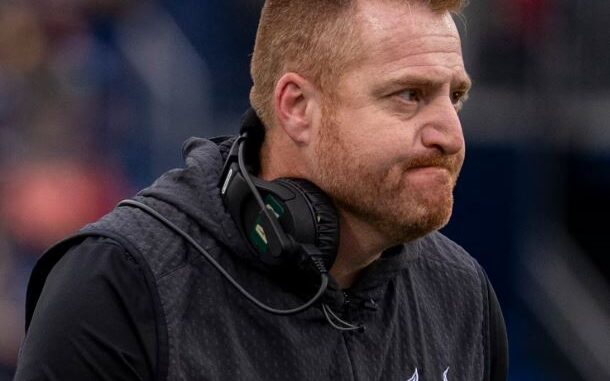
Auburn head coach Alex Golesh is making it clear that the Tigers will not use the challenges of a new coaching regime as an excuse for inconsistent play. Following the team’s first fall scrimmage, Golesh delivered a blunt assessment of the offense and emphasized that Auburn has a much higher standard to meet before the 2026 season begins.
The Tigers held their first major fall scrimmage Friday, giving coaches an opportunity to evaluate how the team is progressing with the season approaching. Instead of celebrating the positives, however, Golesh focused heavily on the mistakes that prevented Auburn from looking like the experienced team he expects it to become.
Golesh described the overall performance as “sloppy” and said Auburn looked too inconsistent, particularly in terms of its emotional response to the ups and downs of the scrimmage.
The first-year head coach acknowledged that plenty of explanations could have been offered. Auburn is operating under a new coaching staff, players are learning different systems and the first fall scrimmage naturally comes with mistakes.
But Golesh made it clear that none of those factors will lower the expectations inside the program.
Golesh Refuses to Accept the “First Scrimmage” Excuse
It would have been easy for Auburn to dismiss the performance as growing pains.
Instead, Golesh chose to use the scrimmage as a measuring stick.
He acknowledged that the Tigers have plenty of work remaining, but he also stressed that the team needs to develop a much more consistent identity.
One of his biggest concerns was Auburn’s inability to maintain its composure and execution throughout the session.
Rather than playing with the consistency expected from an experienced team, Golesh felt the Tigers were allowing the outcome of individual plays to affect their overall performance.
That is something he wants corrected quickly.
The message is particularly significant because Auburn enters the season with considerably more experience than a typical rebuilding team.
Auburn’s Offense Is Supposed to Be Further Along
The offensive expectations are especially high because much of the foundation of Golesh’s system is already familiar to several key players.
Golesh brought important pieces of his previous offensive operation with him to Auburn, including quarterback Byrum Brown and receiver Chas Nimrod.
Golesh spent multiple seasons working with Brown at South Florida, giving the coach and quarterback an established relationship before they arrived on the Plains.
That familiarity should theoretically give Auburn an advantage over programs that are completely installing new systems.
Instead of starting from scratch, Golesh has been able to build around players who already understand his offensive philosophy, terminology and expectations.
That is one reason the coach appears unwilling to accept an extended adjustment period.
The Tigers are not simply trying to survive their first year under a new coach. They believe they have enough experience and talent to compete immediately.
Pre-Snap Mistakes Are a Major Concern
One of Golesh’s biggest complaints following the scrimmage involved Auburn’s execution before the snap.
The coach pointed specifically to pre-snap mistakes that he believes cannot become a regular part of the offense.
Those types of errors are particularly frustrating because they are generally correctable through preparation, communication and discipline.
While physical mistakes can sometimes be attributed to defensive pressure or athletic mismatches, pre-snap penalties, missed assignments and communication problems are largely within the offense’s control.
Golesh therefore expects those issues to be addressed immediately.
For an offense that is expected to be one of Auburn’s biggest strengths, the margin for error is small.
The Tigers cannot afford to consistently put themselves behind the chains because of mistakes that occur before the play even begins.
There Were Positive Signs, Too
Despite his criticism, Golesh did not suggest that the entire scrimmage was a failure.
He acknowledged that there were bright spots throughout the session.
The problem was consistency.
Auburn showed enough encouraging moments to demonstrate its potential, but those positive sequences were interrupted by mistakes and lapses that prevented the offense from operating at the level the coaching staff expects.
That distinction is important.
The Tigers do not appear to lack talent or ability. Instead, they need to become more consistent and disciplined.
If Auburn can eliminate those mistakes while maintaining the explosive plays that have generated offseason optimism, the offense could develop into a dangerous unit.
This Is More Than a Rebuilding Season
Another reason expectations are high is that Auburn’s 2026 season is being viewed as the culmination of several years of development.
Golesh arrived with an offensive system that he had already spent years refining, while several players have experience playing within that system.
Brown, in particular, has extensive familiarity with Golesh’s approach.
That means Auburn should not need to spend an entire season figuring out how to operate its offense.
The Tigers have already invested significant time in building the foundation.
Now the expectation is to turn that foundation into results.
For Auburn fans, that creates legitimate excitement, but it also raises the pressure on Golesh and his staff.
A season that merely ends with bowl eligibility may not satisfy a program that believes it has enough pieces to compete for something more meaningful.
Auburn’s Schedule Leaves Little Room for Error
The Tigers also won’t have the luxury of spending several months slowly developing.
Auburn opens the season against Baylor before facing Southern Miss in Week 2. The Tigers then begin SEC competition against Florida in Week 3.
That means Auburn has only one obvious opportunity early in the schedule to work through mistakes against an opponent considered significantly less challenging.
By the time the Tigers face Florida, the expectations will already be high.
Auburn’s early-season schedule therefore makes the first fall scrimmage particularly valuable. The coaching staff needs to identify weaknesses now rather than discovering them once the games count.
Pre-snap execution, communication and emotional consistency will likely remain major points of emphasis throughout the remainder of preseason camp.
Golesh Wants a Veteran Mindset
Perhaps the most important takeaway from Golesh’s comments is his insistence that Auburn must begin behaving like a mature team.
He does not want the Tigers to become overly emotional after good plays or lose focus after mistakes.
Instead, he wants a team capable of maintaining the same level of execution regardless of what happens on the previous snap.
That mindset could become one of the defining characteristics of Auburn’s 2026 campaign.
The Tigers have enough experience to know what is expected of them. Now they need to demonstrate that understanding consistently.
The first scrimmage showed that Auburn is not there yet.
But it also gave Golesh and his staff a clear list of problems to address before the season opener.
The Standard Is Already High
Auburn’s first fall scrimmage may have been sloppy, but Golesh’s reaction could ultimately be a positive sign.
Rather than accepting mistakes as inevitable consequences of a new coaching staff, he is demanding improvement immediately.
That approach reflects the expectations surrounding the program and the belief that this Auburn roster is capable of competing sooner rather than later.
With the season approaching quickly, the Tigers will have to turn criticism into correction.
Golesh’s message is simple: Auburn cannot afford to settle. With an experienced offensive core, a quarterback already familiar with the system and a demanding early schedule, the Tigers are expected to look sharper—and much more disciplined—long before the opening kickoff.
Leave a Reply