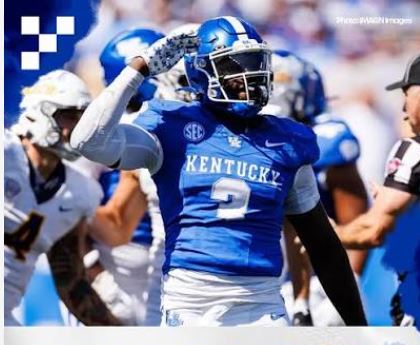
Alex Afari Jr.’s bid to return to the Kentucky Wildcats for a fifth college football season remains unresolved after a Jefferson Circuit Court judge declined to issue a ruling during Monday’s highly anticipated hearing. The Kentucky linebacker appeared in court seeking a temporary restraining order that would restore his eligibility, but Judge Brian Edwards instead indicated that he would try to reach a decision as quickly as possible. No specific timetable was provided, leaving Afari, Kentucky and head coach Will Stein waiting with the Wildcats’ season opener only days away.
Afari’s case has become part of the rapidly expanding legal battle surrounding fifth-year eligibility for athletes from the 2022 high school recruiting class. The NCAA’s eligibility rules have left several players who exhausted their traditional eligibility after the 2025-26 academic year fighting for another season through the courts. Afari initially received an opportunity to return to Kentucky after a federal ruling extended eligibility protections to members of that class, and he rejoined the Wildcats in August. That relief was short-lived, however, after the NCAA successfully obtained a stay from the U.S. Court of Appeals for the 10th Circuit, leaving Afari without federal protection.
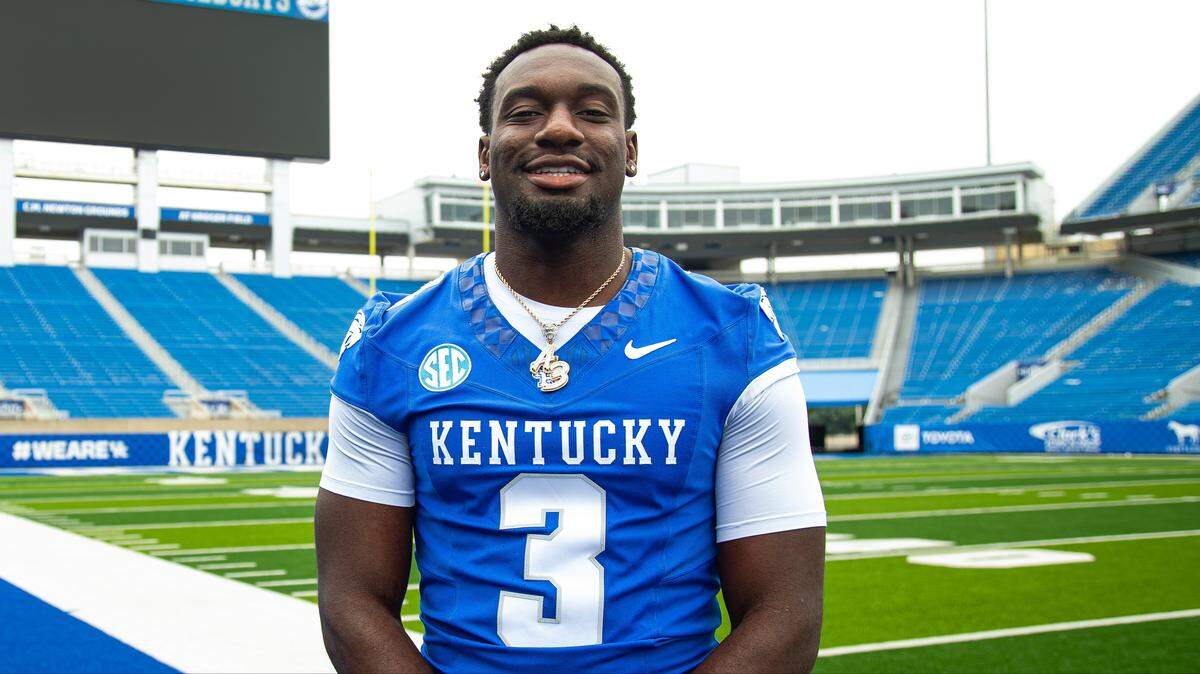
Rather than enter the transfer portal, Afari remained connected to Kentucky and subsequently sought protection through the Jefferson County case that had already produced favorable results for other athletes. His legal team asked the court to apply the temporary restraining order previously granted to more than a dozen former college athletes. The NCAA has opposed that effort, arguing that Afari should not be allowed to participate because of his previous involvement with the Green Bay Packers, including signing an NFL contract and taking part in minicamp activities. The NCAA has maintained that those circumstances should prevent him from returning to college football.
The legal complications became even more significant because of the timing. Kentucky is preparing for its 2026 season opener against Youngstown State on Saturday, Sept. 5, and the Wildcats have been unable to determine whether Afari can realistically be part of the game plan. Even if Judge Edwards eventually rules in his favor, Afari would still need to regain his football rhythm and receive enough practice time before being cleared to contribute in a meaningful game situation. That makes his availability for the opener increasingly doubtful, although a ruling in the coming days could potentially put him in position to return later in the season.
The uncertainty is particularly significant for Kentucky because Afari is not an inexperienced player. During his four seasons with the Wildcats, he appeared in 48 games and made 42 starts, accumulating 193 tackles, 26.5 tackles for loss and six sacks across his Kentucky career. His experience and familiarity with the program could provide an immediate boost to a defense entering the first season of the Will Stein era. Kentucky had already begun incorporating him into preparations before the latest legal setback, making the continued uncertainty frustrating for both the player and the coaching staff.
Stein has previously acknowledged that the situation has left everyone waiting for clarity. The Kentucky coach indicated that the program would monitor the legal developments and be prepared to respond once a ruling is made. For Afari, that waiting game has now continued through another crucial court appearance, with no immediate answer from Judge Edwards. His representatives also declined to comment after Monday’s hearing.
Another important element of Monday’s proceedings involved the Southeastern Conference. The SEC is expected to challenge temporary restraining orders involving fifth-year eligibility during a hearing in Louisiana on Thursday, Sept. 3. However, Judge Edwards declined to address SEC-related arguments during Monday’s Jefferson Circuit Court hearing, noting that the conference was not currently a named defendant in the case before him. That means the immediate question remains whether Afari himself can receive temporary legal protection that would allow him to play.
Afari’s situation also mirrors the case of Mark Mitchell, whose own eligibility fight became one of the most prominent developments in Kentucky athletics. Mitchell received a temporary injunction that allowed him to pursue another season, eventually committing to Kentucky basketball before reversing course and deciding to re-enroll at Missouri. The cases demonstrate just how complicated the eligibility dispute has become, with individual athletes pursuing different legal avenues depending on their circumstances.
For Kentucky football fans, the immediate focus is now on when Judge Edwards will finally issue his decision. A favorable ruling could reopen the door for Afari to return to the Wildcats and potentially become a major defensive contributor during the 2026 campaign. A negative ruling, meanwhile, could bring his attempt at a fifth season to an end. For now, there is no final answer — only another stretch of uncertainty as Kentucky prepares for its season opener and Afari waits to learn whether his college career will continue.
Bottom line: Afari remains ineligible for the moment, but his fifth-year hopes are still alive because Judge Edwards has not rejected his request. The next ruling could have major implications for both the veteran linebacker and Kentucky’s defense.
Leave a Reply