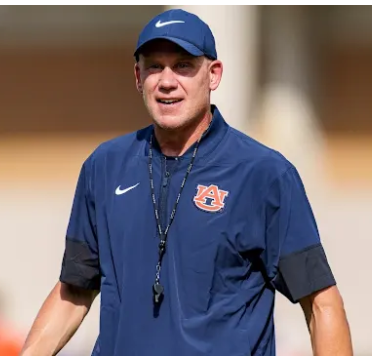
Auburn’s defensive success under coordinator DJ Durkin is beginning to attract attention far beyond the Plains, raising questions about how long the Tigers will be able to keep him in his current role. Working under offensive-minded head coaches like Hugh Freeze and now Alex Golesh, Durkin has effectively operated as the architect of Auburn’s defense, shaping a unit that has not only improved on the field but also boosted recruiting momentum particularly in talent-rich areas such as Maryland, Virginia, and the broader DMV region. His ability to land top defensive prospects, including recent four-star EDGE commit Rion Jackson out of Annapolis, has reinforced his reputation as one of the stronger defensive minds in college football.
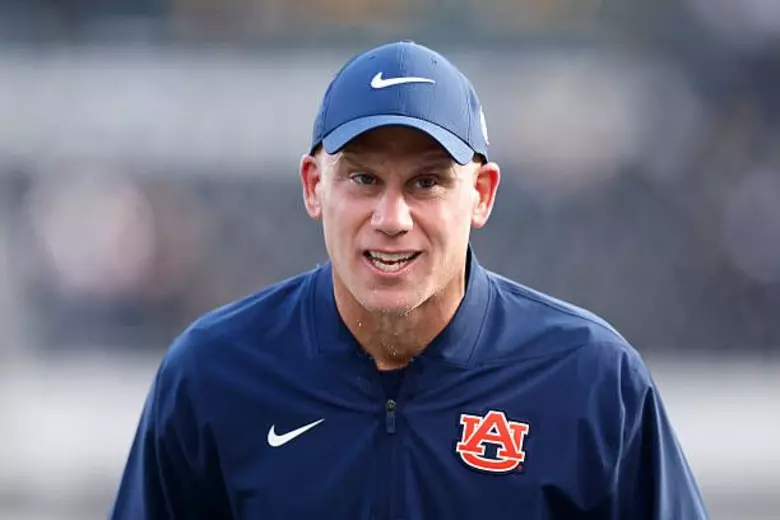
That level of impact naturally brings speculation about future head coaching opportunities. Despite past controversy during his tenure at Maryland, Durkin’s coaching résumé continues to make him an appealing candidate for programs seeking a defensive-driven leader. Schools such as Liberty could emerge as potential landing spots, especially if they look to retool following inconsistent recent results, while other programs along the East Coast—including possible Power Five opportunities—could also view him as a strong fit given his recruiting success and schematic identity. Even programs in Florida, where he previously had success, could revisit his name depending on coaching turnover or staff changes.
While Auburn currently benefits greatly from Durkin’s presence, the reality of modern college football suggests coordinators with his profile often do not stay in place for long. His compensation level, among the highest-paid coordinators nationally, reflects his value but also increases the likelihood that other programs will eventually pursue him for a head coaching role. As a result, there is growing acknowledgment that Auburn may not be able to rely on his long-term stability, even if his impact continues to be significant in the short term.
At the same time, Auburn appears to be preparing for potential continuity beyond Durkin by positioning other staff members for future leadership roles. One name gaining attention is Todd Orlando, currently serving as defensive coordinator at South Alabama. Orlando brings extensive experience from major programs such as Houston, Texas, and USC, and his current work in the Southeast is strengthening his regional recruiting ties. His background and familiarity with the defensive coordinator role under similar systems make him a logical internal or adjacent candidate should Auburn need to make a transition.
With head coach Alex Golesh also managing a modern coaching staff structure, the financial and strategic balance of retaining top coordinators becomes increasingly complex. If Durkin were to depart for a head coaching opportunity elsewhere, Auburn would likely evaluate more cost-effective and system-aligned replacements, with Orlando emerging as a natural name to watch.
For now, Auburn continues to benefit from Durkin’s defensive leadership, but the broader coaching landscape suggests that change may eventually be inevitable. Whether that shift happens sooner or later will depend on both Auburn’s on-field success and the growing external demand for one of its most influential assistant coaches.
Leave a Reply