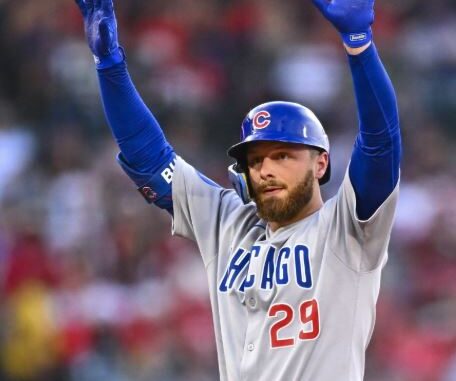
Michael Busch has become an increasingly important piece of the Chicago Cubs’ lineup, but his unusual 2026 season is beginning to raise questions about whether his recent loss of power is simply a temporary dip or a more significant problem.
The Cubs do not need to panic about Busch just yet, but the warning signs are becoming more difficult to overlook. With more than a month remaining in the regular season, Busch is already approaching the number of plate appearances he accumulated last year, giving Chicago plenty of evidence to evaluate his development and determine what may be behind his offensive regression.
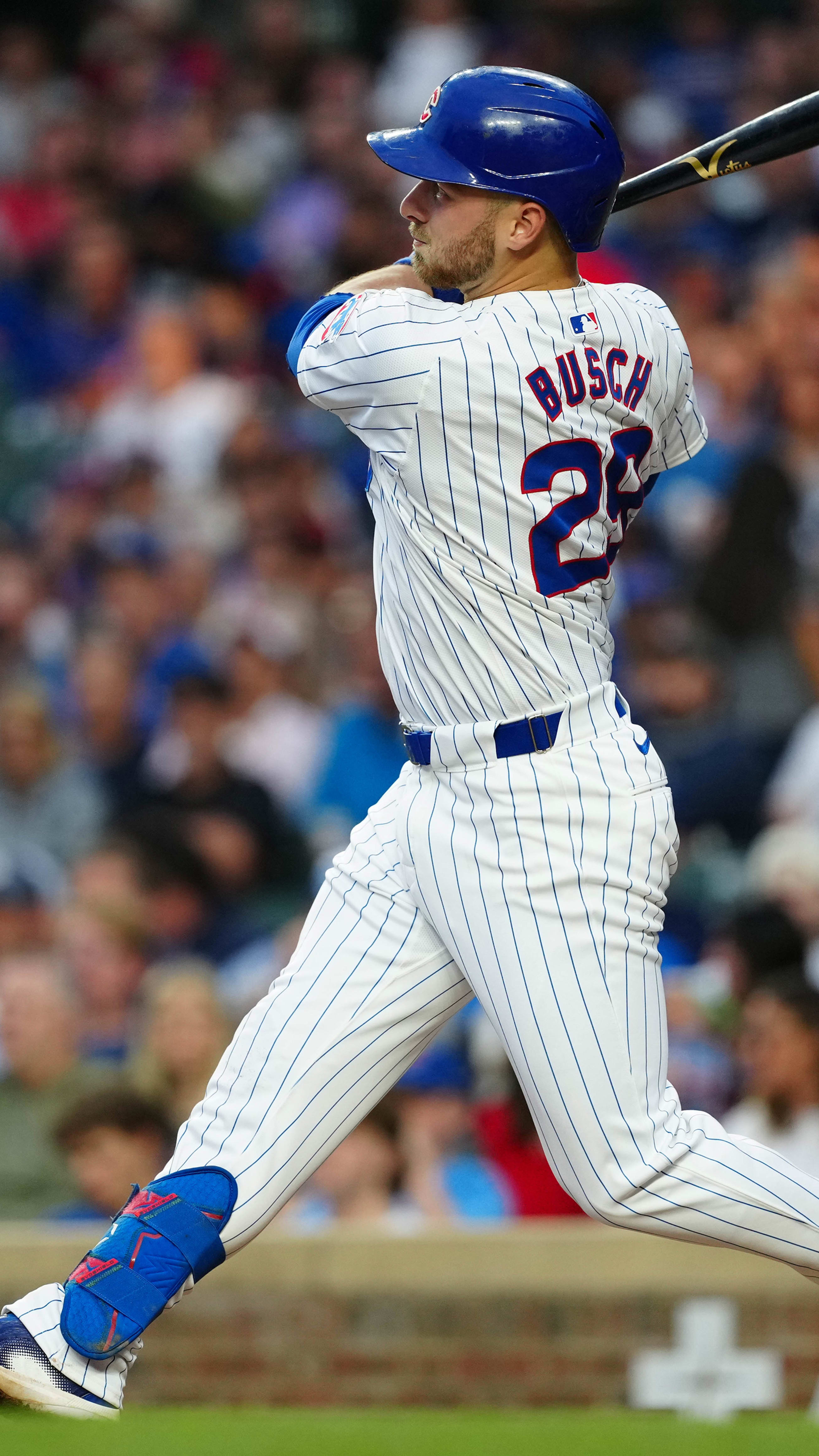
Busch has firmly established himself as the Cubs’ everyday first baseman. That represents a significant change from last season, when manager Craig Counsell frequently used him in a platoon role, particularly against left-handed pitching. Despite that cautious approach, Busch eventually produced one of the best power seasons of his career, finishing with 34 home runs over 155 games.
This season, however, the Cubs have shown considerably more confidence in Busch. He has regularly remained in the lineup against both right-handed and left-handed pitchers, and that trust has not been completely misplaced. His 112 wRC+ against left-handed pitching indicates that he has been productive enough to justify the club’s decision to give him more opportunities.
That makes his overall offensive decline somewhat puzzling.
Busch has not been a complete offensive disappointment in 2026. He has shown stretches of solid production and has done enough in other areas to remain a regular contributor. The bigger concern is that the power that made him such an intriguing part of Chicago’s lineup last year has largely disappeared.
Through 126 games, Busch has hit only 15 home runs. Last season, he launched 34 homers in 155 games. With a substantial portion of the season still remaining, he has plenty of time to improve that total, but the gap between his 2025 power production and this year’s numbers is significant.
The decline becomes even more noticeable when looking beyond his home-run total.
Last season, Busch posted a .261 batting average, a .523 slugging percentage and a .261 isolated power mark. This season, those figures have fallen to approximately .242, .386 and .144, respectively. The drop in slugging percentage and ISO is particularly concerning because both statistics provide a clearer picture of his ability to generate extra-base power.
For a player occupying first base on a regular basis, that matters considerably.
First basemen are generally expected to provide meaningful offensive production, particularly in the power department. While Busch does not need to become a 40-homer hitter to remain valuable, Chicago needs more than a modest power contribution from one of its primary corner infielders.
The encouraging part is that the Cubs still have reasons to believe Busch can recover.
One of the biggest areas requiring attention is his quality of contact. Busch has not been hitting the ball with the same authority he displayed last season. His barrel rate has fallen from 17.1 percent in 2025 to 8.7 percent this year, representing a substantial decline in the frequency with which he produces premium contact.
His hard-hit rate has also dropped noticeably.
Those numbers suggest that the problem is not simply bad luck on balls that he is striking well. Instead, Busch appears to be producing fewer balls with the type of exit quality that typically leads to home runs and extra-base hits.
His swing decisions may offer another clue.
Busch’s average bat speed has declined by roughly one mile per hour, while his chase rate has increased by about 2.5 percentage points compared with last season. More importantly, he is making contact on more than half of the pitches he swings at outside the strike zone.
That combination can create problems for a hitter.
When a batter expands the strike zone, he is more likely to make contact with pitches that are difficult to drive. Even if that contact results in a ball in play, it often comes with weaker exit velocity and less ideal launch conditions. Over time, those swings can contribute to a significant reduction in slugging and home-run production.
For Busch, that could be one of the major explanations for why his power numbers have fallen so dramatically.
The Cubs therefore may not need to make a drastic change to his role, but they should pay close attention to his approach at the plate. If Busch can become more selective, wait for pitches he can drive and reduce the number of swings outside the strike zone, there is still a reasonable chance that his power will return.
The timing is particularly important for Chicago because the club could face major offensive changes during the offseason. Potential uncertainty surrounding players such as Seiya Suzuki and Ian Happ could create additional pressure on the remaining core of the lineup.
That makes Busch’s development even more important.
If the Cubs view him as their long-term solution at first base, they need to determine whether the 2025 version of Busch was closer to his true offensive ceiling or whether this year’s power decline is merely an extended slump. His ability to recover over the final weeks of the season could provide valuable information before the organization makes decisions for 2027 and beyond.
For now, there is no reason for Chicago to abandon its confidence in Busch. He has already demonstrated that he can produce at a high level, and his performance against left-handed pitching shows that his overall offensive game has not completely fallen apart.
Still, the concern is becoming louder.
Busch’s declining barrel rate, reduced hard-hit production, lower bat speed and increased willingness to chase pitches all point toward an approach that needs attention. If those trends continue, the Cubs may eventually have to reconsider how they view his offensive ceiling.
But that decision does not have to be made today.
With plenty of games still left on the schedule, Busch has an opportunity to rediscover the swing that produced 34 home runs a year ago. For the Cubs, the priority should be helping him regain his power rather than treating the situation as a crisis.
The next several weeks could determine whether Busch’s 2026 season becomes remembered as a temporary power outage or the beginning of a more significant change in his offensive profile.
Leave a Reply