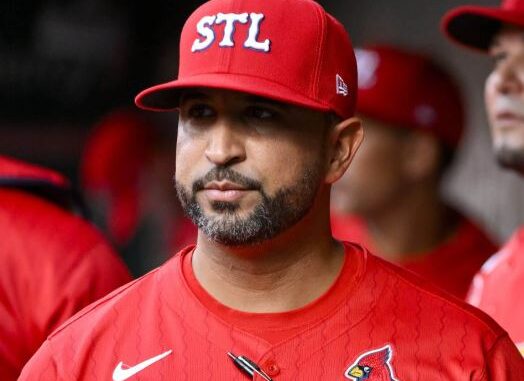
The St. Louis Cardinals have officially completed their trade with the Arizona Diamondbacks by acquiring young right-handed pitching prospect Brian Curley as the final piece of the deal that sent outfielder Lars Nootbaar to Arizona at the August 3 trade deadline. The October 1 announcement brings the transaction to a close and gives St. Louis another young arm to develop within its farm system.
The move is part of the Cardinals’ broader effort to reshape their roster and build pitching depth for the future. Although Curley is not an established major-league starter, his draft pedigree, strikeout production and experience as a young professional pitcher give St. Louis another prospect to evaluate as the organization develops its next wave of talent.
Cardinals officially acquire Brian Curley

Brian Curley — Right-handed pitcher
Age: 23 · Drafted in 2025 · University of Georgia
Curley was selected by Arizona in the third round of the 2025 MLB Draft, with the 92nd overall pick. The Virginia native made his professional debut in 2026 and moved from High-A to Double-A during his first season.
The Cardinals announced the acquisition through their player-development account on October 1, identifying Curley as the player to be named later in the Nootbaar transaction. That final addition had been part of the original agreement, meaning St. Louis had already received two pitchers before the deal was officially completed.
Curley’s arrival gives the organization another pitcher who can compete for opportunities as he progresses through the minor leagues. However, he remains a developmental prospect rather than an immediate solution for the major-league rotation.
Curley’s first professional season: Strong strikeout numbers, challenging results
Curley spent the beginning of the 2026 season with the High-A Hillsboro Hops before earning a promotion to Double-A Amarillo in mid-July. His performance showed an ability to miss bats, but he also encountered difficulties as he faced more advanced hitters.
His reported numbers were:
| Level | Appearances | Innings | ERA | Strikeouts |
|---|---|---|---|---|
| High-A | 15 | 69⅔ | 4.52 | 90 |
| Double-A | 10 | 46⅓ | 6.41 | 40 |
| Combined | 25 | 116 | 5.28 | 130 |
Statistics reported in coverage of Curley’s 2026 minor-league season.
The numbers highlight both the potential and the work ahead. Curley struck out 130 batters across 116 innings, demonstrating an ability to generate swings and misses. However, his combined 5.28 ERA and 1.54 WHIP indicate that limiting baserunners and preventing runs will be important areas for improvement.
His transition to Double-A was particularly difficult. His ERA climbed to 6.41 over 10 starts, suggesting that the higher level presented challenges he will need to address before moving closer to the majors.
Curley features a fastball that sits in the mid-90s, complemented by several secondary pitches. Baseball America noted that his arsenal includes multiple pitch shapes, although his smaller frame and delivery could ultimately make a bullpen role a possibility. His long-term role has not been settled, and additional development will help determine whether he can remain a starter or become a reliever.
Why the Cardinals traded Lars Nootbaar
The deal began on August 3, when St. Louis sent Nootbaar to Arizona in exchange for right-hander Daniel Eagen, left-hander Sandro Santana and a player to be named later. Curley was eventually selected to fill that final spot.
Nootbaar had spent his entire major-league career with St. Louis after making his MLB debut in 2021. The left-handed-hitting outfielder provided the Cardinals with experience, on-base ability and defensive versatility, making his departure a significant roster change.
His career with St. Louis included a .241 batting average, a .340 on-base percentage, a .402 slugging percentage, 61 home runs and 210 RBIs across six seasons, according to the report. He also accumulated 9.8 Baseball-Reference wins above replacement.
The Cardinals’ decision to trade him reflected a willingness to exchange an established major-league player for younger talent. Rather than retaining Nootbaar as part of the current roster, the organization obtained multiple pitching prospects who could contribute in future seasons if their development continues.
Arizona, meanwhile, gained an outfielder who could contribute immediately. Nootbaar posted a .244/.353/.409 batting line with five home runs and 17 RBIs after joining the Diamondbacks, providing on-base production and an additional left-handed bat. Arizona finished the season with 86 wins but narrowly missed the postseason.
What St. Louis received in the deal
Curley is the third pitching prospect included in the transaction, joining Eagen and Santana. Their different profiles give St. Louis several opportunities to develop the return from the trade.

Daniel Eagen — Right-handed pitcher
Eagen was one of Arizona’s notable pitching prospects when the trade was made. He recorded a 4.15 ERA in six starts for St. Louis’ Double-A Springfield affiliate, according to follow-up coverage. His pitch mix and strikeout ability give him a potential starting or multi-inning relief profile.
Sandro Santana — Left-handed pitcher
Santana delivered encouraging results after joining the Cardinals’ organization. Follow-up reporting listed a 1.04 ERA with the Double-A club before he moved to Triple-A, where he posted a 2.00 ERA over seven appearances. His left-handed delivery and potential multi-inning relief role could make him a useful bullpen candidate as he develops.
Brian Curley — Right-handed pitcher
Curley completes the return. His strikeout production is a promising feature, but his Double-A results show that he needs to improve his run prevention and consistency. He adds another developmental arm to the organization’s pitching group.
The three pitchers give St. Louis different developmental options, although none should be treated as a guaranteed major-league success. Their future value will depend on continued performance, health, command and their ability to adjust to increasingly difficult competition.
What this means for the Cardinals’ pitching plans
The Curley acquisition is primarily a long-term organizational move, rather than a transaction designed to change the major-league roster immediately. The Cardinals can use their minor-league system to evaluate his fastball, secondary pitches, command and ability to handle a full workload.
One key question will be whether Curley can improve his efficiency and prevent opponents from getting on base. His strikeout numbers provide a foundation, but his elevated ERA shows why missing bats alone is not enough. Better command and consistency could strengthen his case to remain a starting pitcher.
There is also a potential bullpen pathway. If his delivery, command or secondary offerings make it difficult to sustain a starting role, the Cardinals could eventually explore using his fastball in shorter outings. That remains a projection, however, rather than an announced organizational decision.
For a franchise developing young talent, adding another arm can create competition and give pitching coaches another player to work with. The immediate priority will be helping Curley translate his raw tools into more reliable results at Double-A and beyond.
Final outlook: The Nootbaar trade is now complete
The Cardinals’ acquisition of Brian Curley closes the books on the Lars Nootbaar trade that began at the 2026 deadline. St. Louis surrendered an established outfielder but received three pitching prospects in return, giving the organization several potential avenues for future value.
Curley’s first professional season was mixed: his 130 strikeouts offer an encouraging sign, while his 5.28 combined ERA shows that there is still significant development ahead. His selection in the third round of the 2025 draft gives context to his prospect status, but it does not guarantee that he will become a major-league contributor.
For the Cardinals, the bigger story is the collection of pitching talent assembled in exchange for Nootbaar. Eagen and Santana have already offered some encouraging results in the St. Louis system, while Curley adds another player to monitor as the organization plans for 2027 and beyond.
Whether the deal ultimately benefits St. Louis will depend on how these prospects develop and how Nootbaar performs in Arizona. For now, the final player has been identified, the transaction is complete, and Curley will have an opportunity to continue his development in the Cardinals’ organization.
Leave a Reply