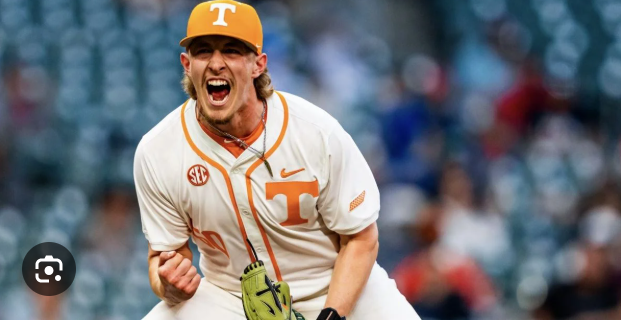
The St. Louis Cardinals are beginning to see early but meaningful signs that one of their young pitching prospects could develop into a frontline starter, as their farm system takes on a more central role during the organization’s ongoing rebuild.
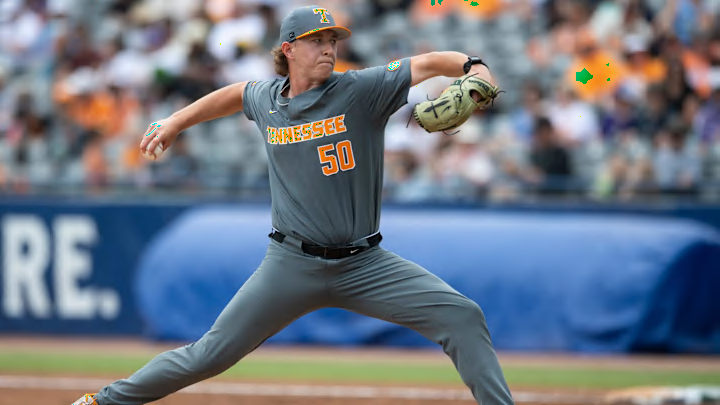
After committing fully to a roster reset through multiple veteran trades, the Cardinals have shifted their focus toward long-term development. That strategy puts significant pressure on their minor league system to produce high-impact talent, particularly on the pitching side. Within that group, Tanner Franklin has started to stand out as one of the more intriguing arms in the organization.
Franklin’s rise has been closely watched by prospect analysts, including Thomas Nestico of TJStats, who recently identified him as a breakout candidate in the minor leagues this season. Drafted in the third round out of Tennessee, Franklin was originally viewed as a reliever, but his physical profile and raw stuff have encouraged the Cardinals to explore his potential as a starter.
At 6-foot-5, Franklin brings an imposing presence on the mound, and his fastball is already considered one of the most advanced weapons in the system. The pitch routinely sits in the upper 90s and features strong ride and carry, particularly effective due to his lower three-quarters arm slot. That combination makes the fastball difficult for hitters to track, often leading to high swing-and-miss rates even when located in the strike zone.
Beyond the velocity, evaluators have been encouraged by how well the pitch plays in game situations. It is not just about raw speed; the movement profile and release point give it late life that disrupts timing, which is a key indicator for long-term success at higher levels of competition.
While the fastball is clearly Franklin’s foundation, his secondary pitches are still a work in progress. His slider is currently his most reliable breaking ball, sitting in the mid-80s with moderate glove-side movement that gives him a usable put-away pitch against both right- and left-handed hitters. Complementing that is a cutter in the low 90s, which acts as a bridge pitch between his fastball and slider. He has shown confidence using it early in counts, especially to get ahead of hitters or disrupt their timing before going to his harder stuff.
His changeup remains the least developed part of his arsenal. It is currently used sparingly, primarily against left-handed batters, and lacks the consistency and refinement of his other offerings. However, it is still considered an important developmental piece if he is going to transition fully into a starting role rather than a bullpen weapon.
Franklin’s early professional results have reinforced the excitement around his profile. Across his first innings in Low-A ball, he has posted strong numbers, including a low earned run average and an impressive strikeout rate. Over limited appearances spanning the past two seasons, he has struck out 33 batters while allowing just 15 hits and five walks in 20 2/3 innings. Those numbers suggest not only dominance, but also growing command and control, which are often the separating factors for young pitchers moving up the ladder.
What makes Franklin particularly interesting is the internal competition and comparisons within the system. He was a teammate of fellow Cardinals pitching prospect Liam Doyle, another high-upside arm with a similar fastball-heavy profile. Doyle has received more attention and higher public rankings so far, but both pitchers share similar developmental paths: elite velocity paired with secondary pitches that still need refinement.
Within the organization, Doyle is currently viewed as the more polished or widely recognized prospect, but Franklin’s performance is starting to narrow that gap. Scouts believe that by the end of the season, both could be ranked among the top pitching prospects in the system, with Doyle likely holding the edge until he reaches the majors.
For Franklin specifically, the trajectory depends heavily on how his secondary pitches develop. If his slider and cutter continue to improve and his changeup becomes a viable third or fourth option, he could transition from a power reliever profile into a legitimate starting pitcher with mid-rotation or higher potential.
At this stage, Franklin is still early in his journey, but the combination of velocity, physical projection, and early statistical success has made him one of the more closely watched arms in the Cardinals’ system. In a rebuild that depends heavily on internal development, his progress over the next year could play a meaningful role in shaping the organization’s long-term pitching foundation.
Leave a Reply