
The St. Louis Cardinals have endured their share of frustrating defeats this season, particularly in games that appeared to be under control before unraveling late. Those losses have naturally led to criticism of individual players, with relievers often becoming the easiest targets when a lead disappears in the final innings.
But there is an important distinction between criticizing a player’s performance and blaming that player entirely for a team’s defeat.
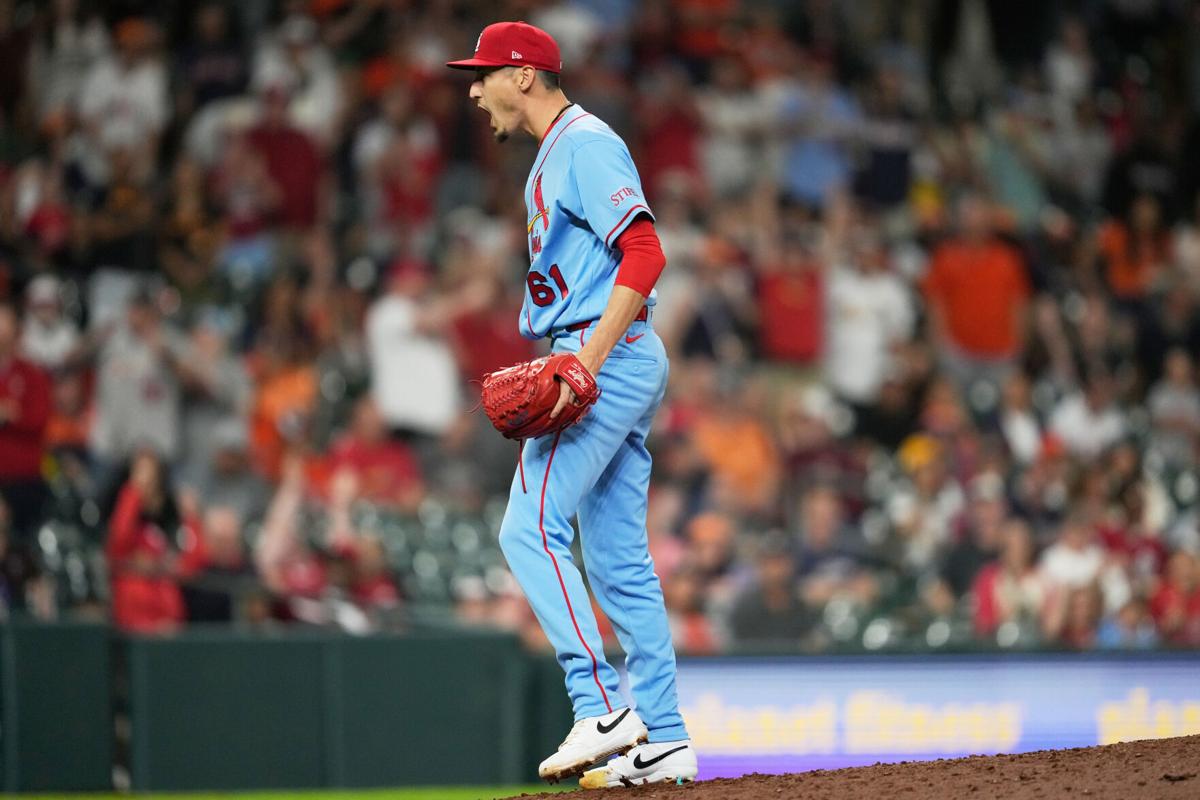
That distinction has become increasingly relevant around the Cardinals, particularly following several difficult outings from Riley O’Brien. His recent struggles in late-game situations have generated plenty of frustration among fans, and there is legitimate reason to examine whether he should continue serving as the team’s closer. However, arguing that O’Brien alone is responsible for the Cardinals’ losses overlooks everything that happens during the previous eight innings.
Baseball is fundamentally a team sport. A game can be influenced by a starting pitcher’s performance, defensive mistakes, missed opportunities with runners in scoring position, bullpen decisions, baserunning, managerial strategy and dozens of individual at-bats. The closer may be the player standing on the mound when everything falls apart, but that does not automatically make him the sole reason the team lost.
One infamous error does not tell the whole story
One of baseball’s most famous examples is Bill Buckner’s error during Game 6 of the 1986 World Series between the Boston Red Sox and New York Mets.
Most fans remember the image immediately. Mookie Wilson hit a ground ball toward first base, Buckner attempted to make the play, and the ball went through his legs. The Mets eventually won the game and went on to capture the World Series.
Buckner became the face of that collapse.
Yet the larger story is far more complicated.
The Red Sox collected 13 hits in the game but stranded eight runners. There were numerous opportunities throughout the contest that Boston failed to convert. Those missed chances rarely receive the same attention as Buckner’s error because his mistake happened at the most visible and consequential moment.
That is often how baseball works. The final mistake tends to receive far more attention than the series of smaller mistakes that helped create the situation in the first place.
The same principle applies to the Cardinals.
O’Brien’s struggles are real, but the problem is bigger
There is no need to pretend that Riley O’Brien’s recent struggles do not matter.
They do.
When a closer enters a game with a lead and fails to protect it, the performance deserves scrutiny. If those blown saves become a pattern, the organization has every right to reconsider his role. The Cardinals have to determine whether O’Brien is the best option to handle the ninth inning as they continue trying to build a competitive roster.
But that is different from saying that every loss involving a blown save is entirely his fault.
Consider the recent game against the Chicago White Sox. O’Brien surrendered a two-strike, two-run home run to Randall Grichuk that ultimately became one of the defining moments of the defeat. Understandably, that home run generated an enormous amount of frustration among Cardinals supporters.
However, St. Louis had already left nine runners on base during the game.
That is nine opportunities that could have produced additional runs.
The bullpen also contributed to the problem, with Cooper Hjerpe allowing four earned runs in relief. Looking exclusively at O’Brien’s final-inning mistake therefore removes a significant portion of the game’s actual story.
If the Cardinals had converted more of their opportunities earlier, pitched more effectively in the middle innings or received a stronger relief performance before the ninth, the game might never have reached the point where O’Brien’s mistake became decisive.
That is why assigning complete blame to one player is too simplistic.
Closers naturally become the scapegoat
There is an understandable reason relievers frequently become the target of fan anger.
The closer operates at the most visible moment of the game.
A team can struggle offensively for eight innings and still have an opportunity to win. But when the closer enters with a lead, expectations change immediately. Fans expect three outs, and anything short of that can feel like a collapse.
That pressure makes the ninth inning uniquely unforgiving.
O’Brien’s blown saves are frustrating. The same can be said for other Cardinals relievers who have struggled to finish games. But evaluating the bullpen should involve looking at the entire relief corps rather than identifying one player as the source of every problem.
The Cardinals’ bullpen construction, role definition, workload management and pitching depth are all legitimate subjects for discussion.
Those are baseball questions worth having.
Personal attacks against an individual player are not.
Baseball players are people, too
History also provides examples of how dangerous it can be to reduce a person’s entire identity to one moment on a baseball field.
The story of former California Angels pitcher Donnie Moore is sometimes presented as though one infamous home run surrendered to Dave Henderson during the 1986 ALCS directly caused the personal tragedy that followed years later.
That explanation is far too simplistic.
Moore had serious personal struggles and dealt with depression before and after that baseball moment. Reducing his life and struggles to one pitch fails to acknowledge the much larger human story behind the player.
The example illustrates an important point for modern fans.
Athletes can have terrible games. They can make costly mistakes. They can fail in moments when their team desperately needs them to succeed.
But they remain human beings outside the lines.
Criticism of performance is part of professional sports. Treating a player as though he personally embodies everything wrong with an entire organization is something entirely different.
Should O’Brien remain the Cardinals’ closer?
That question is completely fair.
Based on his recent struggles, there is a legitimate argument that the Cardinals should explore alternatives for the ninth inning. A rebuilding organization must constantly evaluate whether its current players fit the roles they have been assigned.
Perhaps O’Brien would be more effective in a different bullpen role. Perhaps another reliever deserves an opportunity to close games. Perhaps the Cardinals need to pursue a more reliable late-inning option through the offseason.
Those are roster-construction questions, and they deserve serious consideration.
What should not happen, however, is turning every Cardinals defeat into a referendum on O’Brien as an individual.
If St. Louis loses a game because the offense leaves runners stranded, the starting pitcher struggles, the middle relief collapses and the closer then gives up the decisive hit, the entire sequence matters.
The final mistake may be the most memorable one, but it is not necessarily the only reason the team lost.
Winning and losing remain collective responsibilities
One of the simplest lessons in baseball is also one of the most important: teams win together and lose together.
A dramatic home run can make one player look like the hero, but that player still needs teammates to reach base, defend the field and pitch effectively. Likewise, when a game goes wrong, the responsibility rarely belongs exclusively to one person.
The Cardinals have experienced both sides of that equation.
Their wins have often required contributions from multiple players, while their losses have typically involved several missed opportunities or mistakes. Focusing exclusively on the final player involved in a defeat can make the game easier to understand emotionally, but it does not necessarily make the analysis accurate.
That is especially important for a team still figuring out its future.
St. Louis needs to evaluate its roster honestly. If O’Brien is not the answer at closer, the Cardinals should make that determination. If the bullpen needs more depth, the front office should address it. If the offense continues leaving too many runners on base, that problem deserves equal attention.
But none of those conclusions require turning one player into the team’s scapegoat.
The Cardinals need solutions, not scapegoats
The frustration among Cardinals fans is understandable. Supporters invest emotionally in every game, and watching a late lead disappear can be incredibly difficult.
Fans are entitled to boo. They are entitled to criticize players. They are entitled to question managerial decisions and demand changes from the front office.
But there is a difference between demanding better performance and assigning complete responsibility for a team’s failure to one individual.
O’Brien may not ultimately be the Cardinals’ closer of the future. His recent performances may justify a change in role. But the organization’s broader late-game problems cannot be solved simply by identifying one player to blame.
The Cardinals’ challenge is to build a roster capable of preventing those situations from happening repeatedly.
That means better pitching, more consistent offense, stronger bullpen depth, smarter roster construction and better execution from everyone involved.
Baseball is too complicated to reduce an entire nine-inning game to one pitch or one player.
The Cardinals will have to win as a team if they want to return to contention. And when they lose, the lessons should be examined collectively rather than turning one player into the scapegoat.
The goal should not be finding someone to blame.
It should be finding a way to win the next game.
Leave a Reply