The Chicago Cubs may have taken a major step toward strengthening their playoff position with a dominant 19-2 victory over the Seattle Mariners on Sunday, but the performance also raised an important question about the future of Shota Imanaga in the team’s October plans.
While Chicago’s offense provided more than enough support, Imanaga struggled badly on the mound and lasted only two innings. The left-hander surrendered five hits and two runs while throwing just 41 strikes on 72 pitches. His lack of command, combined with a noticeable dip in velocity, prompted manager Craig Counsell to make an early pitching change.
With the Cubs entering the most important stretch of the regular season, Counsell made it clear afterward that there is little room for prolonged struggles.
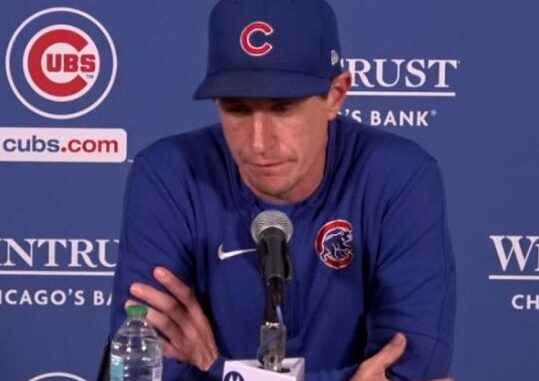
Counsell’s message: It is “go time”
Counsell described Imanaga’s outing as an unusually poor performance but emphasized that the pitcher will have an opportunity to respond in his next start.
The Cubs manager noted that Imanaga’s misses were significantly larger than normal and that his velocity was down from the beginning of the outing. Counsell characterized the performance as something the team hopes was an isolated setback, but the message behind his comments was unmistakable: Imanaga needs to correct the problem quickly.
The timing makes the situation even more significant.
Chicago had already dropped the first two games of its series against Seattle, meaning Sunday’s game was essentially a must-win if the Cubs wanted to avoid being swept. The offense responded spectacularly, but Imanaga’s struggles added another layer of concern for a team trying to build a dependable pitching staff before the postseason arrives.
Velocity has become the biggest concern
The biggest red flag surrounding Imanaga is not simply that he had one bad start. His fastball velocity has been trending downward, and that has become increasingly difficult for the Cubs to ignore.
His fastball reached only 92.2 mph on Sunday and frequently sat in the upper-80s and low-90s. For a pitcher who relies heavily on deception, command, movement and changing speeds rather than overpowering hitters, losing even a small amount of velocity can have a major impact.
That concern became particularly relevant last season, when a similar decline in velocity preceded a difficult stretch and ultimately contributed to Imanaga falling out of Chicago’s postseason pitching plans.
The Cubs therefore have to determine whether Sunday was simply a bad day or evidence of a larger problem that could follow Imanaga into September and, potentially, October.
Imanaga cannot afford another extended slump
One poor outing does not necessarily erase everything Imanaga has accomplished, but the margin for error is shrinking as the Cubs move closer to the playoffs.
Chicago has postseason aspirations, and the organization will need every member of its pitching staff to be reliable. If Imanaga continues to struggle with velocity and command, Counsell could be forced to reconsider his role.
The situation is especially complicated because Imanaga is not necessarily an obvious bullpen candidate. His effectiveness comes from working through a lineup as a starter, mixing pitches and using his command to keep hitters uncomfortable. Moving him into relief would require a significant adjustment to his role and preparation.
That means the most likely path for Imanaga is straightforward: regain his form as a starter or risk being left off the postseason roster.
Competition for rotation spots is increasing
Another factor working against Imanaga is the expected return of several Cubs pitchers before October.
As injured arms become available, Chicago’s pitching depth will improve, giving Counsell and the coaching staff more alternatives when constructing the postseason rotation. A few weeks ago, Imanaga’s place might have appeared relatively secure. Now, his recent performance has opened the door for legitimate competition.
The Cubs will not simply choose their October pitchers based on reputation or past success. They will be evaluating who is healthy, who has the best stuff, who is executing pitches and who can be trusted in high-pressure postseason situations.
That puts additional importance on Imanaga’s upcoming starts.
October could be decided by the next few weeks
The Cubs have little interest in allowing one of their key pitchers to enter the postseason with unanswered questions. Imanaga still has time to change the narrative, but Counsell’s “go time” message makes the stakes clear.
If Imanaga can restore his velocity, sharpen his command and return to the form that made him such a valuable part of Chicago’s pitching staff, he could still play an important role in October.
If the velocity continues to decline and the inconsistent command persists, however, the Cubs may have no choice but to move forward without him.
For now, Counsell is giving Imanaga another opportunity to prove that Sunday’s performance was merely a temporary setback. But with the postseason approaching rapidly and competition for roster spots intensifying, the next start could carry far more weight than a typical August outing.
Leave a Reply